COPPER AND URANIUM PRICES RISE AS WORLD SEEKS A LOW EMISSIONS FUTURE - Kanebridge News
Share Button

COPPER AND URANIUM PRICES RISE AS WORLD SEEKS A LOW EMISSIONS FUTURE

The 5-year official forecasts for commodity prices reveal some surprising winners and losers

By Bronwyn Allen
Fri, Apr 5, 2024 12:04pmGrey Clock 2 min

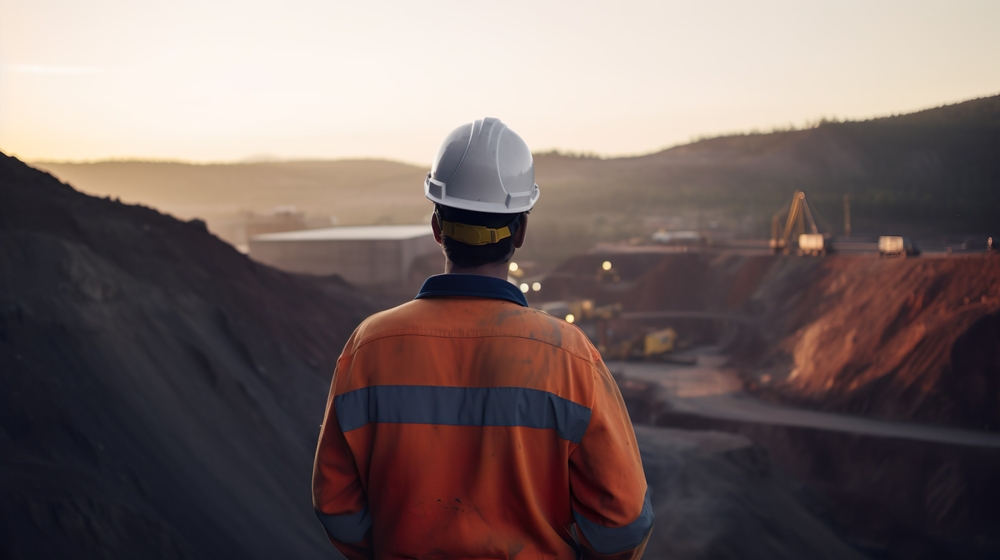
The Department of Industry and Resources has released its official five-year forecasts for commodity prices, with the iron ore price expected to trade more than 25 percent lower than where it is today in FY29. Meantime, copper, nickel and uranium prices are expected to rise materially as the world decarbonises and embraces greater electrification and nuclear energy.

Mining stocks comprise a huge proportion of the ASX, and commodity prices directly affect share prices and company earnings. Therefore, these official price forecasts can provide valuable insights for shareholders of major miners like BHP, Rio Tinto, Fortescue, Mineral Resources and South32.

Australian resource and energy export earnings are forecast to be $417 billion in FY24. This is about 10 percent lower than the record $466 billion in exports last year. Those record exports were largely the result of a spike in energy prices as Western countries sought to avoid Russian oil and gas. Export earnings are expected to fall to about $369 billion in FY25 due to falling commodity prices, primarily energy prices, and a rising AU/US dollar. Exports would then level out through to FY29.

Iron ore is expected to remain Australia’s biggest earner among all our resource and energy exports, followed by liquified natural gas (LNG), other metals, metallurgical coal, thermal coal, base metals, and gold. The iron ore price closed 1.5 percent higher overnight at US$104 per tonne. It’s fallen 10.5 percent over the past month due to weaker Chinese demand. The department is forecasting an average price of US$103 per tonne in FY24. By FY29, the average is expected to have fallen to US$75 per tonne.

LNG prices are expected to fall from an average of AU$17 per gigajoule this financial year to AU$12 per gigajoule in FY29. Metallurgical coal will fall from US$289 per tonne in FY24 to US$207 per tonne in FY29. Thermal coal will drop from US$135 per tonne in FY24 to US$115 per tonne in FY29.

The oversupply of lithium seen last year as global production ramped up while demand fell amid fewer people buying electric vehicles (EVs) is set to continue to weaken lithium commodity prices. Some Australian lithium miners, such as IGO and Core Lithium, have suspended some of their operations after lithium prices plummeted in 2023. The department expects an average price of US$1,800 per tonne this year, falling to an average of US$1,231 per tonne in FY29.

Some particular metals are expected to soar in value due to the green energy transition. The average price of copper, which is essential for electrification and used in solar panels, wind turbines and EVs, is expected to be about US$8,258 per tonne this financial year. By FY29, the department expects copper to be trading above US$10,000 per tonne.

The nickel price has fallen dramatically in recent times, largely due to much new supply generated in Indonesia by Chinese-backed operators. The nickel price has dropped from an average price of US$23,911 in FY23 to US$16,845 today. The Federal Government recently added nickel to its Critical Minerals List to give Australian producers access to funding for support. The resources department expects the nickel price to recover somewhat to an average price of US$20,950 in FY29.

Another commodity expected to rise significantly in value over the outlook period is uranium. Many countries are embracing nuclear energy and building small modular nuclear reactors (SMRs) to support domestic energy needs. The uranium price leapt from an average US$51 per pound in FY23 to a 16-year high of US$106 per pound in February. The department anticipates an average price of US$85 per pound for FY24, rising to US$119 per pound in FY29.

“While global prices are easing, the [forecast] shows demand is likely to be sustained for commodities used in low emissions technologies, including iron ore, copper, aluminium and lithium,” said Resources Minister Madeleine King. The department noted that Chinese demand will continue to heavily influence commodity prices, however, India is now experiencing the world’s strongest economic growth and its expanding manufacturing sector will mean higher demand for resources.

Article originally published on Kanebridge News Australia

MOST POPULAR

The Australian leather house has opened an immersive four-day pop-up in Manhattan, unveiling its Bloom Collection and redefining what a product launch can look like.

Following the successful launch of its Palais Collection, MAISON de SABRÉ has unveiled a new modular handbag system offering more than 720 styling combinations.

Related Stories
Money
Why These Bargain Stocks Can Outshine Gold
By Paul R. La Monica 06/08/2026
Money
Celebrity-backed fund nears US$50m as investor demand builds 
By Jeni O'Dowd 02/06/2026
Money
What Is Artemis II? The NASA Mission to Fly Astronauts Around the Moon
By Micah Maidenberg 30/03/2026

Gold miners are emerging as a compelling way to navigate market uncertainty, with analysts pointing to strong cash flows, attractive valuations and rising profit margins. As gold prices stabilize above US$4,000 an ounce, mining stocks could offer investors both downside protection and long-term upside.

By Paul R. La Monica
Thu, Aug 6, 2026 3 min

Gold is one of the market’s go-to hedges in rocky times. Don’t forget that gold miners’ stocks are too.

The stock market’s gains in 2026 belie the rocky macroeconomic picture: elevated inflation, heightened geopolitical tensions, and jitters about the artificial-intelligence trade. That backdrop, in theory, should be the time for gold to shine. Instead, the price of the yellow metal has tumbled more than 5% so far, after last year’s blistering 65% rally. In part, the U.S. dollar’s recovery has stymied gold, which benefited from the greenback’s weakness in 2025.

Even with the precious metal’s recent weakness, gold mining stocks could be the best way to profit from this year’s uncertainty.

Gold miners “are a valuable hedge against macro risks that would likely be damaging for equities,” BCA Research’s Noah Weisberger and Rishabh Shah wrote this week.

Concerns about the Federal Reserve’s next moves to tackle inflation, the increasingly crowded AI trade, and steep valuations for tech stocks are just some of the drivers that could help gold’s price get on even footing— and lead to even bigger gains for miner stocks.

These stocks’ prices tend to outpace gold’s moves, because the companies have fixed operational costs. So when gold’s price rallies, their profit margins soar, and vice versa. For instance, the VanEck Gold Miners GDX +7.39% exchange-traded fund has fallen 11% this year as the metal has slumped.

Now, gold’s price just needs to stabilize to help miners’ stocks take off, and that seems to be happening. The precious metal has recently found support above the $4,000 level, and has stuck in a narrow range since the end of June. But its price rose ever so slightly in July, ending a four-month losing streak for the metal. Technical analysis also suggests that gold is due for a comeback.

Barron’s recently wrote that the pullbacks for both gold miners and the metal itself are overdone. Senior technical analyst Doug Busch noted that the VanEck ETF is on the “verge of a breakout” and has the potential to hit $11o in early 2027, up more than 40% from its current price.

Gold miners also have more than their role as a market hedge going for them. Their fundamentals are solid, too, says Chris Mancini, portfolio co-manager of the Gabelli Gold Fund.

“Precious metals miners are generating substantial amounts of free cash flow given profit margins of over $2,000 per ounce, and are returning this cash to shareholders through buybacks and dividends,” he said in an email.

“Buying the miners is a cheap way to get exposure to the price of gold,” he added. His fund owns Newmont NEM +6.71%, a Barron’s stock pick last year, and Agnico Eagle Mines as top holdings, as well as miners Northern Star Resources, Endeavour Mining, and Kinross Gold K+8.59%.

Miners are better businesses than they used to be, the BCA team added.

“Capex is more disciplined, margins are high and rising…and they are largely independent of the AI story,” Weisberger, BCA’s head of equities, and Shah, a senior analyst, wrote.

That last part is key. AI is disrupting the software industry and many other services and information-oriented businesses, and investors have piled into AI stocks. But ChatGPT, Claude, Grok, and other large-language models aren’t going to replace the need to mine for metals.

“Equity portfolios can benefit from exposure to quality that is uncorrelated to AI risk, and gold miners fit the bill,” the BCA team said.

They recommend that investors buy the VanEck Gold Miners ETF, which owns top miners such as Agnico, Barrick Mining ABX +7.24%, and Newmont.

An important bonus for big gold miners’ stocks is that their valuations are attractive after the gold’s pullback, too. The VanEck ETF is now trading at just a little more than nine times next year’s earnings estimates. That’s a big discount to its five-year average price-to-earnings ratio of 14, according to FactSet.

What’s more, the ETF is currently valued at a more than 50% discount to the S&P 500 SPX -0.17%, which is trading for about 19 times earnings estimates for 2027. Mining stocks have typically traded at just a 25% discount to the broader market over the past five years. So there is significant upside for the group if valuations move back toward normal levels.

One factor that complicates mining stocks as a market hedge, of course, is if stocks bounce back, which has been the case so far in August.

But both the market and economic outlooks remain cloudy, and investors remain nervous about the Fed’s next moves and AI stocks. Gold miners should do just fine, even if the anxious mood on Wall Street persists.