Drew Barrymore Puts Westchester Home on the Market Two Years After Buying It - Kanebridge News
Share Button

Drew Barrymore Puts Westchester Home on the Market Two Years After Buying It

The actress, who felt a ‘spiritual calling’ to the Harrison, N.Y., property, is asking $4.99 million for the home.

By Katherine Clarke
Thu, Mar 26, 2026 5:58pmGrey Clock 3 min

Two years ago, fed up with the long drive to the Hamptons, the actress and daytime talk-show host Drew Barrymore started looking for a weekend home in Westchester County. 

When she saw a circa-1700s mansion for sale, Barrymore said, she felt a karmic connection to the Harrison, N.Y., property. 

“I walked in, and I was, like, ‘I know my family’s been here. I know that I have to work on this house. I know that I’m supposed to be doing this,’” said Barrymore, 51 years old, who lives primarily in Manhattan with her two daughters. “It was like a strange, spiritual calling.” 

It turned out she actually did have a connection to the area: Her great-aunt, the late actress Ethel Barrymore, had a home in nearby Mamaroneck, where an enclave known as Barrymore Lane is widely believed to be named for the family. 

Barrymore bought the roughly 12-acre estate for $4.4 million, according to property records. She did an extensive renovation; she has a deep interest in interior design and has considered pursuing it professionally. “Between Pinterest, thrifting and a can of paint, there’s nothing you can’t do,” Barrymore said with a laugh. 

But roughly two years later, the actress is listing the property for $4.99 million. The renovation took longer than expected, she said, and the family’s lives have changed in the interim. 

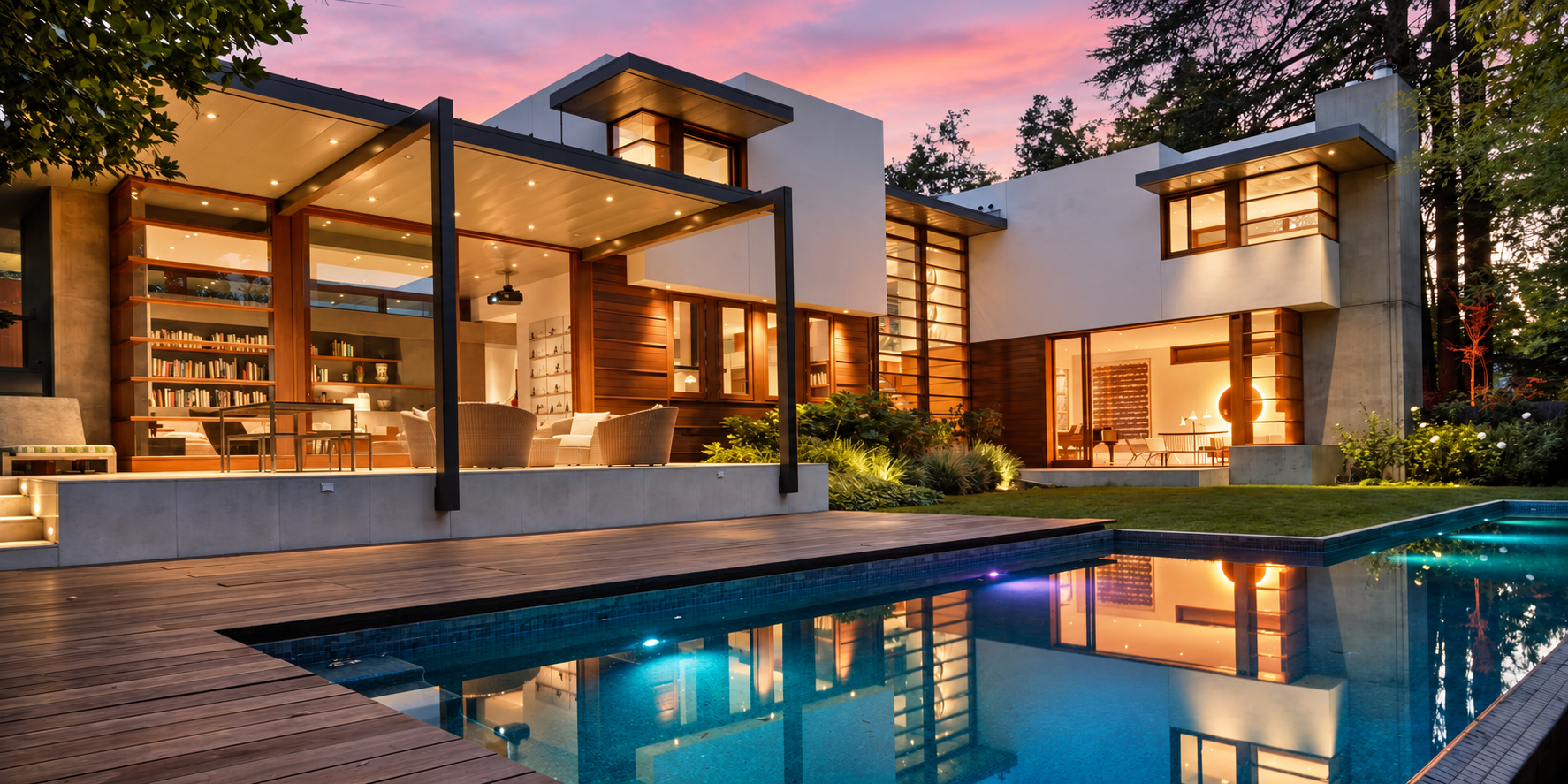
The estate includes a roughly 5,600-square-foot, five-bedroom main house, a pool and a poolhouse with an additional bedroom, according to Kori Sassower of Compass. 

Barrymore said she previously owned a home in Sagaponack, N.Y., but the distance from the city and the weekend traffic to the Hamptons became untenable as her children’s schedules filled up with social and sporting activities. 

Harrison, by contrast, offered accessibility and charm. The property, located roughly an hour from Manhattan, is a short drive from picturesque Rye and Bronxville, while nearby Bedford has drawn celebrities. The median sales price for a home in Harrison is around $1.1 million, according to Redfin. 

The property’s expansive acreage gave Barrymore a sense of being close to nature. “It’s really like being in your own personal park,” she said. “There are tons of deer. There are pheasants, there are ducks, there are rabbits.” 

When she purchased the home, Barrymore said, she thought it would need only a cosmetic renovation. Instead, it turned into a “complete internal gut,” with much of the plumbing, heating and air conditioning replaced, she said.  

Barrymore also revamped the ground floor to open up the kitchen, which felt dark and boxed in. “It took a year of engineering to figure out how to accomplish it,” she said. 

Barrymore declined to comment on the exact costs of the renovation, but compared herself to actress Shelley Long’s character in the 1986 film “The Money Pit.”  

Some of the rooms have maximalist patterned wallpaper, elaborate art walls and heavy, old-fashioned draperies. Others are minimalist. “Every little corner gets scrutinised for what it could be,” she said. “If I see a closet, it’s probably not a closet, it’s going to become some secret hideout for my kid, or I’m going to take the door off and turn it into a sculptural piece.” 

In the home’s living room, Barrymore said she cycled through multiple paint colours, including pink and green. 

“I painted it all green because I was dying for greenery. And then the summer came, and I was, like, ‘Oh, God, everything is green!’” 

She spent time at the property even while it was under construction. When they didn’t have a kitchen, the family cooked dinner on a grill outside and drank boxed water, she said. 

When workers were redoing the pipes, Barrymore couldn’t shower. “I lived in the house in the most primitive of scenarios,” she said. “It’s some of my favourite times and memories.” 

When Barrymore celebrated her birthday at the property in February, she and two friends decided to grill for old time’s sake, even though the kitchen was fully functional.  

“There we were in zero-degree weather with parkas, hoodies, gloves and face masks. But we were, like, ‘We gotta do it. It’s the tradition.” 

Barrymore, who grew up in Los Angeles, stars in films like “Never Been Kissed,” “Riding in Cars With Boys” and “Charlie’s Angels.” Her eponymous daytime talk show launched in September 2020. 

Sassower is listing the property with her colleague Brian K. Lewis in New York City. 

MOST POPULAR

Rugged coastal drives and fireside drams define a slow, indulgent journey through Scotland’s far north.

A haven for hedge-fund titans and Hollywood grandees, Greenwich is one of the world’s most expensive residential enclaves, where eye-watering prices meet unapologetic grandeur.

Related Stories
Property
Wealth on the rise as billionaires reshape Australia’s property landscape
By Staff Writer 23/04/2026
Property
Late Swarovski Billionaire’s Private Island Near Venice, Italy, Asks €24 Million
By Casey Farmer 23/04/2026
Property
INSIDE ONE OF THE WORLD’S MOST EXCLUSIVE POSTCODES
By Jim Motavalli 07/04/2026

Australia’s wealthy class is expanding fast, and Knight Frank says that a surge in billionaires is reshaping the nation’s luxury property market.

By Staff Writer
Thu, Apr 23, 2026 3 min

Australia’s luxury property market is being quietly reshaped by one of the most significant wealth expansions in the world. 

According to Knight Frank’s latest Wealth Report, the country’s billionaire population is set to grow by 77 per cent over the next five years, rising from 48 to 85 individuals. 

That surge sits within a broader wave of wealth creation. Ultra-high-net-worth individuals, those with more than US$30 million, are forecast to increase by nearly 60 per cent to over 26,000 Australians by 2031. 

Globally, the pace is accelerating. The report reveals that 89 new ultra-wealthy individuals are created every day, a figure that underscores a structural shift in capital formation rather than a cyclical upswing. 

For luxury property markets, this is not just a headline number. It is a demand driver. 

Australia’s wealth story is increasingly underpinned by diversification across resources, finance, technology and services, creating a depth of private capital that is both mobile and strategic. 

And mobility is key. The ultra-wealthy are no longer tied to a single market. Instead, they are operating across multiple global hubs, maintaining footholds in cities like London, New York and Singapore, while using Australia as a stable base. 

In this environment, real estate becomes less about shelter and more about positioning. Trophy assets remain desirable, but capital is increasingly being deployed across the full risk spectrum, from long-term holds to value-add opportunities. For Australia, the implications are clear. As wealth expands, so too does the expectation of product, and the locations that can attract it. 

The billionaire effect  

While property remains central to wealth preservation, the latest data shows that capital is increasingly spreading across luxury asset classes, albeit with a more disciplined approach. 

Knight Frank’s Luxury Investment Index recorded a modest 0.4 per cent decline in 2025, signalling a stabilisation phase after several years of correction. 

But beneath that headline number is a more telling shift. Collectors are moving away from speculative buying and toward assets defined by rarity, provenance and cultural significance. 

Impressionist art led the market, rising 13.6 per cent, buoyed by landmark sales including a US$236 million Klimt painting. Watches also performed strongly, up 5.1 per cent, driven by continued demand for brands like Patek Philippe and Rolex. 

At the same time, more volatile categories have corrected. Whisky values fell 10.9 per cent, while parts of the fine wine market have softened following pandemic-era highs. 

Perhaps the most notable trend is behavioural. Younger investors are entering the market through fractional ownership platforms, gaining exposure to high-value assets that were once out of reach. 

For property, the parallels are clear. The same focus on scarcity, narrative and long-term value is increasingly shaping buying decisions at the top end of the residential market. 

Global wealth  

The growth in billionaires is not just increasing demand, it is changing where that demand is directed. 

In Australia, Brisbane has emerged as one of a handful of global cities experiencing rapid change in its luxury positioning. The city’s transformation is being driven by infrastructure investment and the 2032 Olympics, with top-end apartment prices rising from around US$6 million to more than US$10 million in just 12 months. 

Luxury price growth has remained steady, with Brisbane rising 2.1 per cent in 2025, while the Gold Coast recorded 2.8 per cent. 

At the same time, buying power is tightening. US$1 million now buys 5 per cent less in Brisbane than it did five years ago, reflecting the upward pressure on prime markets. 

The trend is not confined to capital cities. Regional lifestyle markets are also capturing attention. Geelong’s waterfront has been identified as one of the world’s hottest luxury residential markets, driven by a combination of coastal amenity, infrastructure and relative value. 

In these markets, pricing is no longer the sole driver. Lifestyle, accessibility and long-term growth are increasingly shaping buyer decisions, particularly among globally mobile wealth. 

Alternative luxury assets  

Beyond residential property, high-net-worth individuals are continuing to diversify into alternative assets that combine lifestyle and investment potential. 

One of the most compelling examples is vineyard investment. Knight Frank’s Global Vineyard Index highlights the Barossa Valley as one of the best-value wine regions globally, where US$1 million can secure more than 18 hectares of land. 

Despite a 10 per cent decline in land values over the past year, the broader outlook remains positive, particularly as the global wine industry shifts toward premiumisation. 

This “trading up” trend is seeing consumers favour higher-quality, provenance-driven wines over mass-market products, reinforcing the long-term appeal of established regions like the Barossa and Eden Valleys. 

For investors, the appeal lies in the intersection of lifestyle and capital preservation. Vineyard assets offer not only production potential, but also a narrative — something increasingly valued in a market where experience and authenticity carry weight.