What Is Artemis II? The NASA Mission to Fly Astronauts Around the Moon
The lunar flyby would be the deepest humans have traveled in space in decades.
By Micah Maidenberg
Mon, Mar 30, 2026 3:08pm 4min
Copyright 2020, Dow Jones & Company, Inc. All Rights Reserved Worldwide. LEARN MORE
It’s go time for the highest-stakes mission at NASA in more than 50 years.
On April 1, the agency is set to launch four astronauts around the moon, the deepest human spaceflight since the final Apollo lunar landing in 1972.
The launch window for Artemis II , as the mission is called, opens at 6:24 p.m. ET.
National Aeronautics and Space Administration teams have been preparing the vehicles to depart from Florida’s Kennedy Space Center on the planned roughly 10-day trip. Crew members have trained for years for this moment.
Reid Wiseman, the NASA astronaut serving as mission commander, said he doesn’t fear taking the voyage. A widower, he does worry at times about what he is putting his daughters through.
“I could have a very comfortable life for them,” Wiseman said in an interview last September.
“But I’m also a human, and I see the spirit in their eyes that is burning in my soul too. And so we’ve just got to never stop going.”
Wiseman’s crewmates on Artemis II are NASA’s Victor Glover and Christina Koch, as well as Canadian Space Agency astronaut Jeremy Hansen.
Photo: NASA’s Artemis II SLS rocket and Orion spacecraft being rolled out at night. Miguel J. Rodriguez Carrillo/Getty Images
What are the goals for Artemis II?
The biggest one: Safely fly the crew on vehicles that have never carried astronauts before.
The towering Space Launch System rocket has the job of lofting a vehicle called Orion into space and on its way to the moon.
Orion is designed to carry the crew around the moon and back. Myriad systems on the ship—life support, communications, navigation—will be tested with the astronauts on board.
SLS and Orion don’t have much flight experience. The vehicles last flew in 2022, when the agency completed its uncrewed Artemis I mission .
How is the mission expected to unfold?
Artemis II will begin when SLS takes off from a launchpad in Florida with Orion stacked on top of it.
The so-called upper stage of SLS will later separate from the main part of the rocket with Orion attached, and use its engine to set up the latter vehicle for a push to the moon.
After Orion separates from the upper stage, it will conduct what is called a translunar injection—the engine firing that commits Orion to soaring out to the moon. It will fly to the moon over the course of a few days and travel around its far side.
Orion will face a tough return home after speeding through space. As it hits Earth’s atmosphere, Orion will be flying at 25,000 miles an hour and face temperatures of 5,000 degrees as it slows down. The capsule is designed to land under parachutes in the Pacific Ocean, not far from San Diego.
Water photo: NASA’s Orion capsule after its splash-down in the Pacific Ocean in 2022 for the Artemis I mission. Mario Tama/Press Pool
Is it possible Artemis II will be delayed?
Yes.
For safety reasons, the agency won’t launch if certain tough weather conditions roll through the Cape Canaveral, Fla., area. Delays caused by technical problems are possible, too. NASA has other dates identified for the mission if it doesn’t begin April 1.
Who are the astronauts flying on Artemis II?
The crew will be led by Wiseman, a retired Navy pilot who completed military deployments before joining NASA’s astronaut corps. He traveled to the International Space Station in 2014.
Two other astronauts will represent NASA during the mission: Glover, an experienced Navy pilot, and Koch, who began her career as an electrical engineer for the agency and once spent a year at a research station in the South Pole. Both have traveled to the space station before.
Hansen is a military pilot who joined Canada’s astronaut corps in 2009. He will be making his first trip to space.
Koch’s participation in Artemis II will mark the first time a woman has flown beyond orbits near Earth. Glover and Hansen will be the first African-American and non-American astronauts, respectively, to do the same.
What will the astronauts do during the flight?
The astronauts will evaluate how Orion flies, practice emergency procedures and capture images of the far side of the moon for scientific and exploration purposes (they may become the first humans to see parts of the far side of the lunar surface). Health-tracking projects of the astronauts are designed to inform future missions.
Those efforts will play out in Orion’s crew module, which has about two minivans worth of living area.
On board, the astronauts will spend about 30 minutes a day exercising, using a device that allows them to do dead lifts, rowing and more. Sleep will come in eight-hour stretches in hammocks.
There is a custom-made warmer for meals, with beef brisket and veggie quiche on the menu.
Each astronaut is permitted two flavored beverages a day, including coffee. The crew will hold one hourlong shared meal each day.
The Universal Waste Management System—that’s the toilet—uses air flow to pull fluid and solid waste away into containers.
What happens after Artemis II?
Assuming it goes well, NASA will march on to Artemis III, scheduled for next year. During that operation, NASA plans to launch Orion with crew members on board and have the ship practice docking with lunar-lander vehicles that Elon Musk’s SpaceX and Jeff Bezos’ Blue Origin have been developing. The rendezvous operations will occur relatively close to Earth.
NASA hopes that its contractors and the agency itself are ready to attempt one or more lunar landing missions in 2028. Many current and former spaceflight officials are skeptical that timeline is feasible.
The Australian leather house has opened an immersive four-day pop-up in Manhattan, unveiling its Bloom Collection and redefining what a product launch can look like.
Following the successful launch of its Palais Collection, MAISON de SABRÉ has unveiled a new modular handbag system offering more than 720 styling combinations.
Related Stories
Money
Japan Spent Record $50 Billion in Single Day to Bolster Yen
By Megumi Fujikawa 09/11/2026
Money
How Families Can Beat 7% Mortgage Rates and Lower Their Tax Bills
By Laura Saunders 09/10/2026
Money
The Stock Market’s Breezy Summer Is Over. Investors Beware.
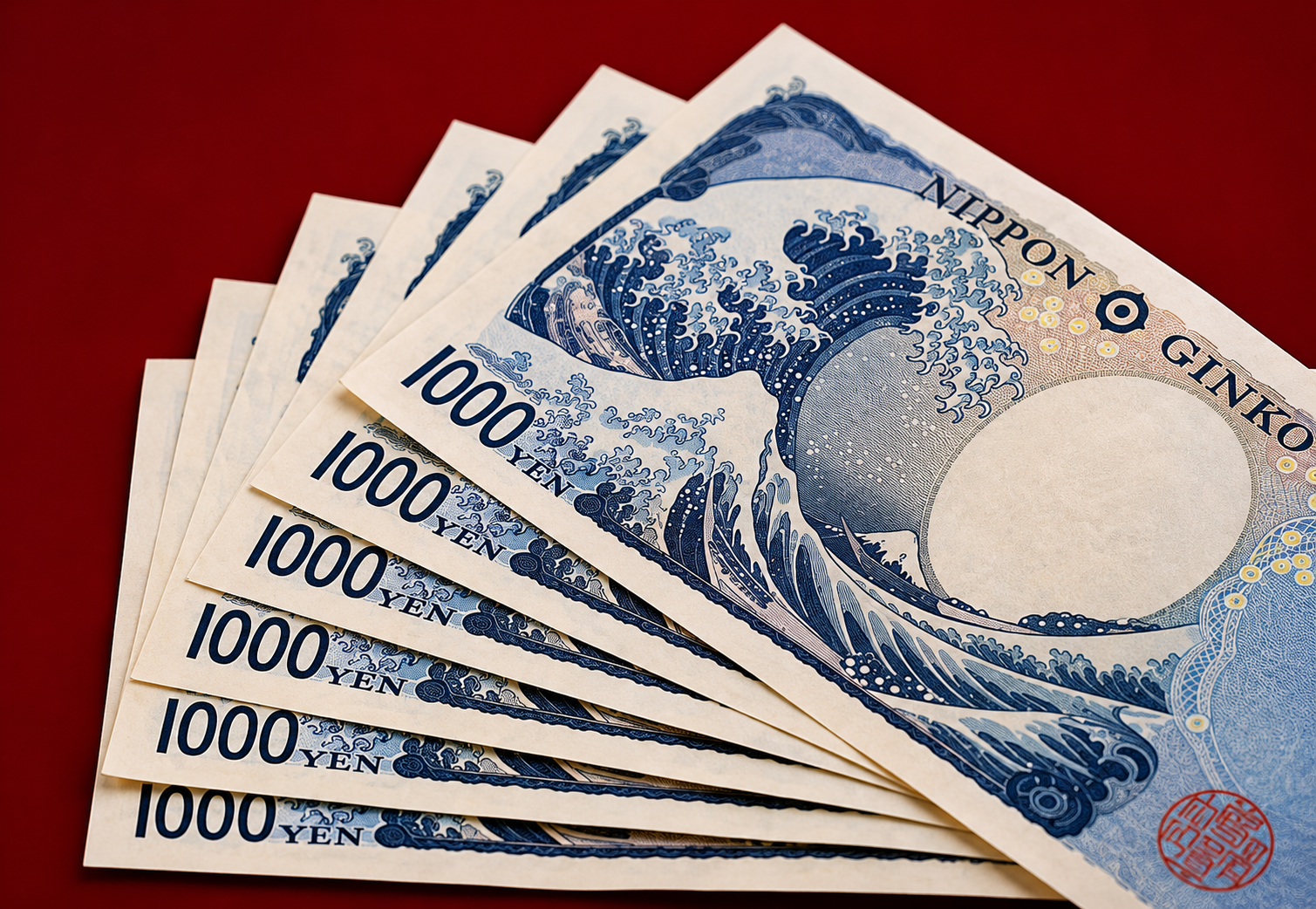
Japan spent a record $50 billion in one day in July to support the yen, as part of a $97.16 billion intervention campaign with the US. Despite the efforts, the yen remains weak at around 158.20 against the dollar.
By Megumi Fujikawa
Mon, Nov 9, 2026 < 1min
Japan spent a record $50 billion in one day during July to prop up the yen, underscoring an aggressive intervention campaign that included rare joint action with the U.S.
Ministry of Finance data on Monday showed that Tokyo bought a total of 15.399 trillion yen, equivalent to $97.16 billion, in July and August. It deployed about half of that on July 30 alone, spending 7.976 trillion yen.
The sum exceeded the amount spent in April and May, reflecting officials’ growing anxiety after the currency tumbled to a four-decade low near 164 against the dollar earlier this year, and highlighting the difficulty of turning the tide against persistent yen weakness.
Japan’s Finance Minister Satsuki Katayama and U.S. Treasury Secretary Scott Bessent confirmed coordinated intervention to support the yen in late July, the first such operation since 1998.
The unusual move initially boosted the yen, but the currency is still hovering around 158.20 against the dollar as growing expectations of further Federal Reserve rate increases reinforce views that the wide U.S.-Japan interest-rate gap is here to stay.
Bessent was outspoken about the yen’s sharp slide during the summer, expressing support for Tokyo’s steps to counter the currency’s undervaluation and noting its role in driving up domestic inflation.
His remarks fueled speculation about faster monetary tightening by the Bank of Japan, which raised interest rates to 1.25% in September and is expected to act again by year’s end.
The central bank has cited the yen’s weakness as one of the major factors affecting Japan’s economic and inflation outlook.



 4 min

 Copyright 2020, Dow Jones & Company, Inc. All Rights Reserved Worldwide.