Demand for Chinese Goods Is Soaring but Economic Momentum Slows at Home - Kanebridge News
Share Button

Demand for Chinese Goods Is Soaring but Economic Momentum Slows at Home

China’s trade surplus surpassed $1 trillion in the first 10 months of 2026, driven by a 35% annual surge in exports in October. However, the export boom contrasts with weakening domestic demand, as retail sales growth slowed to 0.4%, fixed-asset investment fell 8.1% and property investment dropped nearly 22%, highlighting growing challenges for the world’s second-largest economy.

By Hannah Miao
Mon, Nov 16, 2026 7:34pmGrey Clock 2 min

China’s trade surplus surged past $1 trillion last month, but at home, its economy is losing steam.

The world’s second-largest economy weakened on several fronts in October, reflecting the country’s split-screen growth. Soaring exports mask tepid consumer spending, falling investment and a real estate slump with no end in sight.

Retail sales, a gauge of household consumption, rose 0.4% last month from a year ago, slowing from 1.1% in September, according to government data released Monday. Fixed-asset investment fell 8.1% in the first 10 months of the year. Property investment alone dropped nearly 22% during the same period.

“The data continue to depict a two-speed economy,” Société Générale economists Michelle Lam and Wei Yao wrote in a report Monday.

External demand has driven much of China’s economic growth this year. Exports rose 35% from a year earlier in October in dollar-denominated terms, according to official data released last week. The country’s trade surplus for the first 10 months of the year reached $1.04 trillion.

The deluge of exports risks further stoking tensions with Beijing’s trade partners, particularly in Europe, where officials increasingly say that competition from China is hollowing out their local industrial sectors. The European Union and Beijing last month agreed to cap shipments of Chinese hybrid vehicles.

Still, global demand for Chinese goods—especially for tech products that power artificial intelligence—appears to show no signs of slowing. China’s exports of integrated circuits more than doubled in value in the first 10 months of the year, government data show.

That reduces the pressure on Beijing to step up support for the economy. China remains on track to hit its growth target for the year of between 4.5% and 5% gross domestic product growth, making it unlikely Beijing would rush to unleash new stimulus.

“Policymakers are likely to continue doing just enough to meet the growth target,” Macquarie economists Larry Hu and Yuxiao Zhang wrote in a report Monday.

Despite the export momentum, China’s industrial production growth decreased to 4.8% last month, from 5.5% growth in September.

The property market remains a drag on the economy. Home sales fell 14.1% in the January to October period from a year ago, widening from a 13.7% decline in the first nine months.

Meanwhile, China’s headline surveyed urban unemployment rate stood at 5.1% last month, roughly in line with September’s 5.2%.

MOST POPULAR

The Australian leather house has opened an immersive four-day pop-up in Manhattan, unveiling its Bloom Collection and redefining what a product launch can look like.

Following the successful launch of its Palais Collection, MAISON de SABRÉ has unveiled a new modular handbag system offering more than 720 styling combinations.

Related Stories
Money
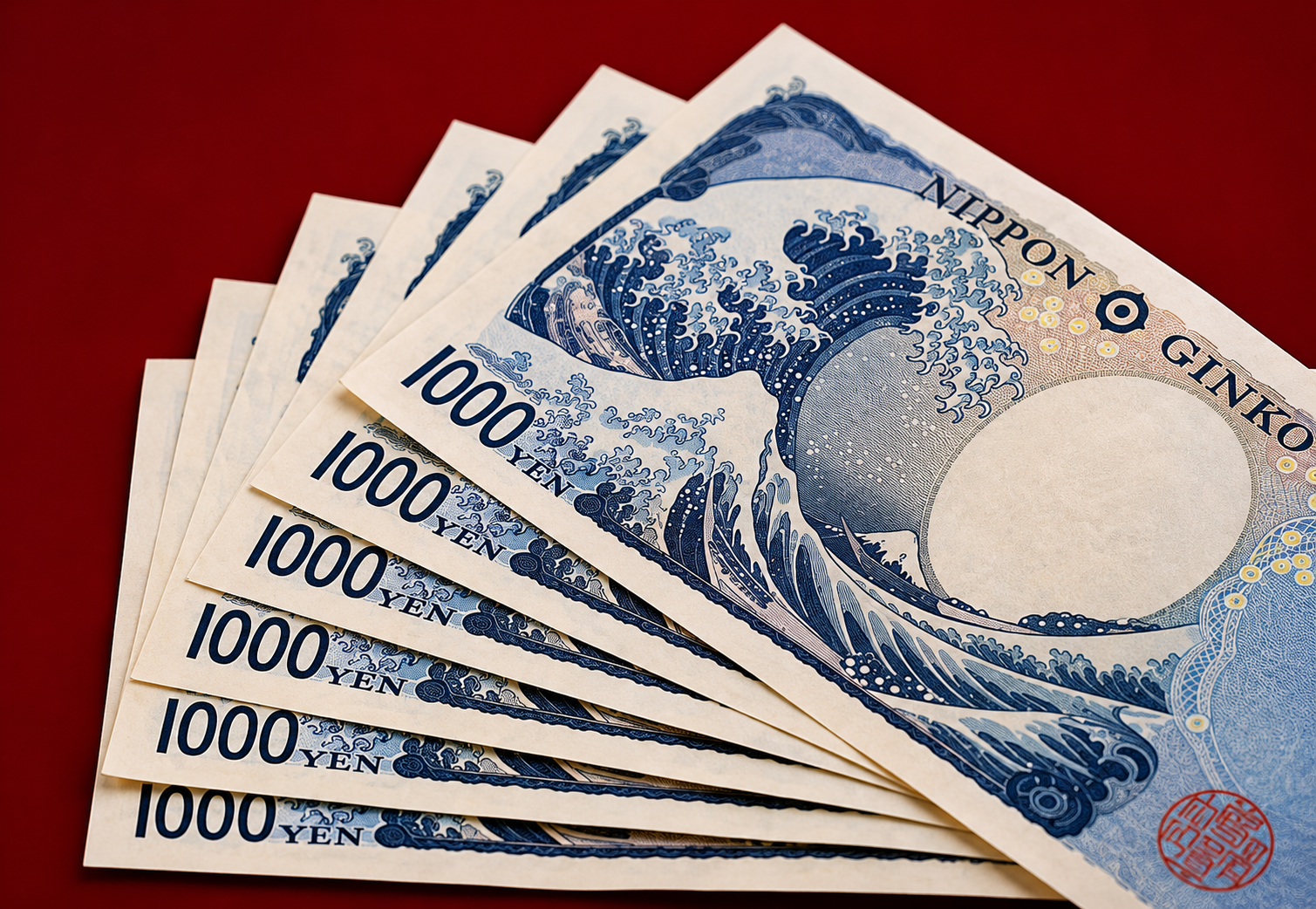
Japan Spent Record $50 Billion in Single Day to Bolster Yen
By Megumi Fujikawa 09/11/2026
Money
How Families Can Beat 7% Mortgage Rates and Lower Their Tax Bills
By Laura Saunders 09/10/2026
Money
The Stock Market’s Breezy Summer Is Over. Investors Beware.
By Hannah Erin Lang 08/09/2026

Japan spent a record $50 billion in one day in July to support the yen, as part of a $97.16 billion intervention campaign with the US. Despite the efforts, the yen remains weak at around 158.20 against the dollar.

By Megumi Fujikawa
Mon, Nov 9, 2026 < 1 min

Japan spent a record $50 billion in one day during July to prop up the yen, underscoring an aggressive intervention campaign that included rare joint action with the U.S.

Ministry of Finance data on Monday showed that Tokyo bought a total of 15.399 trillion yen, equivalent to $97.16 billion, in July and August. It deployed about half of that on July 30 alone, spending 7.976 trillion yen.

The sum exceeded the amount spent in April and May, reflecting officials’ growing anxiety after the currency tumbled to a four-decade low near 164 against the dollar earlier this year, and highlighting the difficulty of turning the tide against persistent yen weakness.

Japan’s Finance Minister Satsuki Katayama and U.S. Treasury Secretary Scott Bessent confirmed coordinated intervention to support the yen in late July, the first such operation since 1998.

The unusual move initially boosted the yen, but the currency is still hovering around 158.20 against the dollar as growing expectations of further Federal Reserve rate increases reinforce views that the wide U.S.-Japan interest-rate gap is here to stay.

Bessent was outspoken about the yen’s sharp slide during the summer, expressing support for Tokyo’s steps to counter the currency’s undervaluation and noting its role in driving up domestic inflation.

His remarks fueled speculation about faster monetary tightening by the Bank of Japan, which raised interest rates to 1.25% in September and is expected to act again by year’s end.

The central bank has cited the yen’s weakness as one of the major factors affecting Japan’s economic and inflation outlook.