Meta PR Goes Back to Playing Offense - Kanebridge News
Share Button

Meta PR Goes Back to Playing Offense

Meta is betting on a human-first AI future, but growing legal battles and declining public trust are putting Mark Zuckerberg’s vision to the test.

By Adam Levine
Thu, Aug 13, 2026 10:19pmGrey Clock 3 min

“Call us optimists. Call us dreamers. Call us whatever the hell you want, but we’re betting on people, and we like those odds. The future is for everyone.”

That ad copy is from the voice-over of a July Meta Platforms META -3.38%.

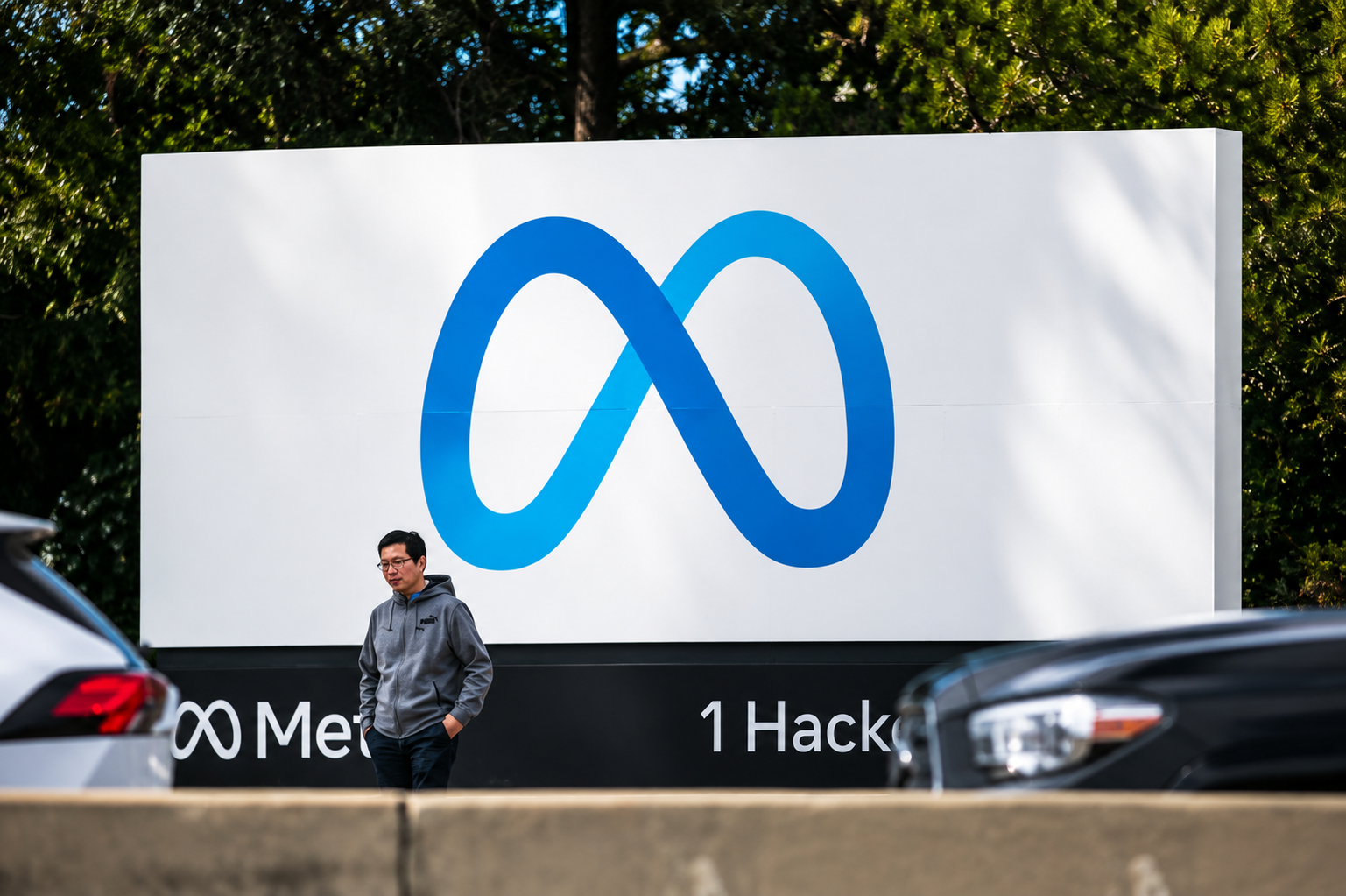
 spot that’s been part of a public-relations blitz to position Meta as the humanist AI company. The message was undercut by the ad’s inclusion of David Bowie’s “Five Years,” a brooding 1972 song about an impending apocalypse. But this week CEO Mark Zuckerberg left no ambiguity, publishing a 6,500-word manifesto—about 10 times the length of this newsletter—with a title that echoed the ad: “The Future is for Everyone.”

That seems to be Meta’s new tagline. In light of sinking public opinion and the company’s thousands of lawsuits from states, school districts, parents, and users, Meta’s public relations have been defensive. This push represents a return to offense, with a chance to distinguish Meta’s approach to AI from other labs like OpenAI, Anthropic, or SpaceX SPCX +9.65%.

“It is surprising that the discourse from many developing AI is so filled with doom,” Zuckerberg wrote. “I do not understand why anyone who believes that AI will eliminate most jobs and much of humanity’s relevance would rush to build that future.”

Zuckerberg frames what sort of future we build with AI as the central issue of our time. “We believe that delivering superintelligence to everyone is the way to answer this question,” he says. “This has the potential to begin a new era of personal empowerment where individuals can use this powerful new capability to reach their full potential, pursue their interests, and improve their lives and the world more than ever before.”

The flood of words belies the situation on the ground in mid-2026. Americans, at least, have a love-hate affair with social media. A November Pew Research Center poll reported that 71% of U.S. adults used Facebook, and 51% used Instagram. Worldwide, 3.6 billion people use at least one Meta app every day.

But in a Reuters/Ipsos poll conducted in July and August, 61% of respondents said they wanted more government oversight of social media, and two-thirds supported laws to keep children under 16 years old off the platforms. When it comes to Meta in particular, in the 2026 Axios Harris 100, an annual poll about corporate reputation, Meta placed 96th out of 100. It’s only above two other social media companies, Chinese ultracheap retailer Temu, and Spirit Airlines, a defunct air carrier. Regarding ethics, Meta came in last, and it was only ahead of TikTok in trust.

The steady drip of headlines in the teen social media trials isn’t helping. Last week, Meta lost a judgment in New Mexico state court that raised their liability in that relatively small jurisdiction to nearly $1 billion dollars. On Wednesday, jury selection began for a federal case with four states suing Meta over addictive product design, and false marketing that said its platforms were safe for teenagers. In July, Meta claimed that the states are asking for a total of $1.4 trillion in damages, in addition to design changes in the apps. This is part of a multidistrict litigation, where thousands of federal trials with social media defendants are coordinated in Judge Yvonne Gonzalez Rogers’ district courthouse in Oakland, Calif.

There is a separate such group of thousands of cases in California state court, mostly with individual plaintiffs. The steady drip of bad headlines from the courts will continue unless Meta decides to settle en masse.

Meanwhile, in the second quarter, Meta booked “$2.40 billion of charges related to legal proceedings,” according to its quarterly filing. That may be just the beginning.

Zuckerberg spent 6,500 words getting his utopian message out, but I can sum it up in two: Trust us. The evidence is that Meta has a long way to go to win back that trust.

MOST POPULAR

The Australian leather house has opened an immersive four-day pop-up in Manhattan, unveiling its Bloom Collection and redefining what a product launch can look like.

Following the successful launch of its Palais Collection, MAISON de SABRÉ has unveiled a new modular handbag system offering more than 720 styling combinations.

Related Stories
Lifestyle
Why Apple Stock Just Got Downgraded to Sell
By 11/08/2026
Lifestyle
Helicopter Parents Are Co-Piloting Their Adult Children’s Careers
By Ray A. Smith 03/08/2026
Lifestyle
The Rise of Million-Dollar Companies With Just One Employee
By 30/07/2026

Apple shares came under pressure after Jefferies downgraded the stock to Underperform and cut its price target to $263.66, citing concerns that plans for a highly anticipated all-glass iPhone have been scrapped. Analyst Edison Lee pointed to production challenges, rising memory costs and uncertainty around Apple’s AI strategy, adding to recent concerns over the tech giant’s growth outlook.

By
Tue, Aug 11, 2026 2 min

Apple AAPL -1.53% stock was downgraded by a major Wall Street firm on Monday, as an analyst predicted that a radical iPhone redesign has been scrapped.

Jefferies analyst Edison Lee cut his rating on Apple to Underperform—generally graded as a moderate Sell rating—from Hold. He also slashed his price target to $263.66 from $285.56, placing it among the lowest on Wall Street.

The downgrade hinges on the suspected cancellation of Apple’s all-glass iPhone. Although the project was reported to be in development as far back as 2025 and rumored to launch as early as 2027, Apple never commented on the speculation. However, the company quietly filed a patent application for a “six-sided glass enclosure” in 2019.

While Jefferies once viewed the release of an all-glass iPhone as plausible, Lee believes development has come to a halt. According to the analyst, supply-chain checks suggest the project was canceled due to “poor production yield.” This refers to the percentage of defect-free units successfully generated during manufacturing.

Lee views the decision as “a major setback to efforts to bring in higher-priced iPhones amid soaring memory costs.” Had it launched in September 2027 to commemorate the iPhone’s 20th anniversary, the device would have carried an estimated blended retail price of $2,060—higher than the average price of any previous model.

“More importantly, we believe the plan was to extend the all-glass features to future iPhone Pro and Pro Max models, further raising their average selling price and margin,” Lee wrote. He believes an all-glass model would have been a crucial defense against soaring memory costs, warning that Apple otherwise faces lower prices for years to come.

In the same breath, the analyst provided a conservative outlook on both Apple’s AI strategy and component costs for the iPhone 19 Pro Max, which is slated for release in 2027. Other supply-chain checks suggest that Apple is considering an upgrade for the iPhone 19 Pro Max, potentially increasing its memory to 16 gigabytes from 12 gigabytes.

In Lee’s view, the slow rollout of Apple Intelligence makes it difficult for Apple to justify the expense of equipping its phones with more memory. Extra RAM is needed to run complex AI models directly on a device.

Apple shares dropped 1.5% on Monday as the tech-heavy Nasdaq Composite COMP -0.32% index fell 0.3%. Heading into the session, Apple had gained over 15% in 2026, marginally outperforming the index.

The stock’s momentum stalled last month when underwhelming fiscal third-quarter earnings triggered a selloff that erased $359 billion in market capitalization, allowing Nvidia  NVDA -2.86% to overtake Apple as the world’s most valuable company.

Lee isn’t the only analyst to sour on Apple stock in recent weeks. KeyBanc analyst Brandon Nispel downgraded shares to Underweight from Sector Weight in July, arguing that Apple’s growth was beginning to stall following a boost in 2025. Sluggish iPhone sales could drag down other hardware categories, Nispel wrote, making the stock look “too expensive” over time.

Even with this recent shift in sentiment, Wall Street hasn’t lost faith in Apple. Of 51 analysts surveyed by FactSet, 32 rate the stock a Buy or the equivalent. Fourteen maintain a Hold rating, while just five—Lee and Nispel included—have issued a negative opinion on the shares.