The Global Economy Looks Vulnerable to an AI Bust - Kanebridge News
Share Button

The Global Economy Looks Vulnerable to an AI Bust

The global economy is increasingly exposed to the risks of an AI slowdown, as data-centre investment fuels growth, trade and technology exports worldwide. While Asian economies benefit from booming chip and hardware demand, a pullback in AI spending could trigger market losses, weaken global trade and increase recession risks.

By Jason Doughlas
Thu, Nov 12, 2026 10:18pmGrey Clock 4 min

A message from the violent swings in stock markets over the past week: The fallout from an artificial-intelligence bust wouldn’t stop at the U.S.’s shores.

The AI build-out has been an engine of growth not just for the U.S. this year but for the whole global economy. Squeezed by the energy crunch caused by the Iran war, the world has relied heavily on U.S. data-center investment to power otherwise lackluster growth.

Global trade has thrived as Asian economies such as China, Taiwan and South Korea have enjoyed booming exports of computer chips, server racks and electronic equipment to feed ravenous demand for computing power in the U.S.

The Silicon Valley bounty is spreading as other economies join the party. Assembly hubs such as Vietnam and Mexico are seeing exports take off. Malaysia, Thailand and Australia are building data centers of their own. Europe’s industrial giants are supplying the power and cooling systems that make the AI revolution possible.

Yet the anxiety that spread through global markets in the aftermath of the U.S. midterm elections shows this growing dependency on Silicon Valley has a downside.

A slowdown in AI investment would punish exports in economies that in many cases show few other signs of growth. A sustained stock slide would crush mom-and-pop investors all over the world who have piled into technology stocks in anticipation of bumper returns. Overstretched budgets mean governments have limited room to respond with more spending.

Economists calculating what might happen if the pace of investment slows or the AI boom turns to full-blown bust say the only real question is how severe the global consequences will be.

“There is very little that can be done to prevent a global recession should the AI boom collapse,” said Frederic Neumann, chief Asia economist at HSBC in Hong Kong.

Stock markets have been on a wild ride since the Democrats’ victory in the U.S. midterm elections sparked concerns that Congress will hit the brakes on data-center development.

The latest upset in the industry has been the alleged spying scandal engulfing Nvidia, the linchpin of the AI ecosystem because of its deep pockets and advanced chips.

Stocks have clawed back some losses in recent days, moves that suggest many investors think the selloff is overdone. Even so, key stocks and indexes remain well below recent peaks. The tech-heavy Nasdaq index closed Wednesday 8% below its year-to-date high. Japan’s Nikkei index is down 16%, and South Korea’s Kospi, home to major memory-chip maker Samsung Electronics and SK Hynix, is down 43%.

For now, the stock-market gyrations haven’t spilled over into real economic activity, with global data pointing to the AI boom still going strong.

Jensen Huang, CEO of NVIDIA, gives a keynote address on stage in front of screens displaying partner company logos.
Jensen Huang is under scrutiny after an affair with an alleged spy. Sean Gallup/Getty Images

Asian economies are still seeing bumper export growth, with many of the gains driven by surging prices for chips and other hardware. China’s exports were up 35% year-over-year in October, according to figures from data provider CEIC. South Korea’s were up 93%, with Japan, Taiwan, Singapore and others also posting double-digit gains.

Economists at Capital Economics said the export bonanza means global trade is on track for its best spell of annual growth this year since the days of hyperglobalization in the early 1990s, excluding the big rebounds after Covid-19 and the 2008-09 financial crisis.

But the consulting firm warned that as much as 80% of recent export growth has been concentrated in AI-related goods, leaving global trade vulnerable to any change in U.S. spending on data centers. China, South Korea and other major economies are beset by weak consumption, meaning a drop-off in trade would have an outsize hit on growth.

Political and regulatory hurdles could drag on data-center investment. So, too, could rising interest rates or disappointments on earnings if AI firms’ revenues fail to keep up with outlays. The AI splurge already eclipses past infrastructure booms such as the railroads, and even without external pressure it might struggle to maintain that breakneck rate of growth.

As data-center investment slows, “AI capex will turn from a major prop to a drag on world trade,” Marcel Thieliant, head of Asia-Pacific at Capital Economics, said in a report.

Some economists have looked back to the dot-com bubble of the early 2000s as a yardstick to measure the possible costs to the global economy of an AI blowup.

In that episode, U.S. business investment sank and stocks crashed, hurting U.S. consumer spending and crushing imports.

Activists hold signs reading "Stop Data Centers" and "Off Fossil Fuels" during a protest.
Data centers were an issue in the U.S. midterm elections. Michael Nigro/Pacific Press/ZUMA Press

As a share of gross domestic product, U.S. imports of IT-related equipment fell 55% in two years from their mid-2000 peak, according to Oxford Economics—a drop that hit Asian and other economies that were suppliers of the goods. Global trade plummeted, and world growth in 2001 collapsed to just 2%, consistent with a global recession.

The globalized financing of the AI boom would in a bust spread financial pain around the world, adding to the damage from a steep fall in trade. Gaurav Ganguly, head of international economics at Moody’s Analytics in London, said the world would struggle to absorb a sharp AI stock slide on top of an oil shock, tariffs and rising interest rates.

“The result could be a severe economic shock with global recessionary consequences,” he said.

MOST POPULAR

The Australian leather house has opened an immersive four-day pop-up in Manhattan, unveiling its Bloom Collection and redefining what a product launch can look like.

Following the successful launch of its Palais Collection, MAISON de SABRÉ has unveiled a new modular handbag system offering more than 720 styling combinations.

Related Stories
Lifestyle
The Parents Suing Schools Because Their Kids Got Bad Grades
By Zusha Elinson 10/11/2026
Lifestyle
How to Leave Your Career While Keeping the Door Open to a Comeback
By Callum Borchers 05/11/2026
Lifestyle
Apple’s Growth Machine Is Slowing. High Prices Might Not Save It.
By Rolfe Winkler 03/11/2026

Grade disputes are increasingly taking U.S. parents from the classroom to the courtroom. A growing number are challenging teachers’ assessments, with some cases escalating into lawsuits over report card comments, academic performance and even accusations of AI use.

By Zusha Elinson
Tue, Nov 10, 2026 4 min

When Weiwei Luo saw the report card saying her son needed to work on “cooperating with others,” the Silicon Valley mom demanded it be changed. When the school district declined, she called her lawyer.

What began last fall as a playground spat between third-graders has now escalated into a courtroom brawl: In a lawsuit filed in October, Luo calls the teacher’s comments “inaccurate and unsubstantiated,” and is asking a judge to order the district to rehear her case.

Time was when parents disciplined children for bringing home bad marks. Today, they often take a more adversarial approach, educators say, leaning on teachers and administrators to change grades in disputes that can even spill into court.

Ever since remote learning brought classrooms into living rooms during the pandemic, U.S. parents have grown more involved in and less enchanted with schools, according to numerous surveys. That includes scrutinizing how teachers evaluate their children.

Four in 10 American teachers report facing pressure from moms and dads to change grades, according to a 2024 EdWeek survey of a nationally representative sample of 1,500 educators. Affluent parents, teachers noted, were more likely to complain.

Esther Wojcicki, a retired Palo Alto teacher and author of “How to Raise Successful People,” said parents have a newfound sense of self-righteousness in protecting their children. “Especially if they get a bad grade,” she added, “the parents go to battle for them.”

That pushback is pushing some teachers over the edge. In Nashville, Tenn., Samira Hardcastle, a teacher of the year, became an internet sensation this year when she quit. Her resignation letter accused district officials of fabricating a grade to “appease an irate parent” whose child had repeatedly failed to turn in an art assignment in Hardcastle’s class at John F. Kennedy Middle School.

“There’s no accountability, so they learn that it doesn’t matter what their work ethic is,” Hardcastle told The Wall Street Journal. “That’s going to be a tough lesson when they get into the real world and realize it doesn’t work that way.”

A spokesman for Metropolitan Nashville Public Schools said it wasn’t “accurate to characterize this as the district simply changing a student’s grade at a parent’s request.” Sean Braisted said administrators stepped in to give the student another chance to finish the assignment, and independently graded the project.

Fueling this friction is the narrow path into a top U.S. university, argues Rowena Chiu, a Palo Alto school board member and mother of four. “To get your child into an elite university these days seems more impossible than ever,” she said. “I think that does trickle down into nervousness about a particular grade.”

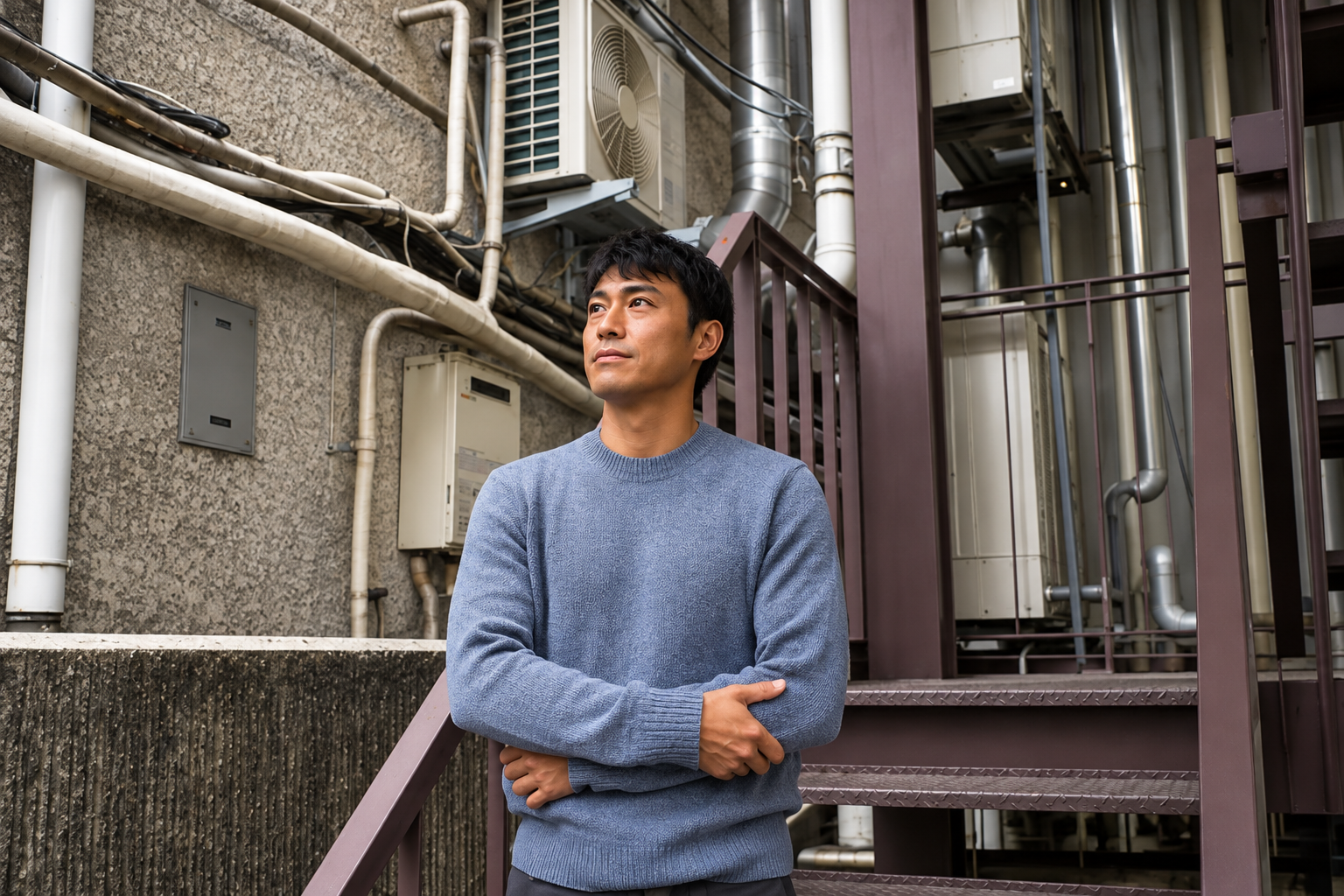
Takashi Kato poses on stairs.
Takashi Kato, shown in 2019, sued his son’s school district over an essay flagged as ‘76% AI.’ Kentaro Takahashi/Bloomberg News

In one recent case, Takashi Kato, the founder and CEO of a Silicon Valley artificial-intelligence startup, sued the Palo Alto Unified School District in federal court after AI-detection software flagged an essay his son turned in as “76% AI.” The tenth-grade English teacher let him redo the assignment, on Arthur Miller’s “The Crucible,” but she gave him a D on the retake, bringing his final grade down to a C.

Kato fought back. He submitted to the district a 1,162-page packet showing the sophomore’s “drafting and revision process,” which he argued proved his son had done nothing wrong, the suit said. The suit said that detection software can be biased against non-native English writers. He offered to accept a B to resolve the dispute.

The district wasn’t persuaded and in March, Kato hired a lawyer. In his lawsuit, he argued that an “academic dishonesty” record could affect college admissions and more. After months of litigation, Kato dropped the suit in September. Kato declined to comment.

“If you’re going to accuse a student of using AI you need to understand the impact it has on the student and give them the proper due process,” said Evan Nelson, Kato’s attorney. “It was never about the grade and it was never about the money, it was all about trying to fix this.”

Lynette White, a spokeswoman for Palo Alto schools, said the district doesn’t comment on litigation, but added there was no settlement.

Also in Palo Alto, the Walter Hays Elementary School strife included a game of tag at recess. A third-grade boy stuck out his tongue at another student who kicked him, and then grew frustrated when his teacher didn’t believe the kick was intentional, according to court filings.

On his report card, the teacher wrote that the boy was “working on his responses to peers when he is frustrated” and “developing his ability to listen to others’ perspectives and collaborate with humility.”

The mom, Luo, hired a lawyer and complained to the school board that the incident didn’t justify the comments. The board disagreed, saying the remarks “reflected the teacher’s observations, were within her competence, were substantiated, and were not misleading,” according to the suit.

But Luo claims the hearing wasn’t fair because her attorney was disconnected from the video call. She didn’t respond to requests for comment and her lawyer declined to comment.

White, the district spokeswoman, said there is a process for parents to challenge grades. “The district follows that process and will respond to the petition in court,” White said.