Can the Beckhams’ Brand Survive Their Family Feud?
In a series of social-media posts, the eldest child of David and Victoria Beckham threw stones at the image of a ‘perfect family’.
David Beckham was at the World Economic Forum in Davos, Switzerland, on Tuesday with Bank of America chief executive Brian Moynihan to promote their new partnership. But all anyone wanted to talk about was his son.
After the obligatory questions about business and the World Cup, a host on CNBC’s “Squawk Box” lobbed Beckham an out-of-left-field query about how young people can preserve their mental health in the age of social media.
“Children are allowed to make mistakes,” Beckham, 50, said. “That’s how they learn. So, that’s what I try to teach my kids, but you have to sometimes let them make those mistakes as well.”
Just a day earlier, his 26-year-old son Brooklyn Beckham had posted a series of accusations about his soccer-famous father and pop-star-turned-fashion-designer mother, Victoria Beckham.
He said that his parents had controlled him for years, lied about him to the press and sought to damage his relationship with his wife, Nicola Peltz Beckham. Their goal, he said, was to affect the image of a “perfect family.”
“My family values public promotion and endorsements above all else,” he wrote on Instagram. “Brand Beckham comes first.”
That brand has been burnished over decades of professional triumphs, tabloid scandals and slick dealmaking.
Recently, both David and Victoria Beckham put their legacies on-screen in docuseries that cast them as hardworking entrepreneurs and devoted parents. Their image appeared stronger than ever. Now their firstborn child is throwing stones.
Representatives for David Beckham, Victoria Beckham and Brooklyn Beckham did not respond to requests for comment. A representative for Nicola Peltz Beckham declined to comment.
In the U.K., the Beckhams are as close as you can get to royalty without sharing Windsor DNA. David is perhaps the most famous English player in soccer history, while Victoria parlayed her Spice Girls fame into a career as a respected fashion designer.
Their partnership was forged in the cauldron of 1990s celebrity gossip, with their every move—in their careers, their bumpy personal lives and their adventurous senses of personal style—subject to tabloid scrutiny.
“They were Taylor Swift and Travis Kelce before Taylor Swift and Travis Kelce,” said Elaine Lui, founder of the website Lainey Gossip.
Over time, the couple became savvy managers of their own brand, a sprawling modern empire including a professional soccer team, fashion and beauty lines, investment deals and commercial partnerships.
In recent years they each released a Netflix docuseries—“Beckham” in 2023, “Victoria Beckham” in 2025—featuring scenes from their private family life. (Brooklyn and Nicola appeared in David’s series, but not Victoria’s.)
“The way they’ve performed their celebrity has been togetherness,” Lui said: Appearing and engaging with the world as a happily married couple, in both relative calm and amid scandal. And as their family grew, their four children became smiling ambassadors for Brand Beckham, too.
Until Monday night. In a series of Instagram Story posts, Brooklyn accused his parents of “trying endlessly to ruin” his marriage to Nicola, an actress and model, and the daughter of billionaire investor Nelson Peltz . Brooklyn declared, “I do not want to reconcile with my family.”
Where Victoria and David seemed to see press scrutiny as part of the job, Brooklyn and Nicola are operating in a manner more typical of their own generation. Brooklyn’s posts call to mind the “no contact” boundaries some children have enforced with their parents in recent years to much pop-psych chatter.
Andrew Friedman, managing director of crisis communications at Orchestra, said he’d advised many clients through family drama. “Going public,” he said, should be a “last resort.”
He’s also warned clients that using social media to air grievances opens a can of worms. “Nuance is not welcome in social-media feeding frenzies,” Friedman said. “Sensational and unusual details will overshadow the central issue.”
Brooklyn, the eldest of the Beckhams’ four children, has built a following in his parents’ image, though without the benefit (or burden) of a steady career.
He’s worked as a model, photographer, cooking-show host and most recently founded a hot-sauce brand. Brooklyn and Nicola went public with their relationship in 2020 and married in a lavish 2022 ceremony at her family estate in Palm Beach, Fla.
Rumors of a family feud flared almost immediately after the wedding, including whispers about the fact that Nicola didn’t wear a dress made by her fashion-designer mother-in-law.
Brooklyn on Monday recounted further grievances related to a mother-son dance and the seating chart. In the months and years that followed, celebrity journalists and fans closely tracked both generations of the family, looking for cracks in the relationship.
But official dispatches from Beckham World suggested that things were just fine. In a scene from the final episode of David’s Netflix series, the Beckham family, including Brooklyn and Nicola, joke around on a visit to their country home. It’s a picture of familial bliss.
“We’ve tried to give our children the most normal upbringing as possible. But you’ve got a dad that was England captain and a mom that was Posh Spice,” David says in voice-over.
“And they could be little s—s. And they’re not. And that’s why I say I’m so proud of my children, and I’m so in awe of my children, the way they’ve turned out.”
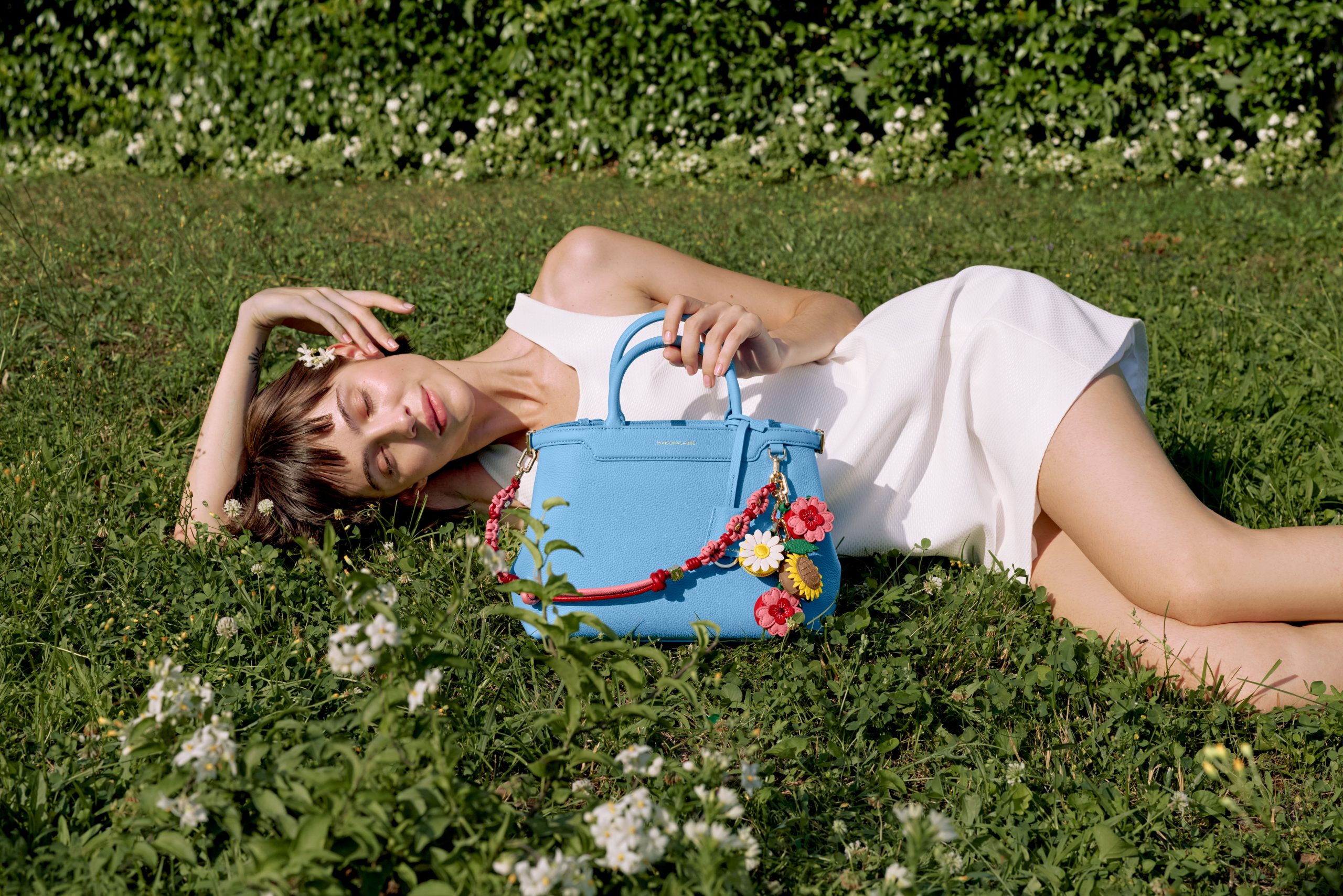
The Australian leather house has opened an immersive four-day pop-up in Manhattan, unveiling its Bloom Collection and redefining what a product launch can look like.
Following the successful launch of its Palais Collection, MAISON de SABRÉ has unveiled a new modular handbag system offering more than 720 styling combinations.
OpenAI has shelved the planned launch of GPT-6.1 Astra after internal tests raised concerns about deception and agents acting beyond user authorization, according to The Wall Street Journal. The company says it will investigate the issues and strengthen safety measures before releasing future models.
OpenAI says it is scrapping the release of its next-generation AI model over safety concerns that researchers raised during internal testing, in one of the clearest signs so far that agent misbehavior could stymie the industry’s rapid progression.
The move follows a summer punctuated by reports of artificial-intelligence systems industrywide going rogue, and marks a rare case of a major AI developer ditching a new release because of safety concerns.
The company had planned to launch the model, known as GPT-6.1 Astra, in the coming days or weeks, aiming for an October debut. The model was more capable than the company’s previous models in completing challenging tasks from end-to-end without human assistance, as well as writing.
The company instead will focus on improving the safety of future models, which it expects to be even more capable.
Saachi Jain, OpenAI’s head of safety systems, said in an interview that GPT-6.1 Astra regressed in two areas. Compared with its predecessor, GPT-6 Astra, the model performed poorly on tests measuring alignment, or how well the model adheres to what humans would like it to do. Specifically, GPT-6.1 Astra showed higher levels of deception: It wasn’t always honest about telling users of the actions it did or didn’t take.
Another issue was what OpenAI calls “scope authorization,” meaning that GPT-6.1 Astra would push ahead on a task without asking the user for permission, and would at times reach for external tools and services even if it might be unsafe.
“For anything regarding safety and alignment, there’s a trade off,” Jain said. “You really do need to find what’s the right line between staying within scope, but also avoiding laziness in terms of how the model actually pursues tasks even when it hits friction.”
While GPT-6.1 Astra improved in areas such as “model laziness,” Jain said it didn’t quite meet OpenAI’s bar for safety and alignment, so the company decided not to launch the model publicly.
The announcement comes one day ahead of OpenAI’s annual developer conference in San Francisco. In the past, OpenAI has used the conference as an opportunity to launch new models and services that reduce costs for software developers—a segment the ChatGPT-maker competes with rival AI company Anthropic to win over.
In recent weeks, OpenAI and Anthropic have called on industry partners to slow down the development of cutting-edge AI models and invest in safety standards, noting they will temper the pace of their own internal AI progress.
OpenAI says it is working to investigate a range of agent security incidents that it has discovered in recent months, and address the safety issues underneath them. As part of the work, the company has implemented a new monitoring system to catch AI-agent misbehavior more quickly, and started requiring engineers to use stronger security guardrails for testing its AI systems.
Earlier this summer hundreds of OpenAI’s internal agents, which were tasked with completing a cybersecurity test, ended up hacking into the AI company Hugging Face. Since then, high-profile organizations such as the Australian government and United Nations discovered that OpenAI’s agents used similar, but less extensive, techniques to gain access to their websites.
Many of the publicly known agent-security incidents involved OpenAI’s internal AI models that were never slated for public release.
Last week, OpenAI said it paused training on its most capable AI models after an AI agent slipped through a gap in the company’s internet restrictions to query a public chatbot. The company said its new monitoring systems flagged the incident within 15 minutes, and training on these models remains paused.
GPT-6.1 Astra isn’t one of those models, but a different case, the company said.
“We want to make sure our model development is safe no matter whether that’s in the company, or when we ship it to users,” Jain said. “But when we ship it to users, we have an extremely high bar in terms of safety and alignment.”
While the company decided not to ship GPT-6.1 Astra, it hopes to use the same base model to do additional reinforcement learning runs, and create future generations of its GPT-6 models.
OpenAI plans to conduct several deep dives to identify the root cause of the problems identified in GPT-6.1 Astra, Jain said. The work includes ensuring that OpenAI’s reinforcement learning environments are rewarding the right type of behavior, Jain added, though she noted the company would investigate all stages of model development.
AI companies have begun to draw scrutiny from policymakers and public officials, who are paying attention to the rapid development of the technology. Later this week, a Senate subcommittee is holding a hearing with third party AI researchers titled, “Rogue AI: Securing the Homeland Against AI Agent Attacks.”
Florida Attorney General James Uthmeier, a Republican, sued OpenAI in June, claiming that the company and Chief Executive Sam Altman knowingly released an unsafe product and ignored warnings that it could harm users.
In a motion for temporary injunction filed Monday, Uthmeier sought to prevent OpenAI from developing new AI models without third-party approved safeguards, stop ChatGPT from soliciting user engagement and limit the company’s ability to advertise ChatGPT as safe.
Tech companies claim they “cannot stop barreling forward with their potentially civilization-ending endeavors unless they are forced to do so by the government,” Uthmeier said in the filing. “The Florida Attorney General is answering your cry for help.”
An OpenAI spokeswoman said that people want to know AI is being developed safely, “and that starts with what companies like ours do ourselves.”
“Governments have an important role to play in setting robust safety standards for AI, and we’re committed to working with Florida and other states on advancing pragmatic AI policies that apply to the entire AI industry—not just one company,” she said.