Casa Campana Brings Mediterranean Chic To The Tweed Coast Hinterland
Step inside this unique take on a family home.
By Terry Christodoulou
Fri, Apr 1, 2022 12:52pm 2 min
2 min
2 min


Step inside this unique take on a family home.
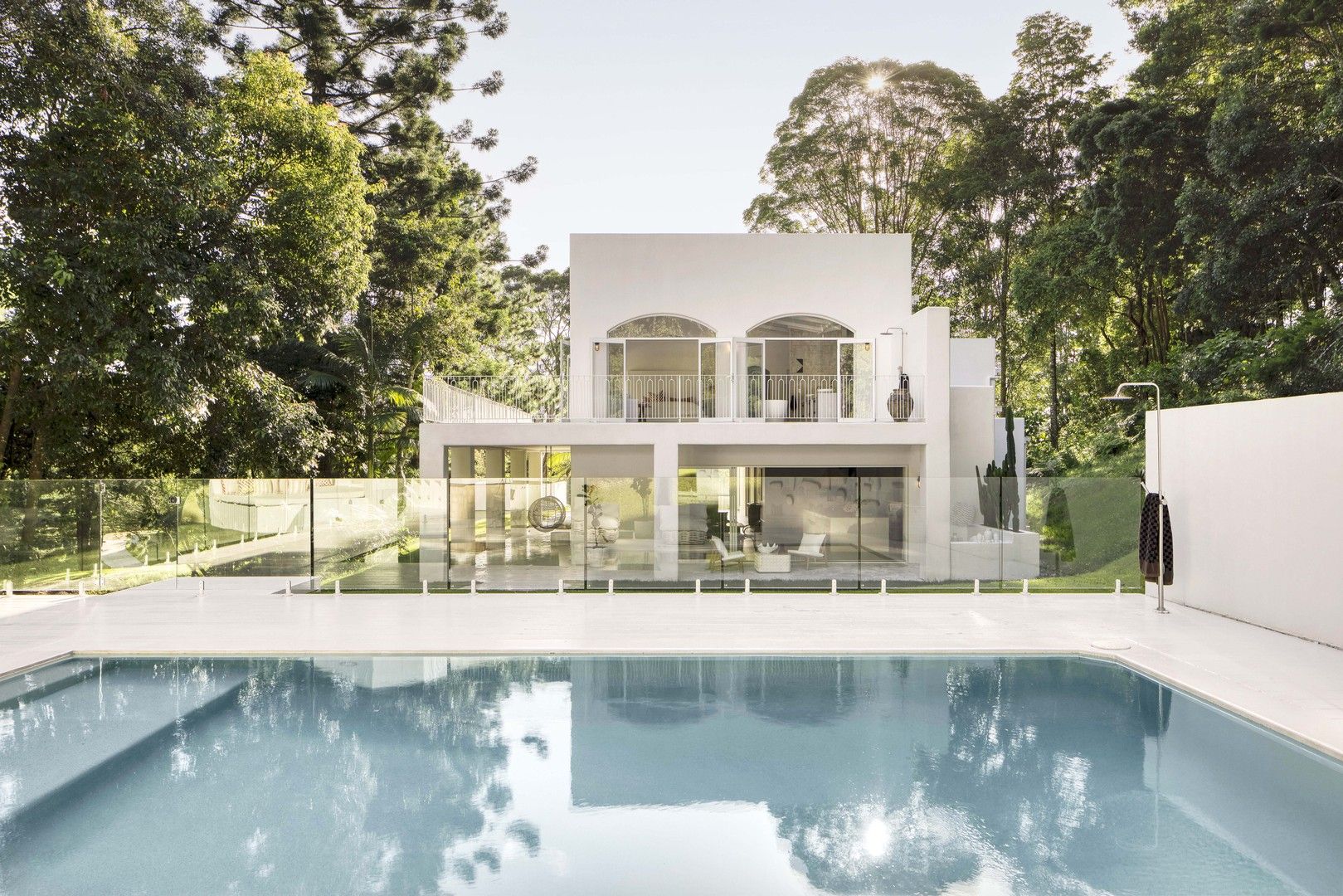
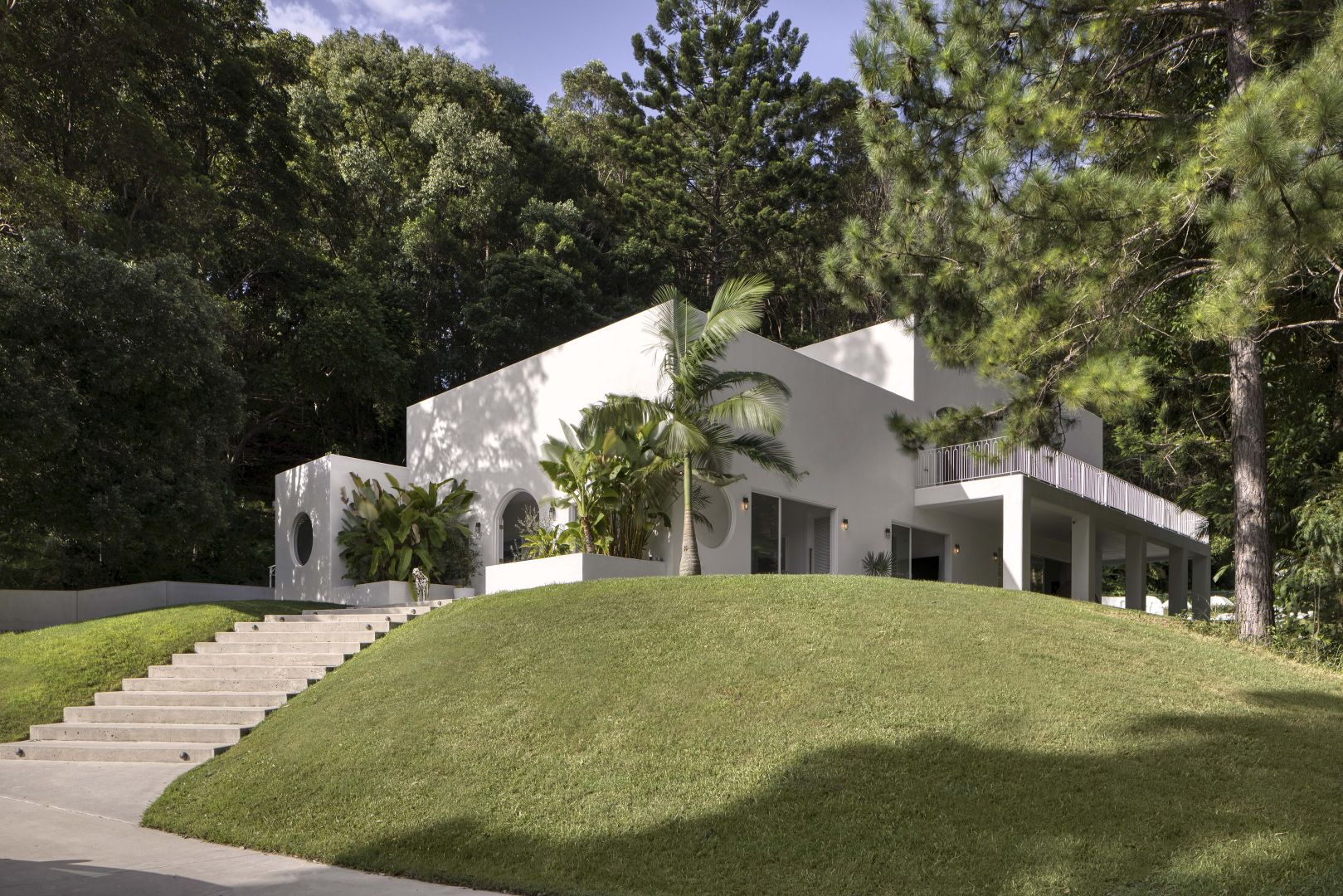
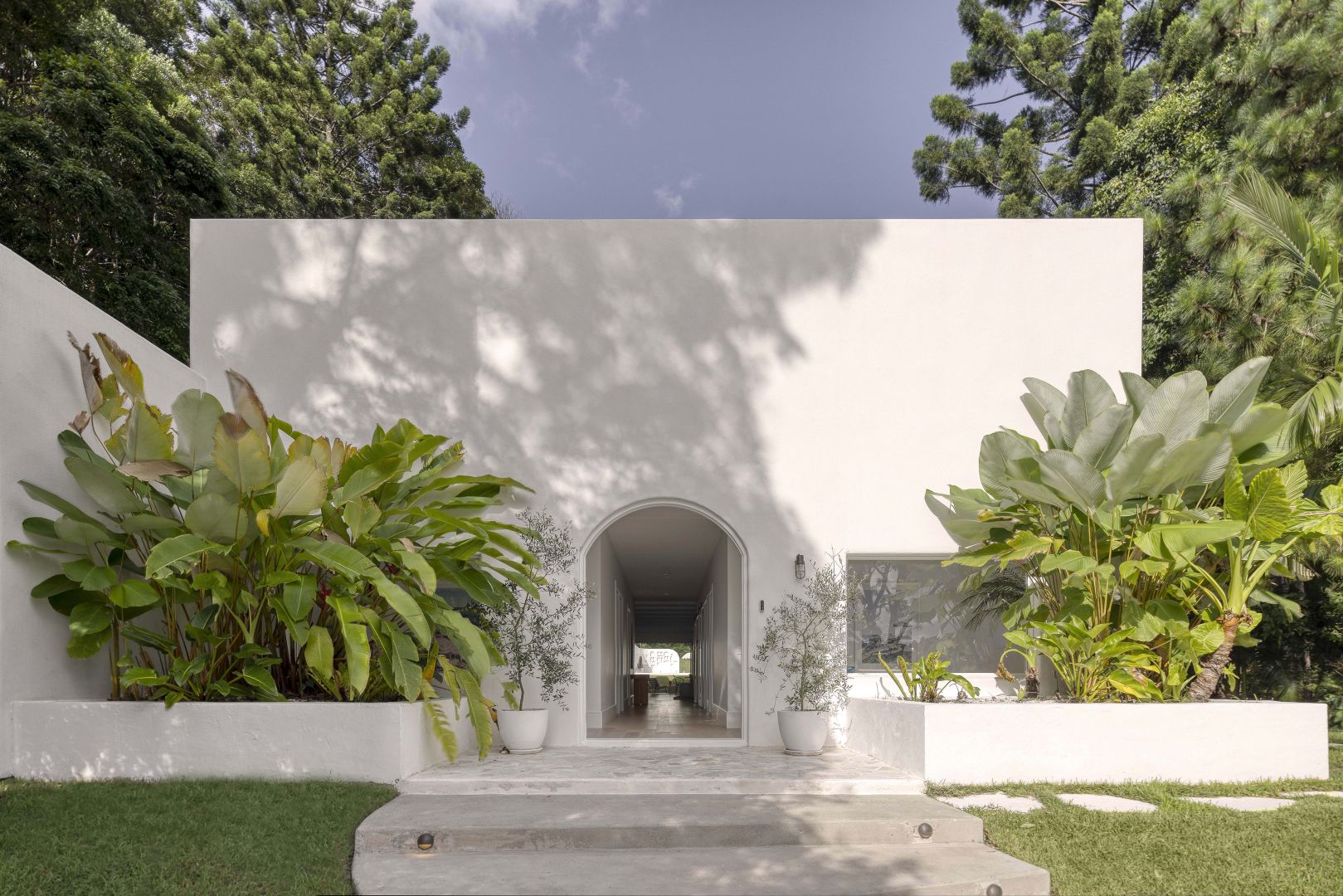
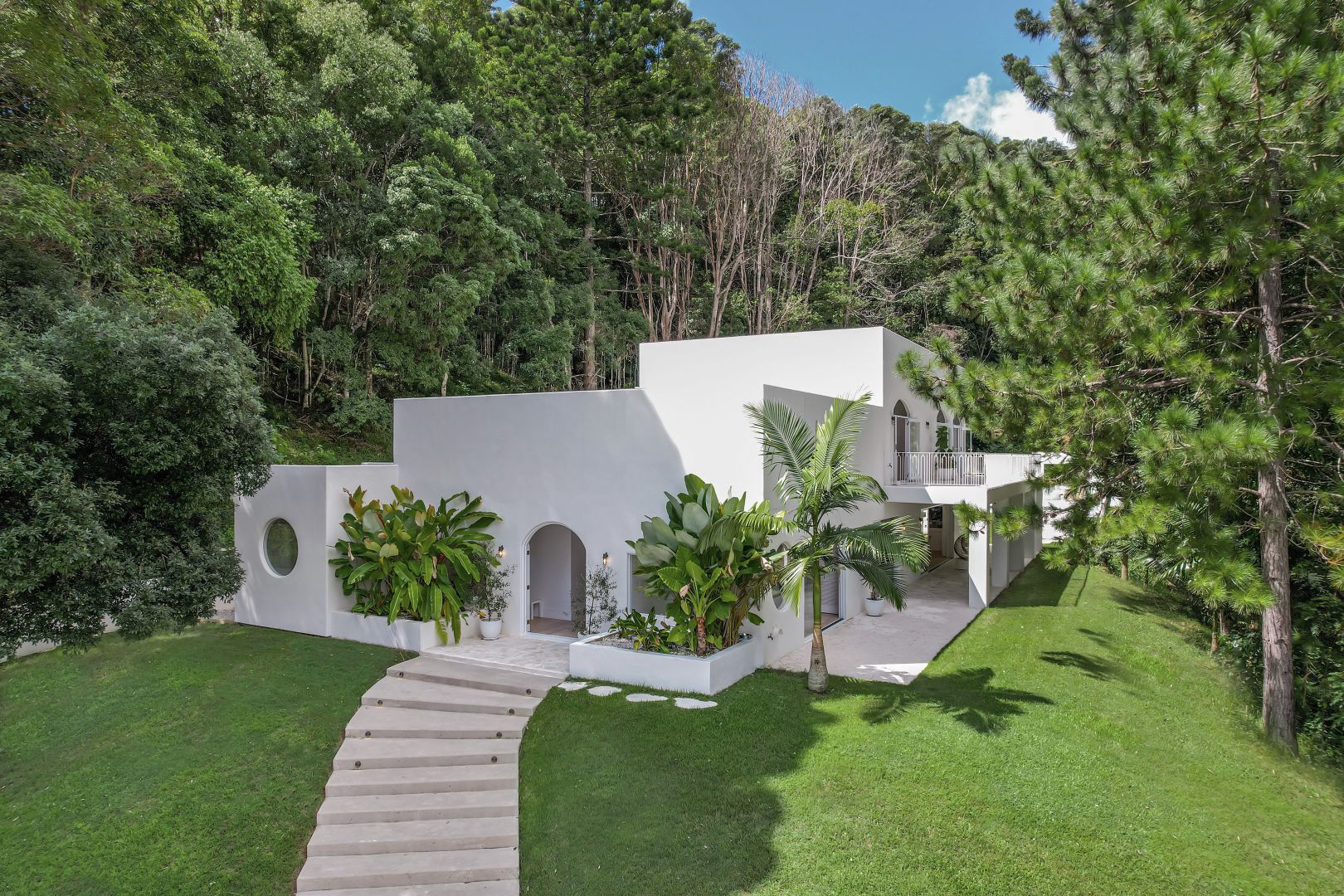
2 minOne would forgive you for thinking Casa Campana was transplanted from the Mediterranean Coast to the rolling green hills of the Tweed Coast hinterland.
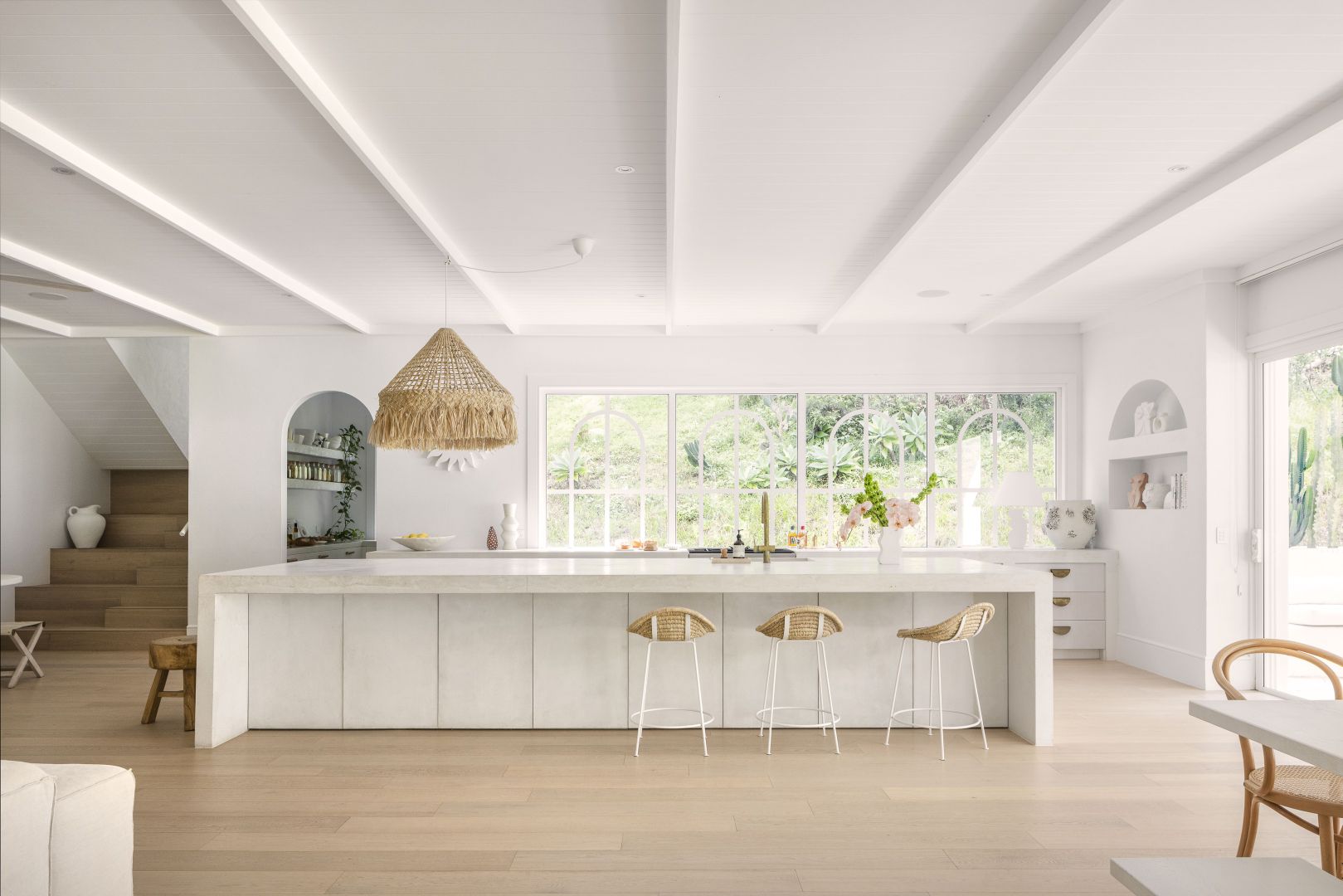
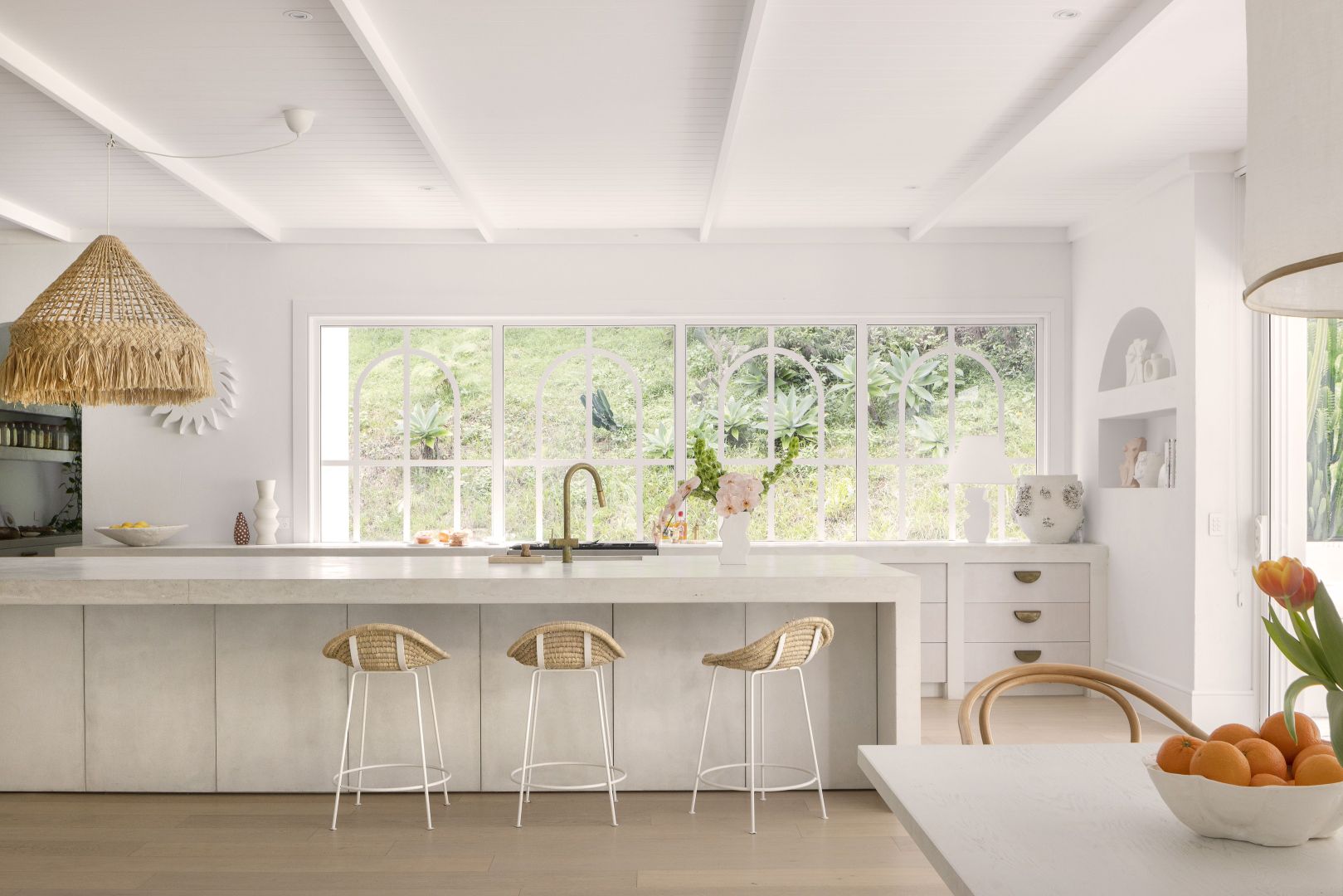
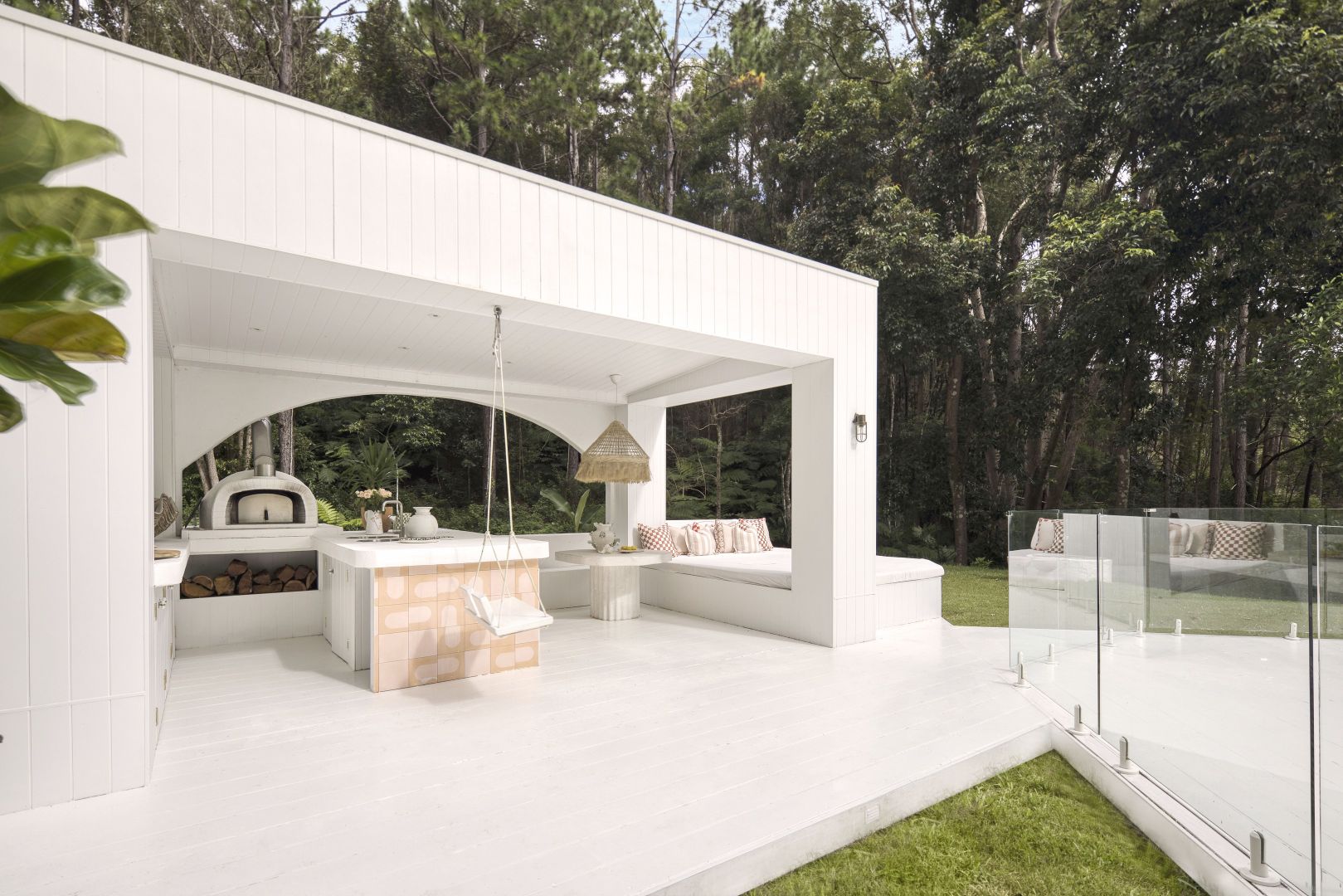
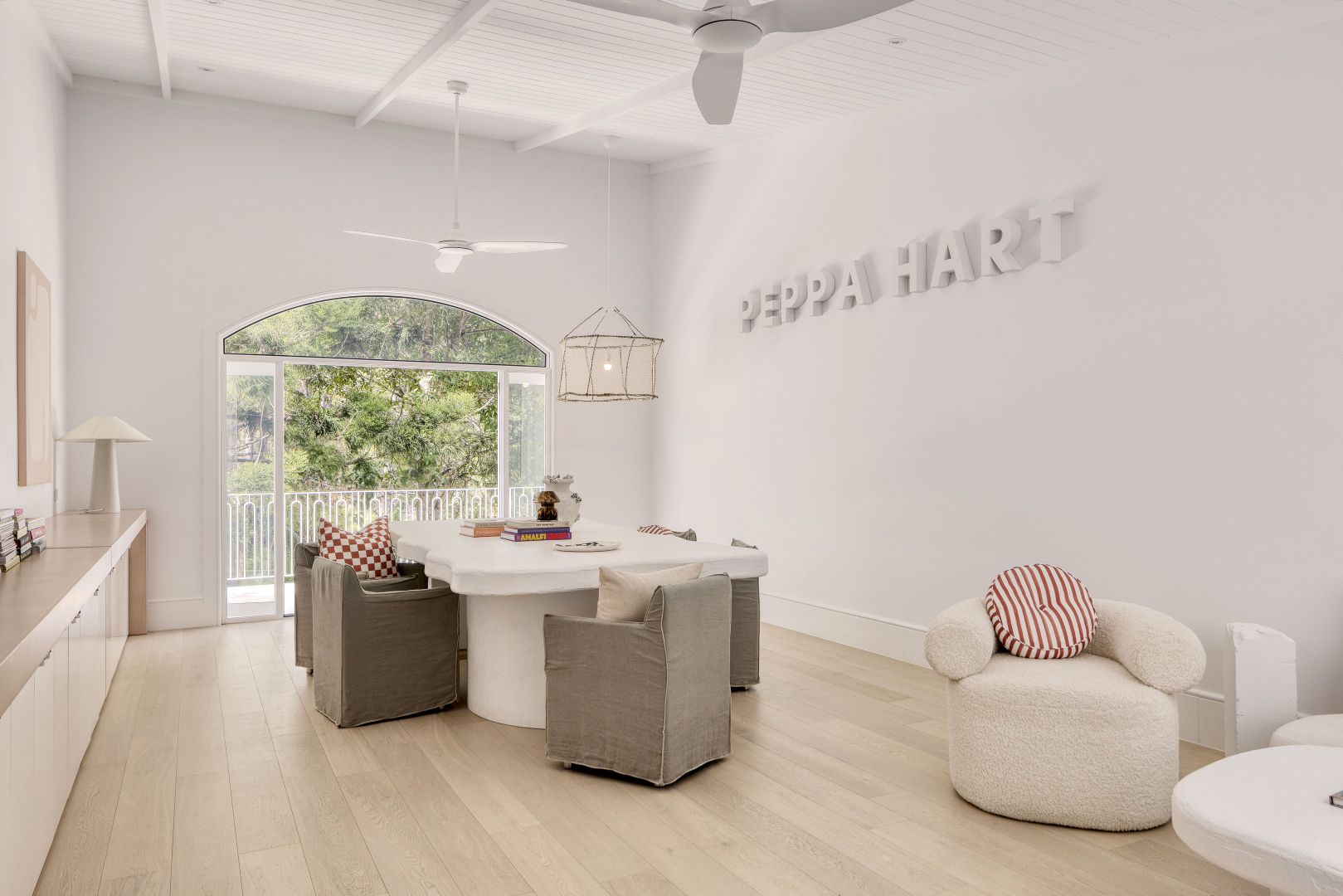
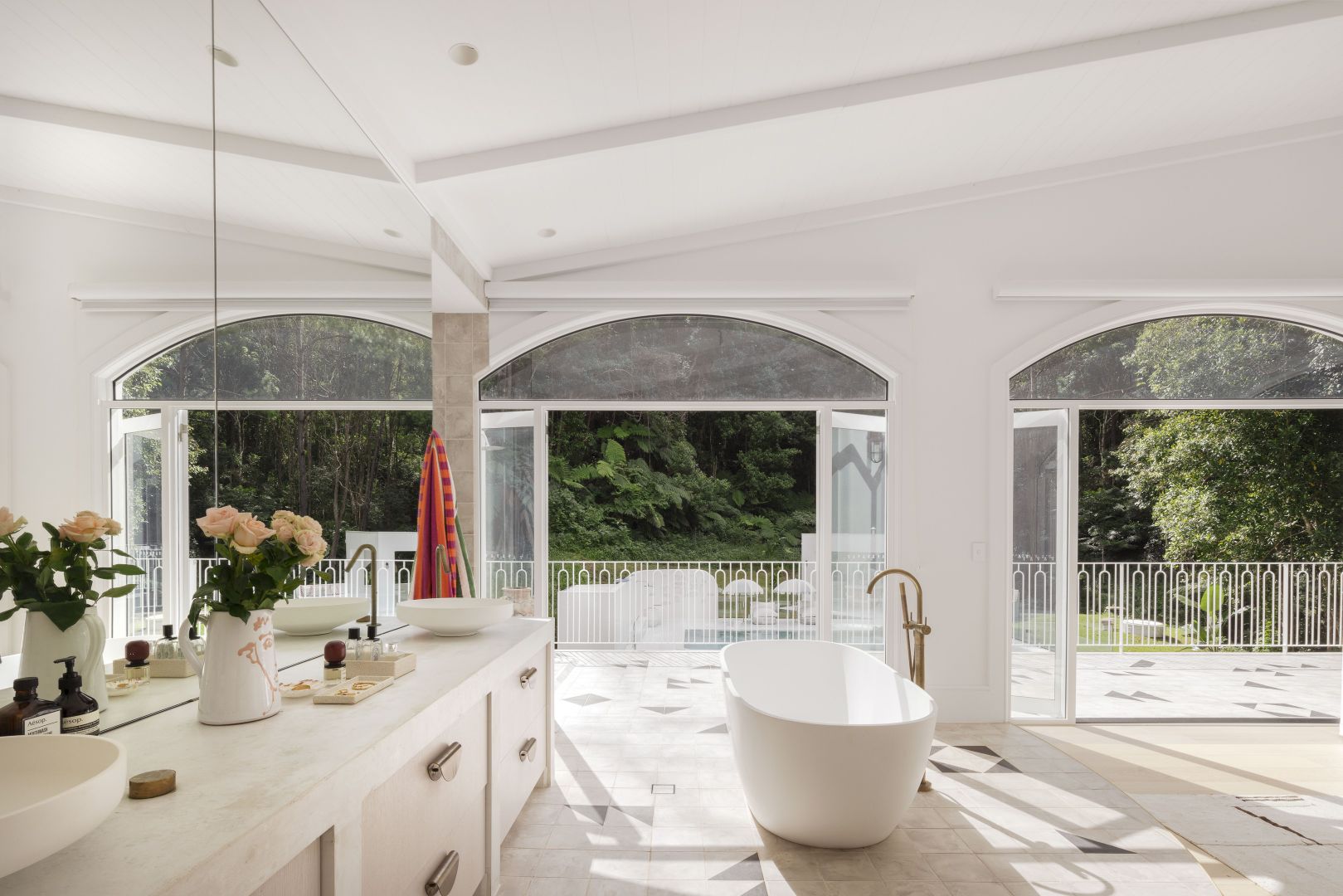
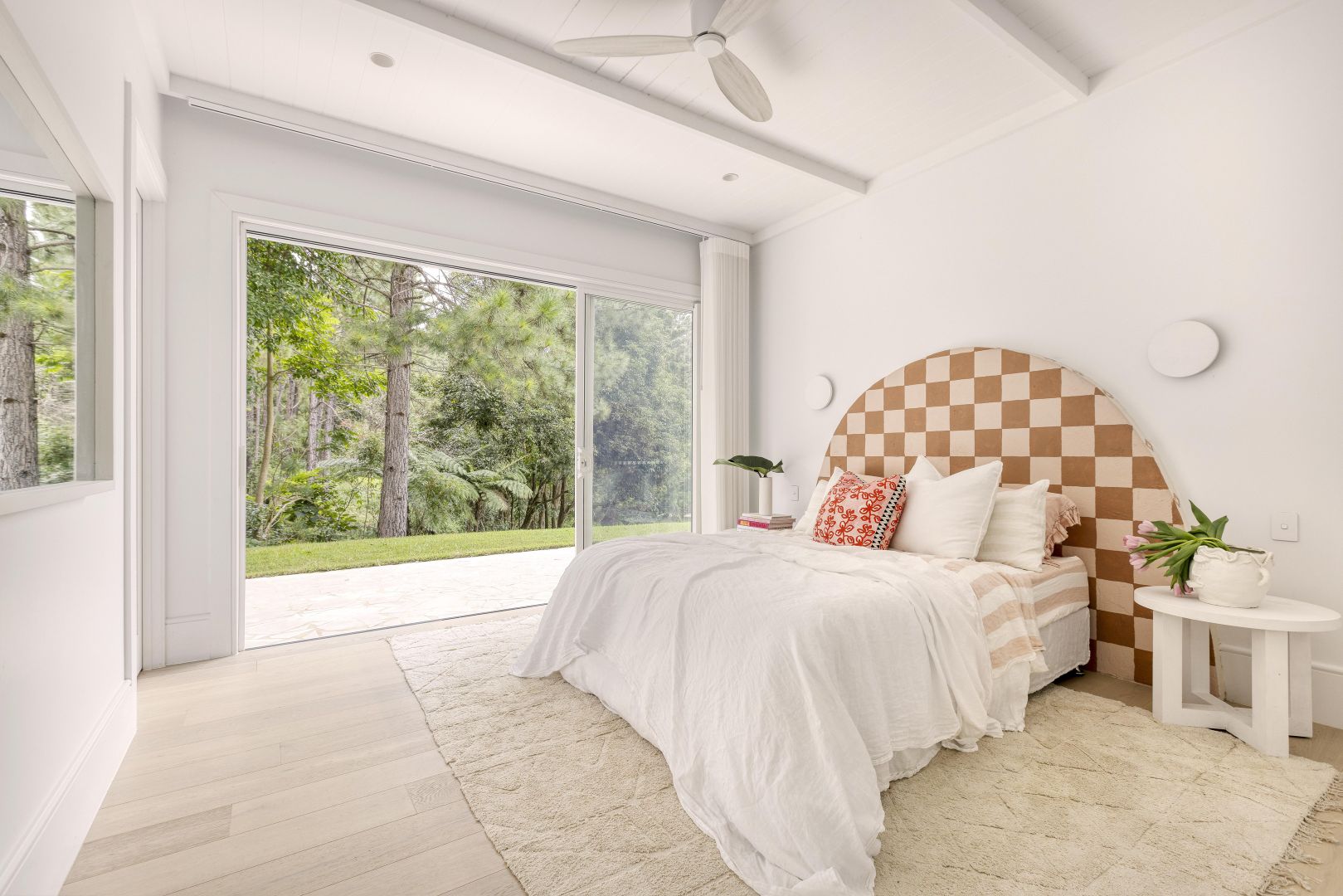
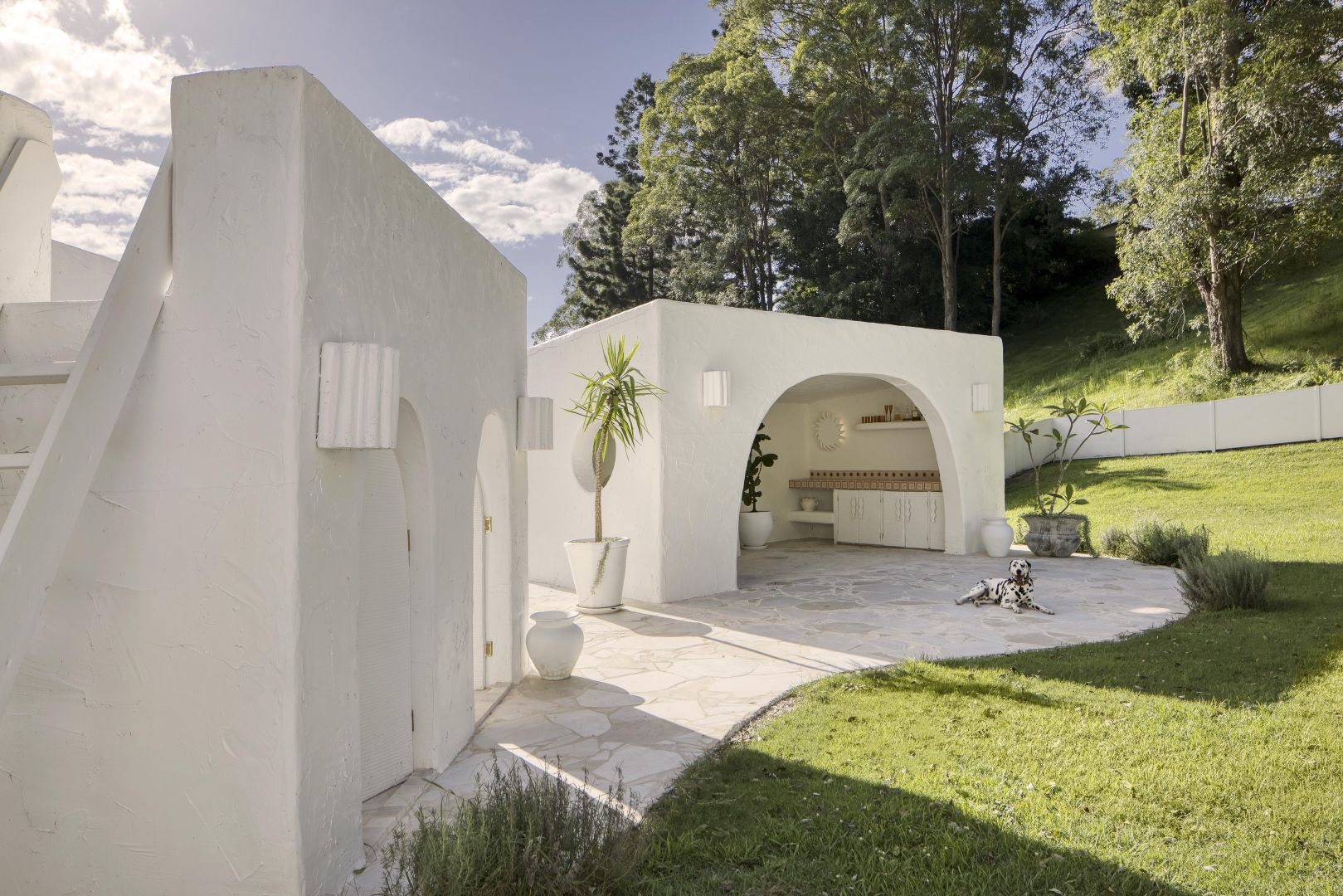
Designed by Peppa Hart in collaboration with Three Birds Renovations, the 4-bedroom, 2-bathroom, 2-car garage residence brings a luxurious slice of Mediterranean style to Northern NSW through its arching design, whitewashed walls and breezy, open-plan layout.
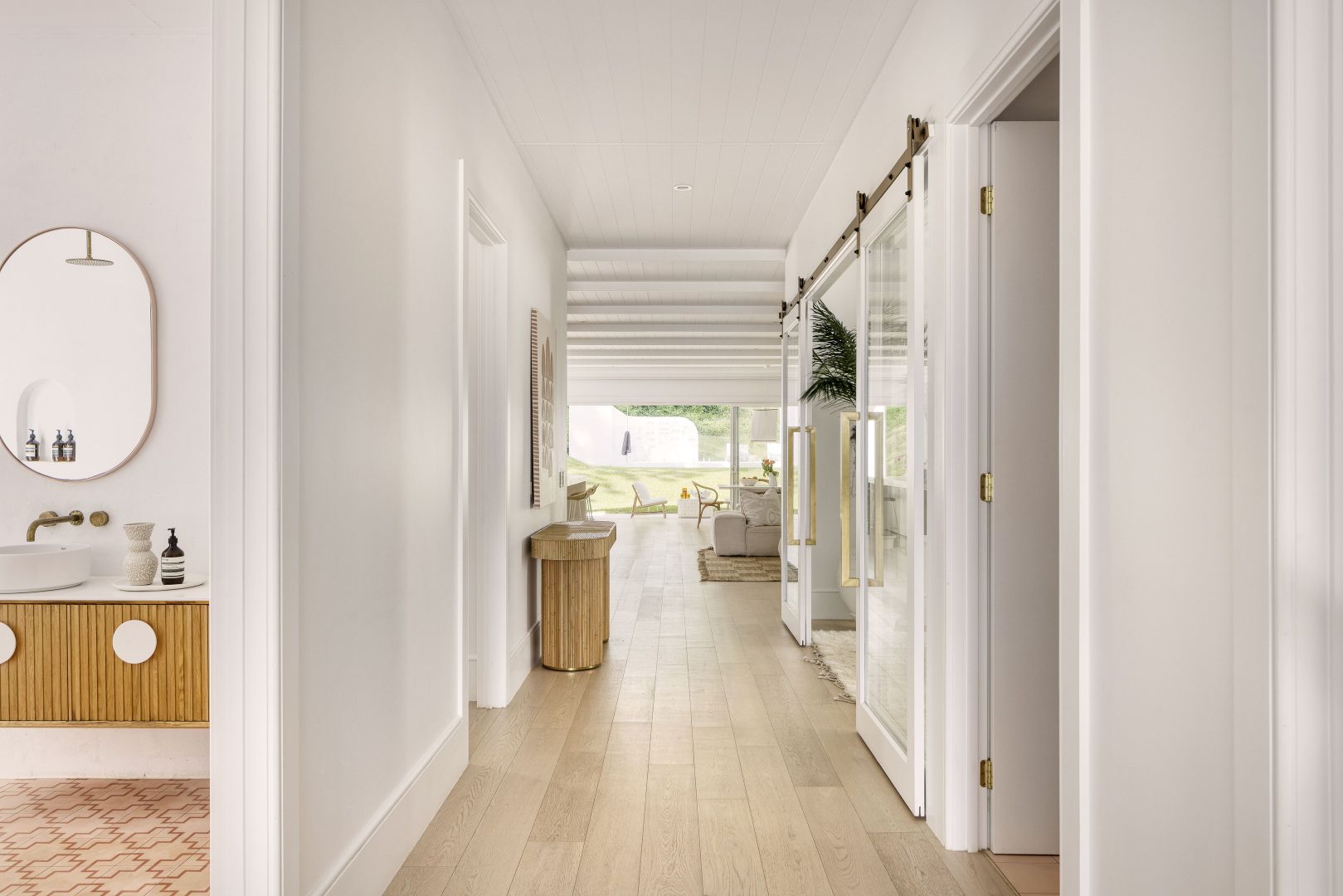
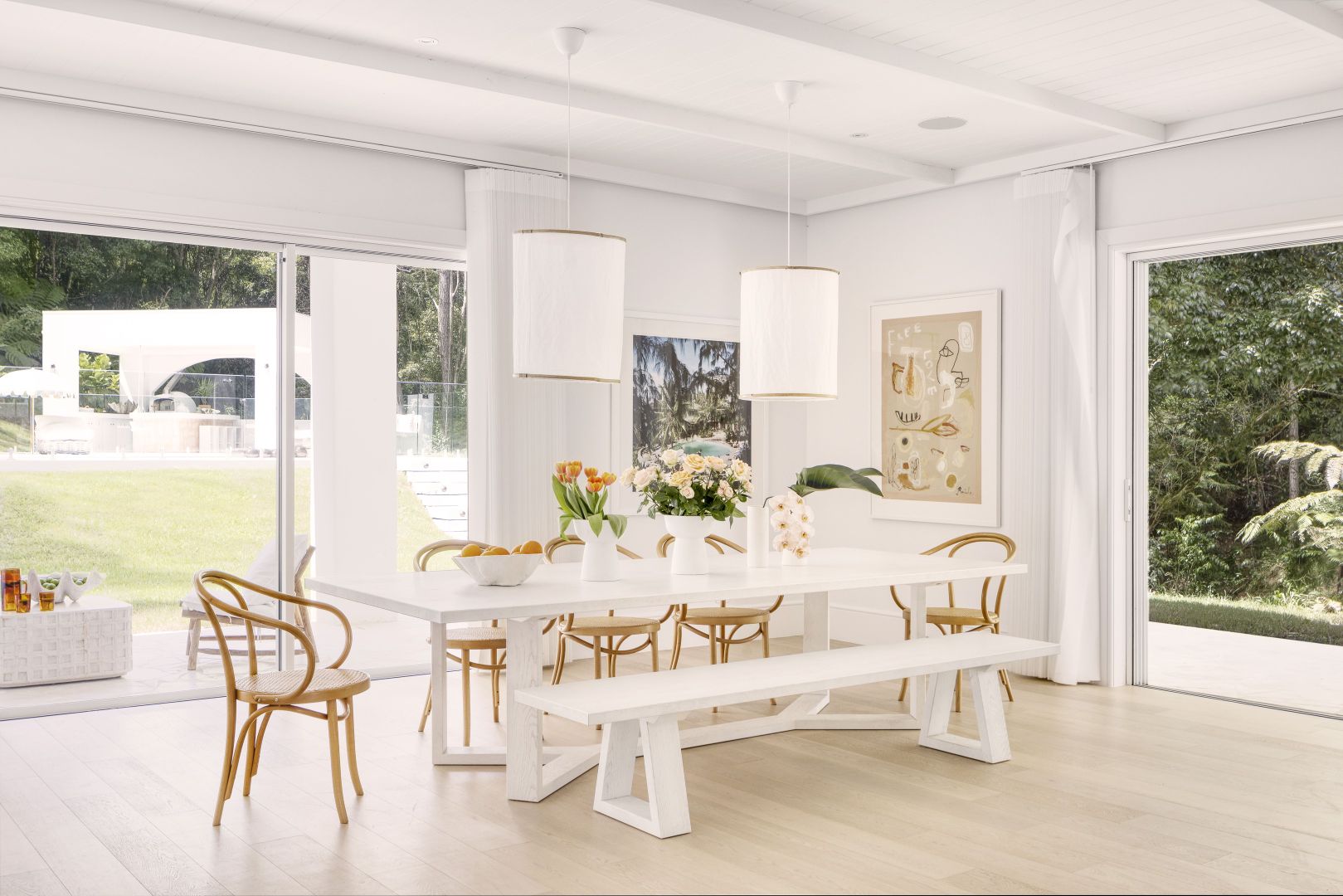
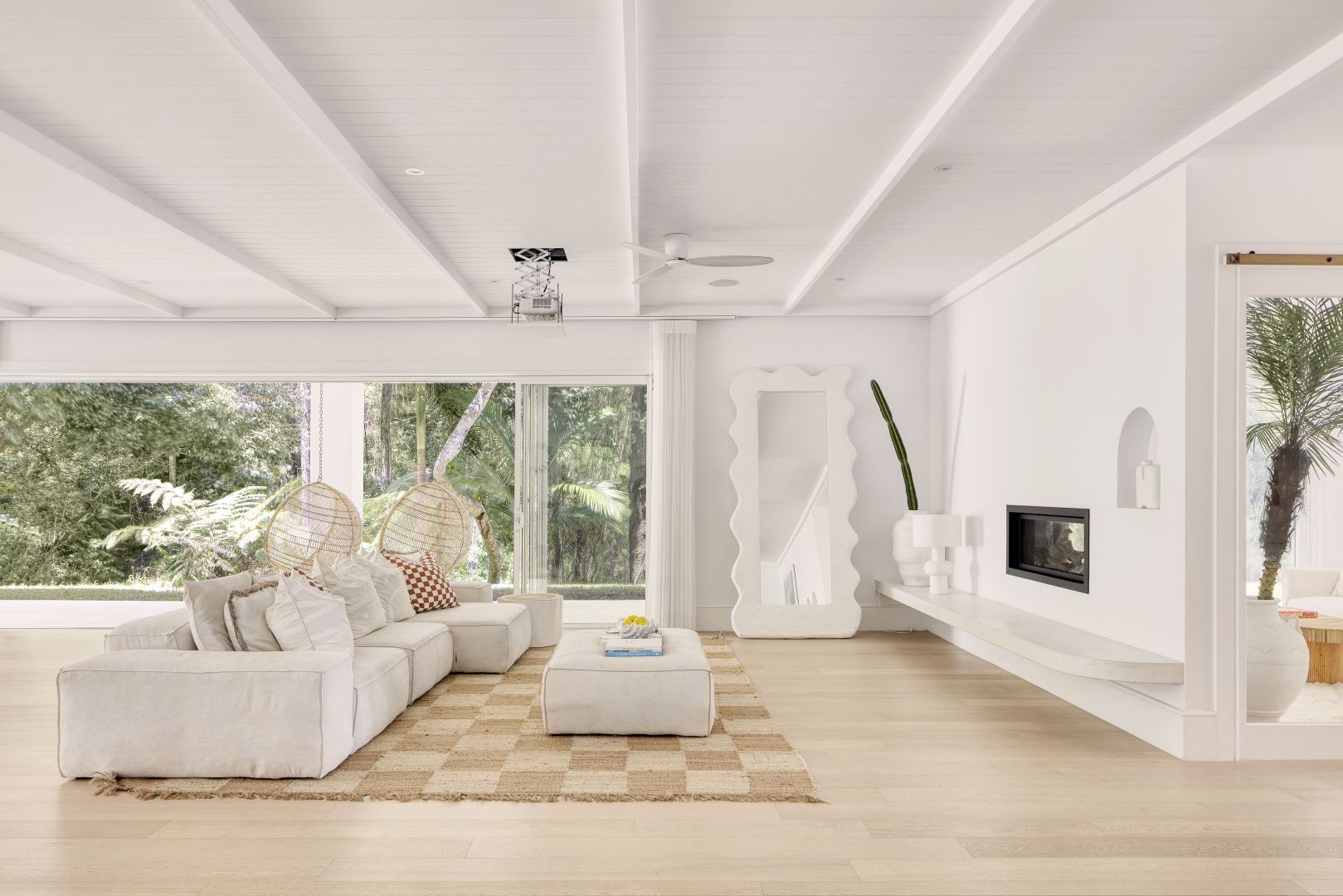
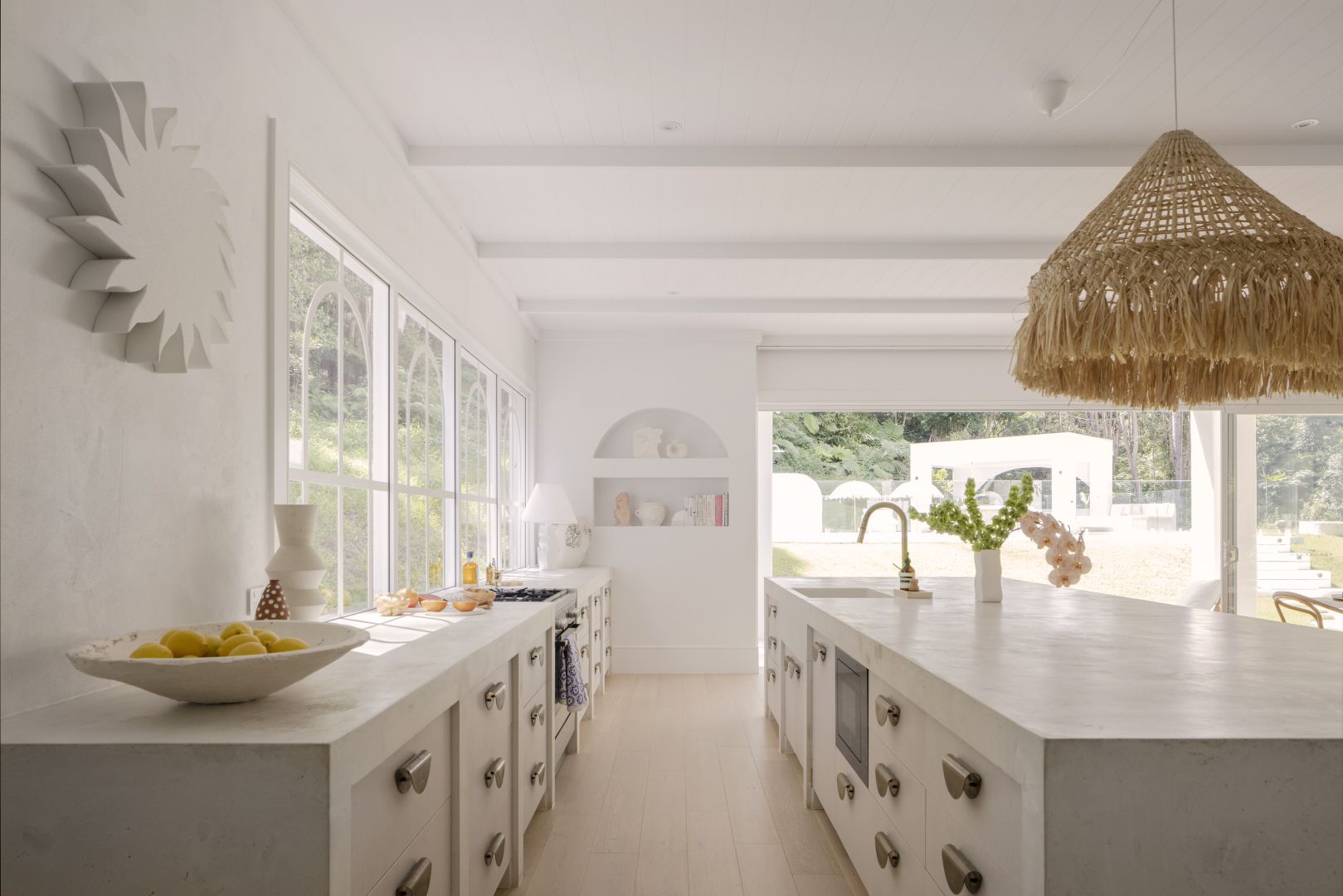
Once through the aforementioned archways, the open plan living and dining area is the star. Boasting enormous scale, custom panelling overhead, and concrete hard finishes — including the kitchen workspaces — Casa Campana is effortlessly cool.
Complementing the custom concrete additions are the handmade balustrades, door handles, and joinery throughout while modern comforts such as a double-sided gas fireplace and a butler’s pantry.
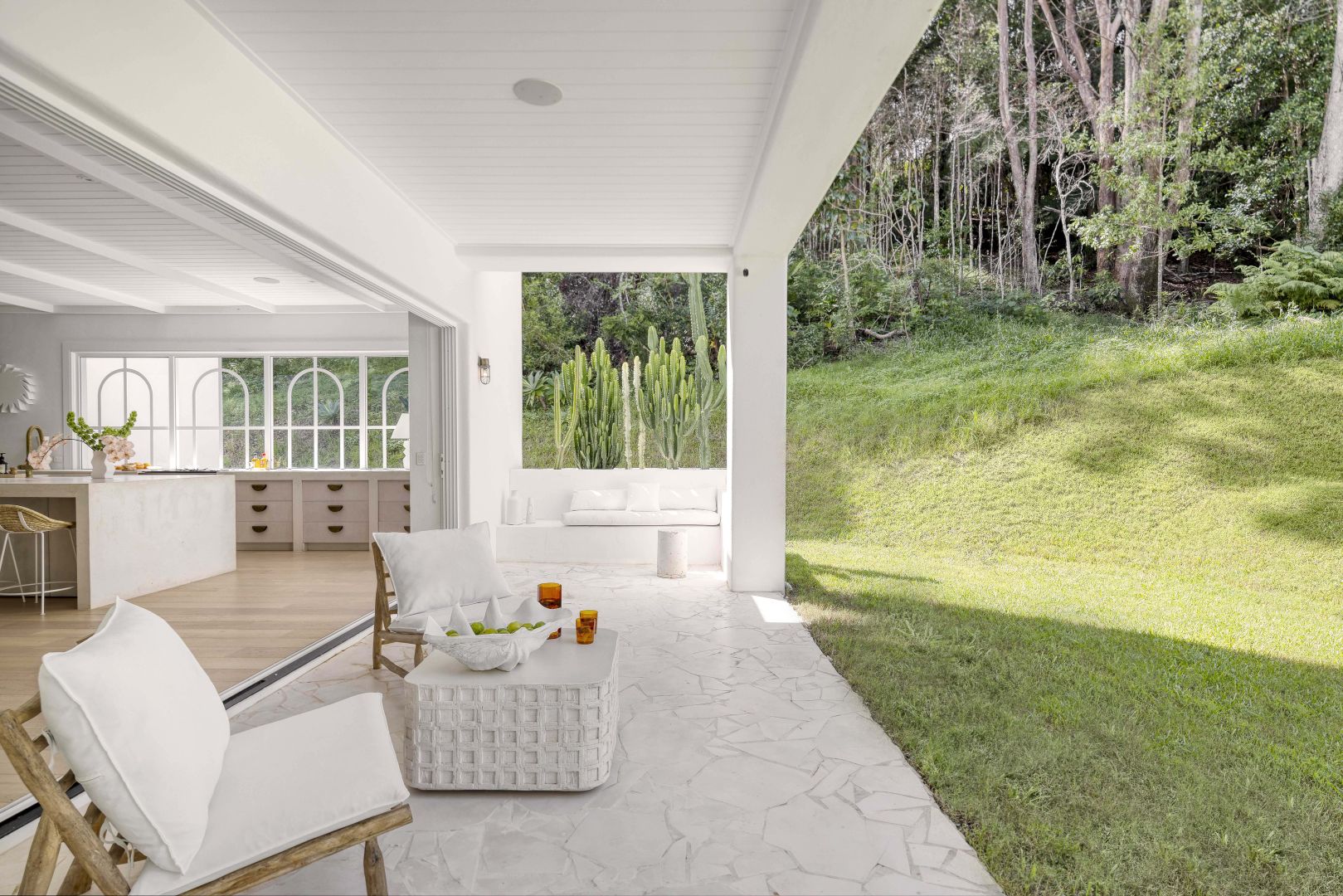
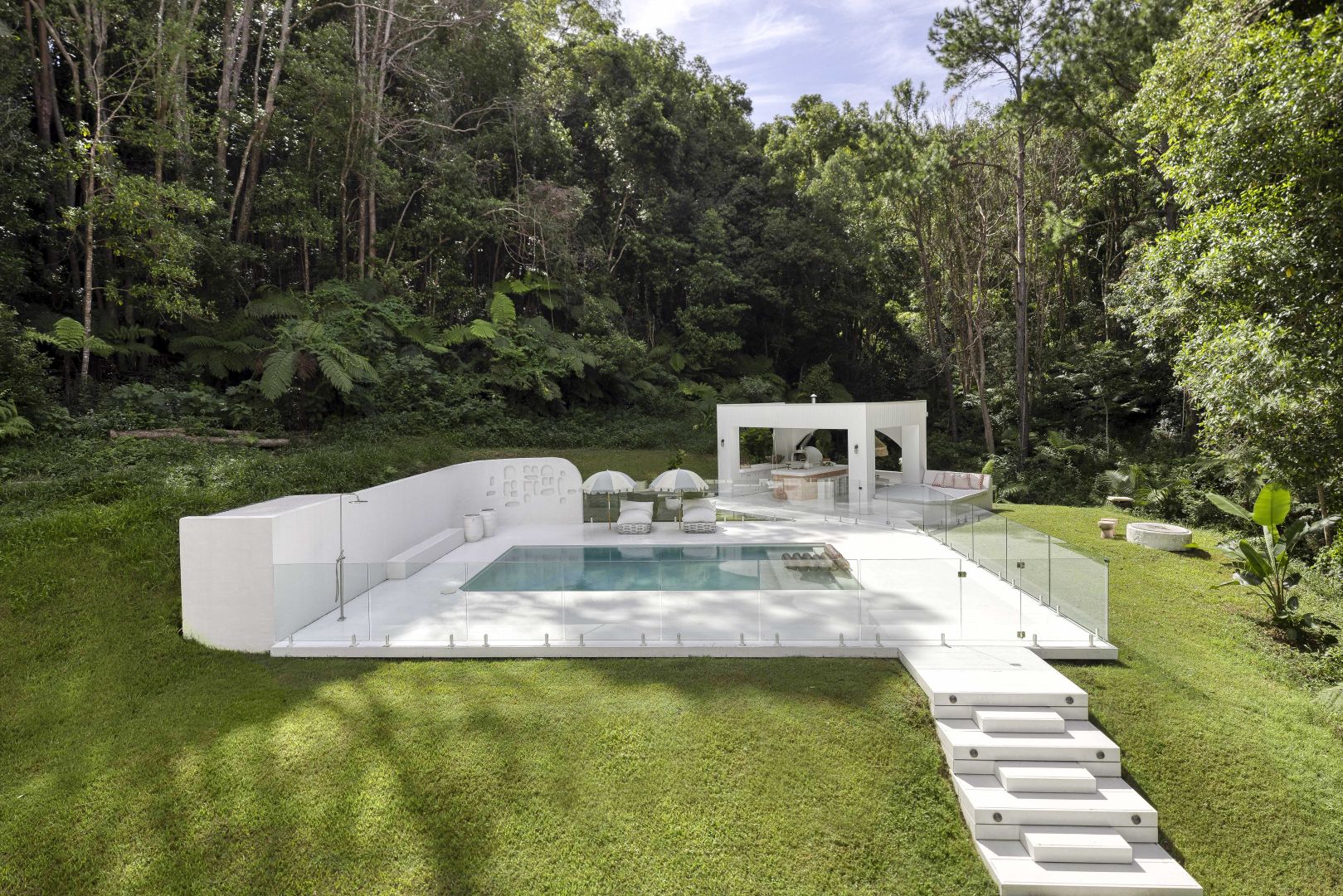
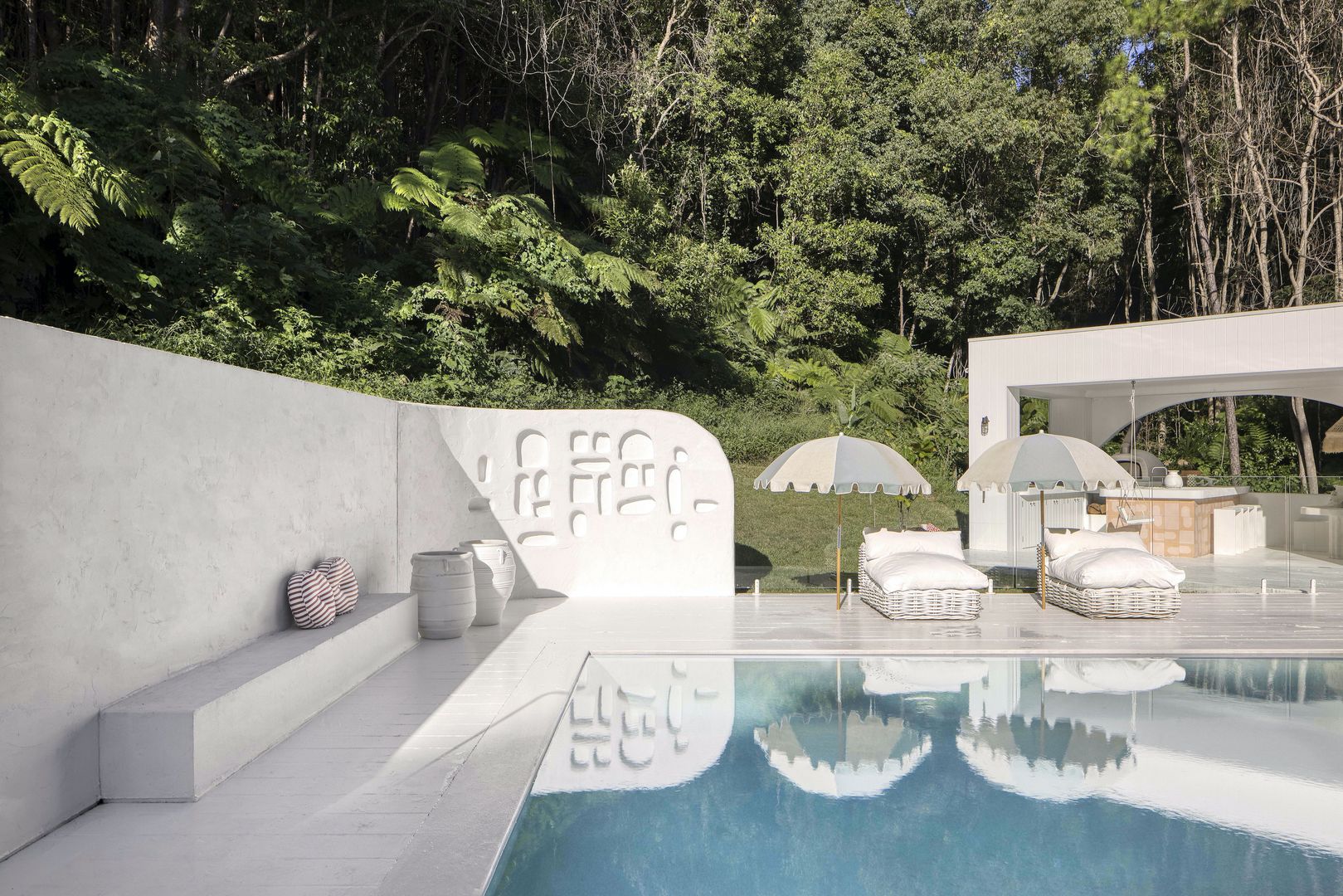
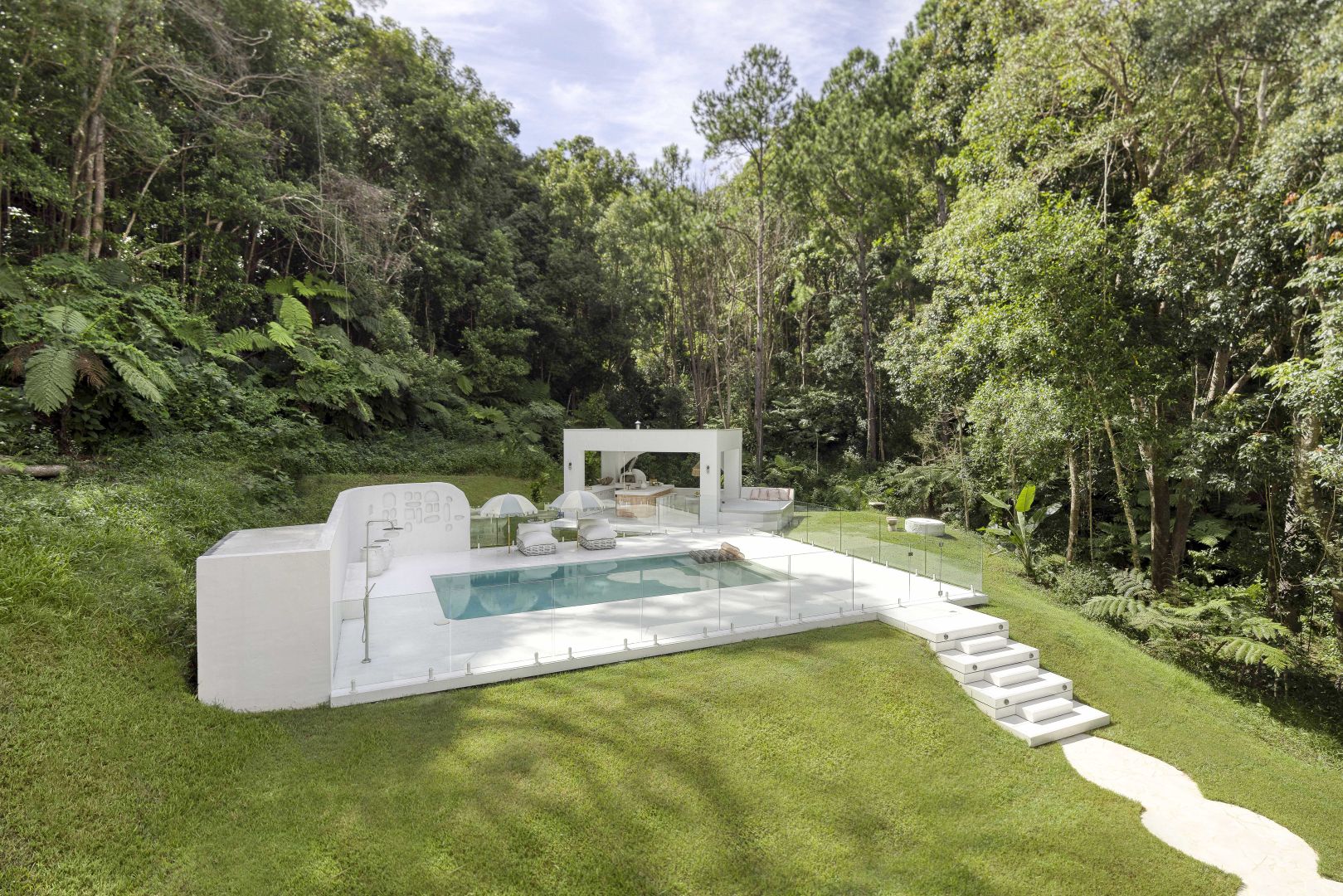
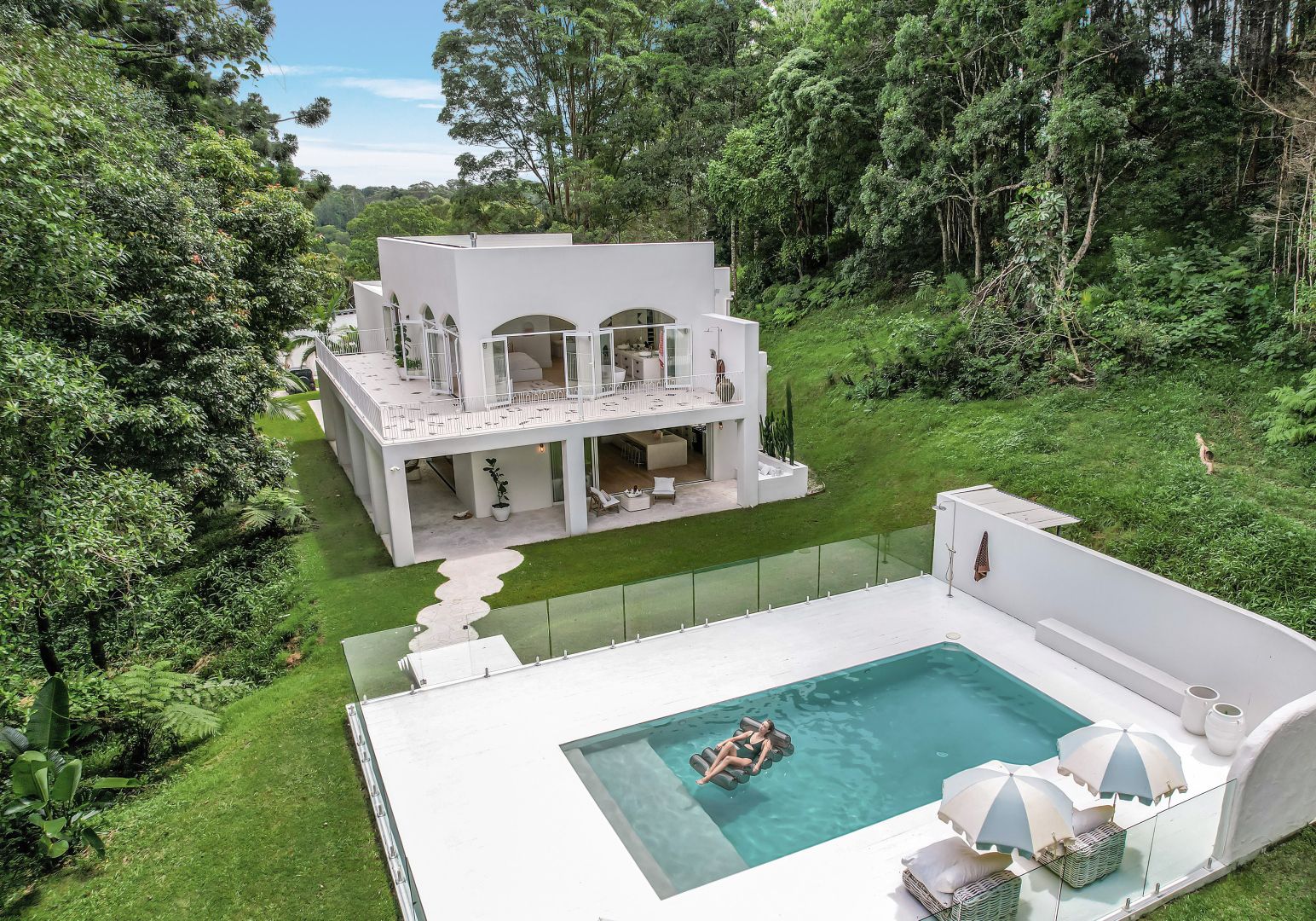
Secluded by its location and sprawling 1.31-hectare plot, the European feel extends outside via oversized bi-fold doors to the smashed tiling underfoot (whitewashed, of course) and further use of concrete leading to the heated saltwater pool.
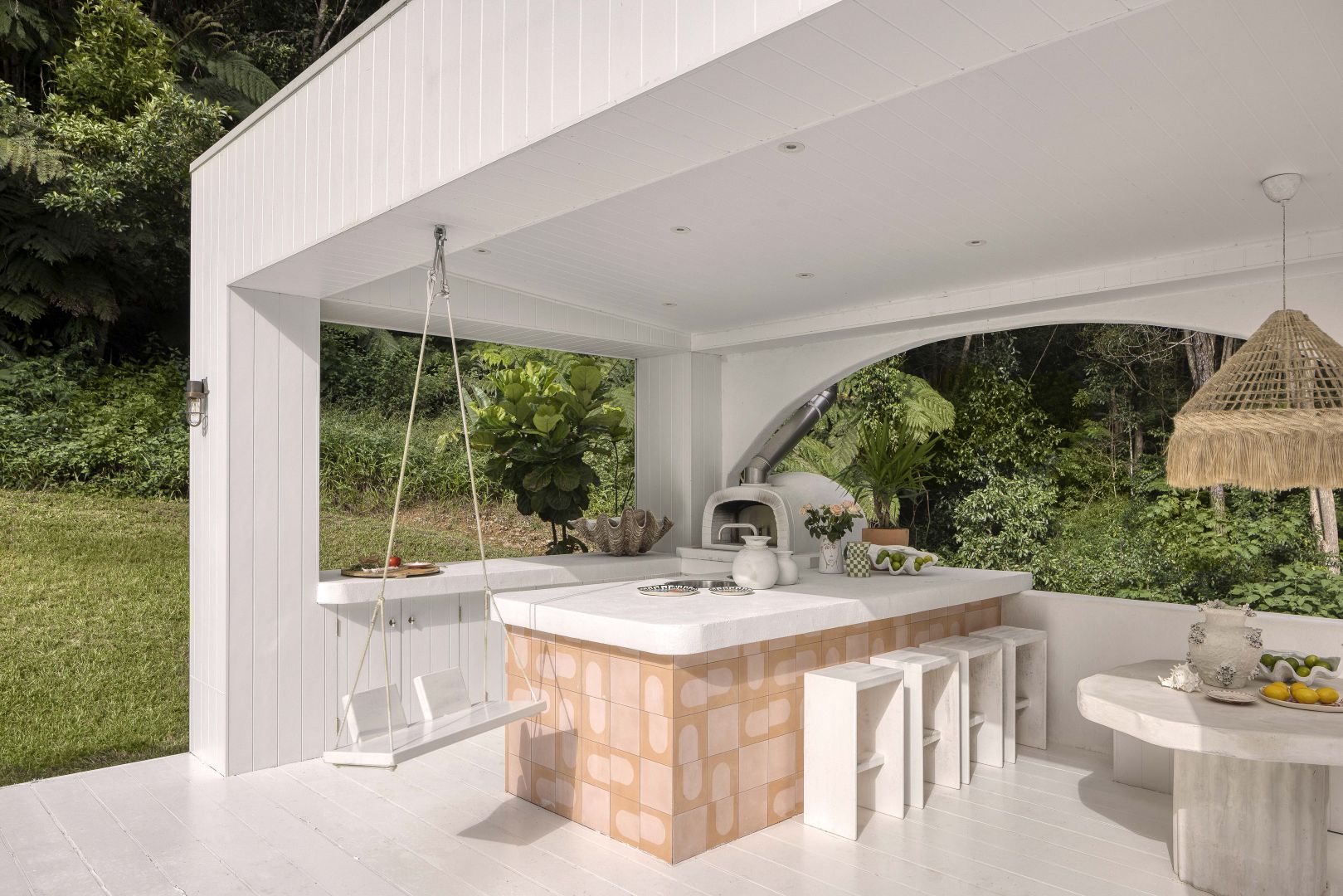
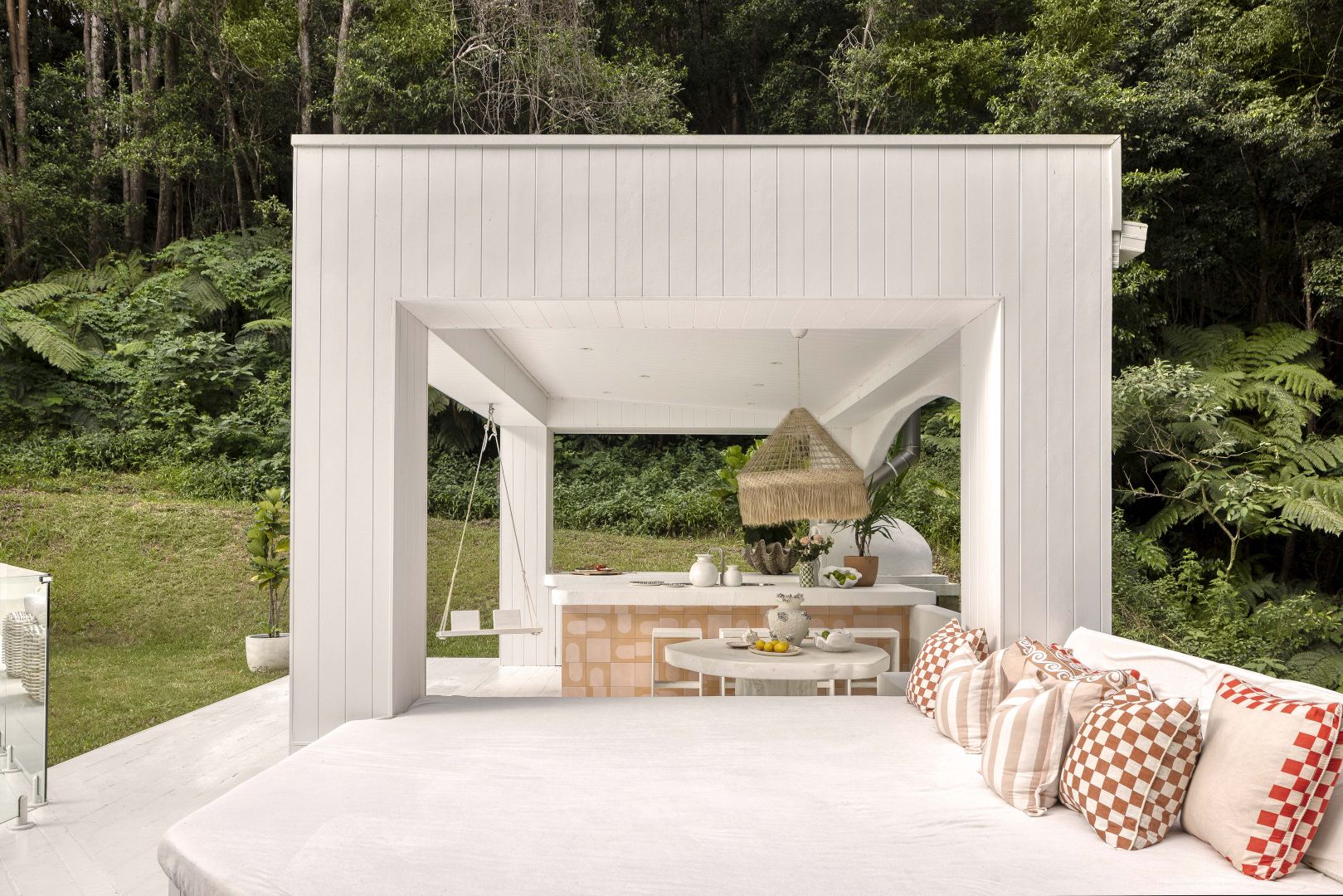
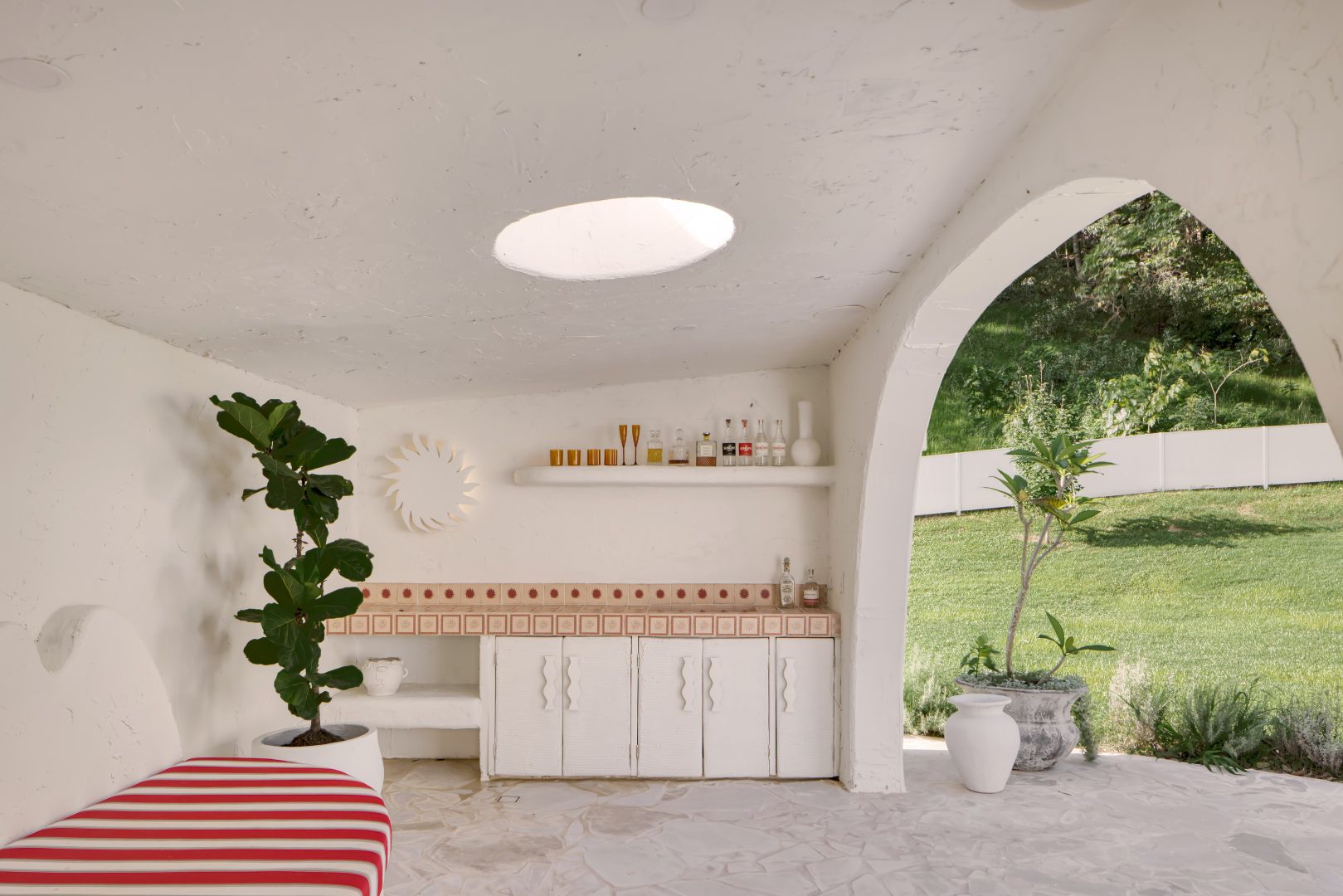
Beyond the pool sees a poolside cabana that inspires hosting, complete with a woodfired pizza oven and sink and two heated outdoor showers.
There’s also a kids and adults cubby area — one featuring a rooftop slide and servery the other a built-in daybed and wet bar.
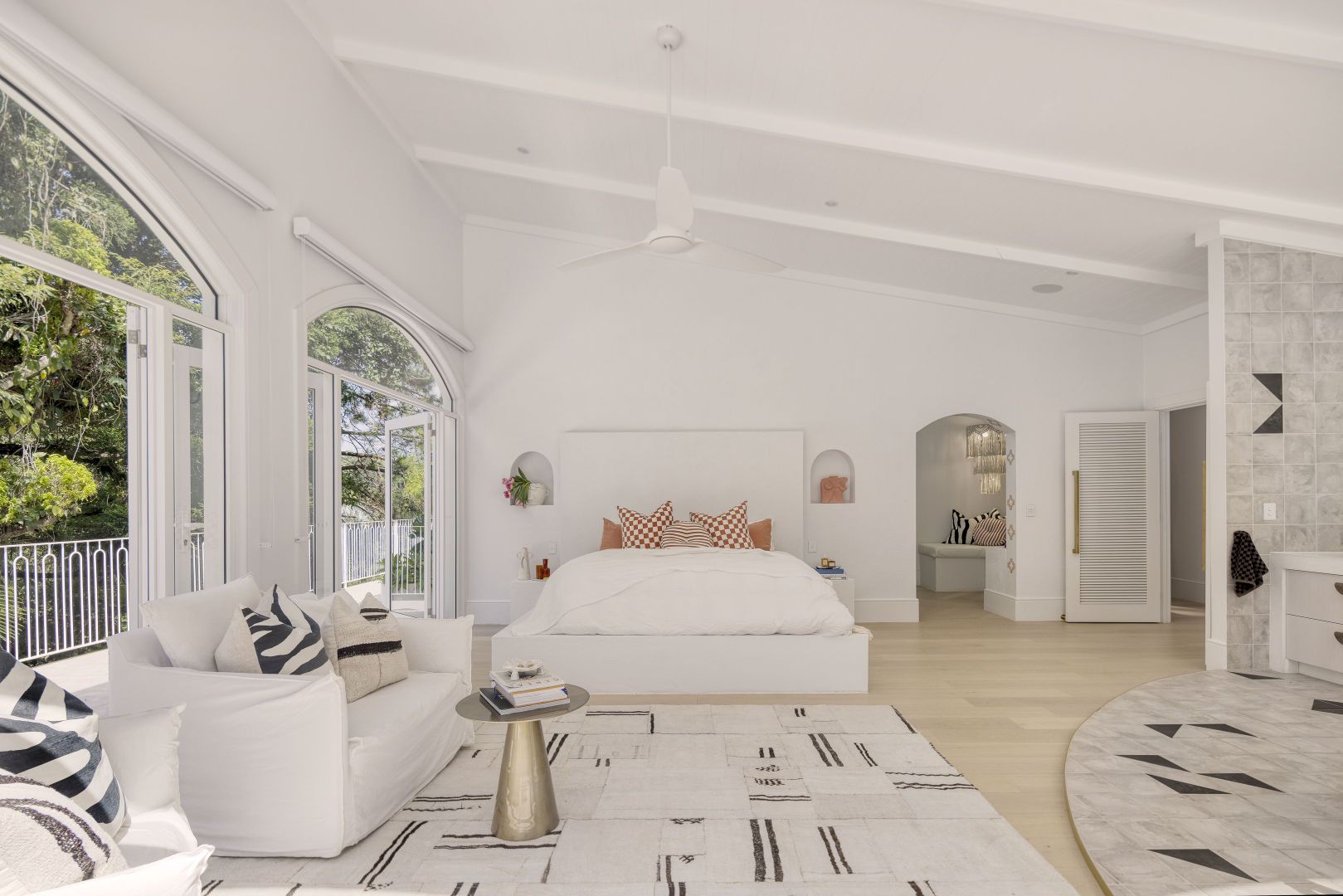
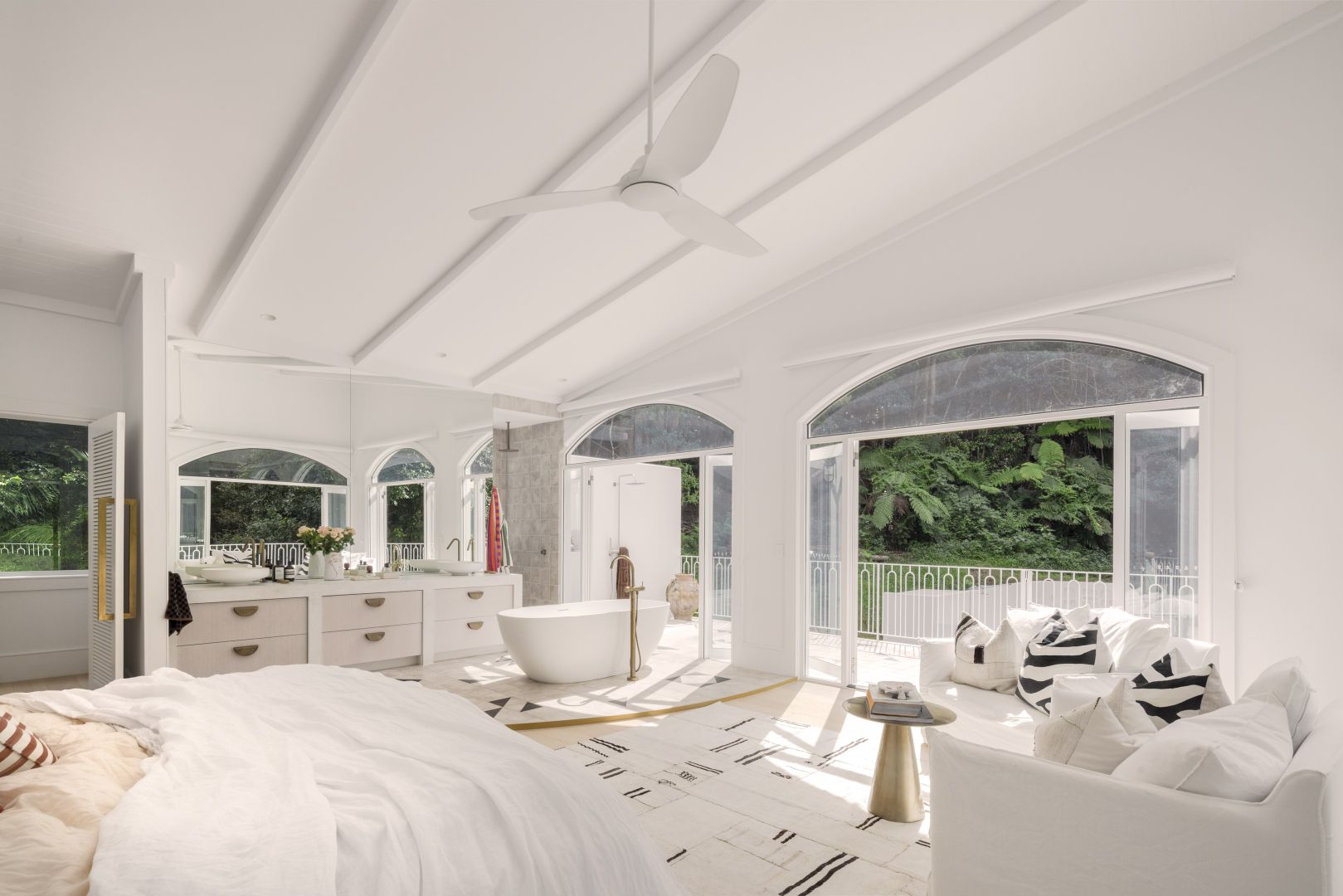
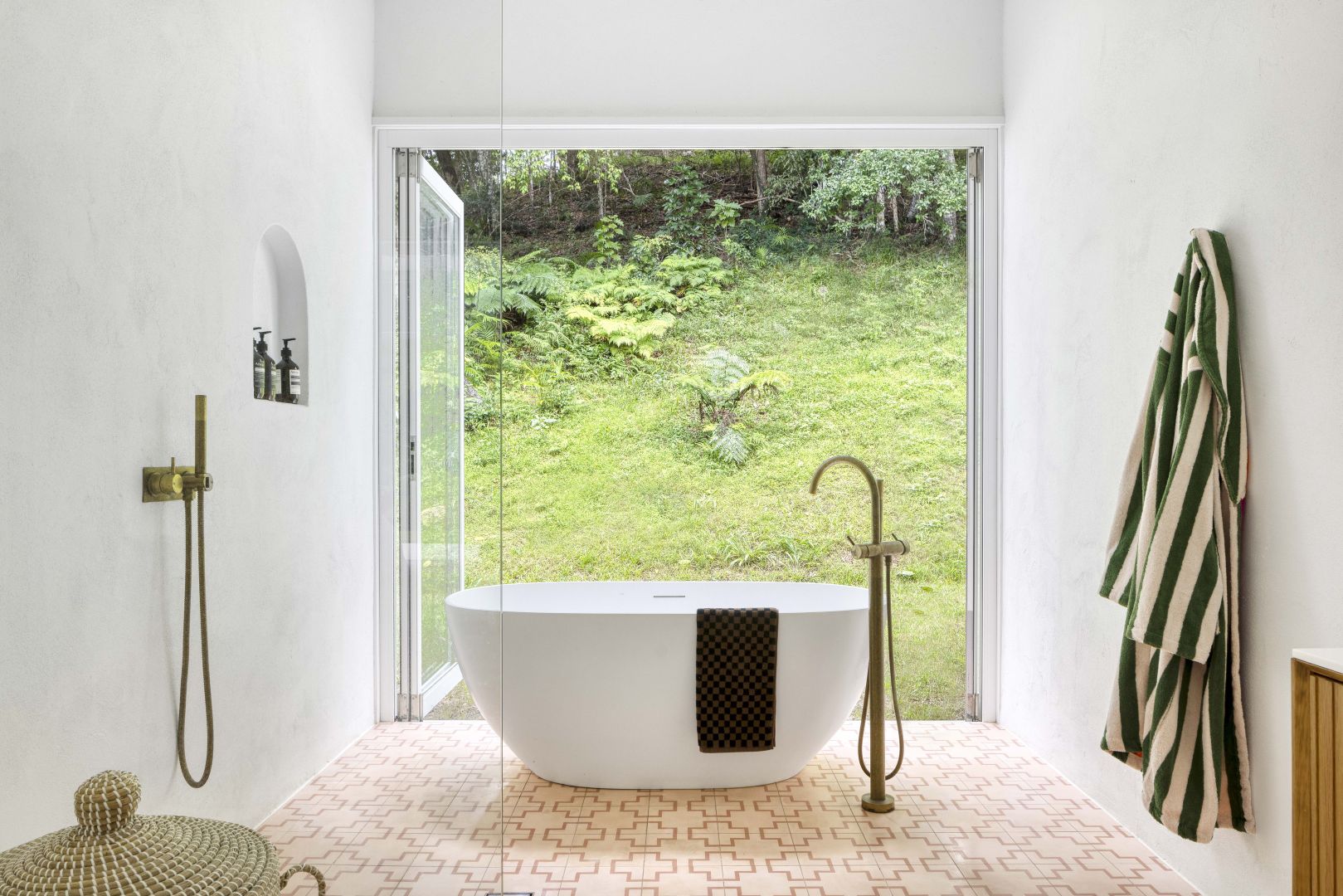
Back inside, the upper level of the home hosts the master suite – complete with a large walk-in robe, built with custom joinery and brass handles and an opulent design, open ensuite complete with concrete benchtops.
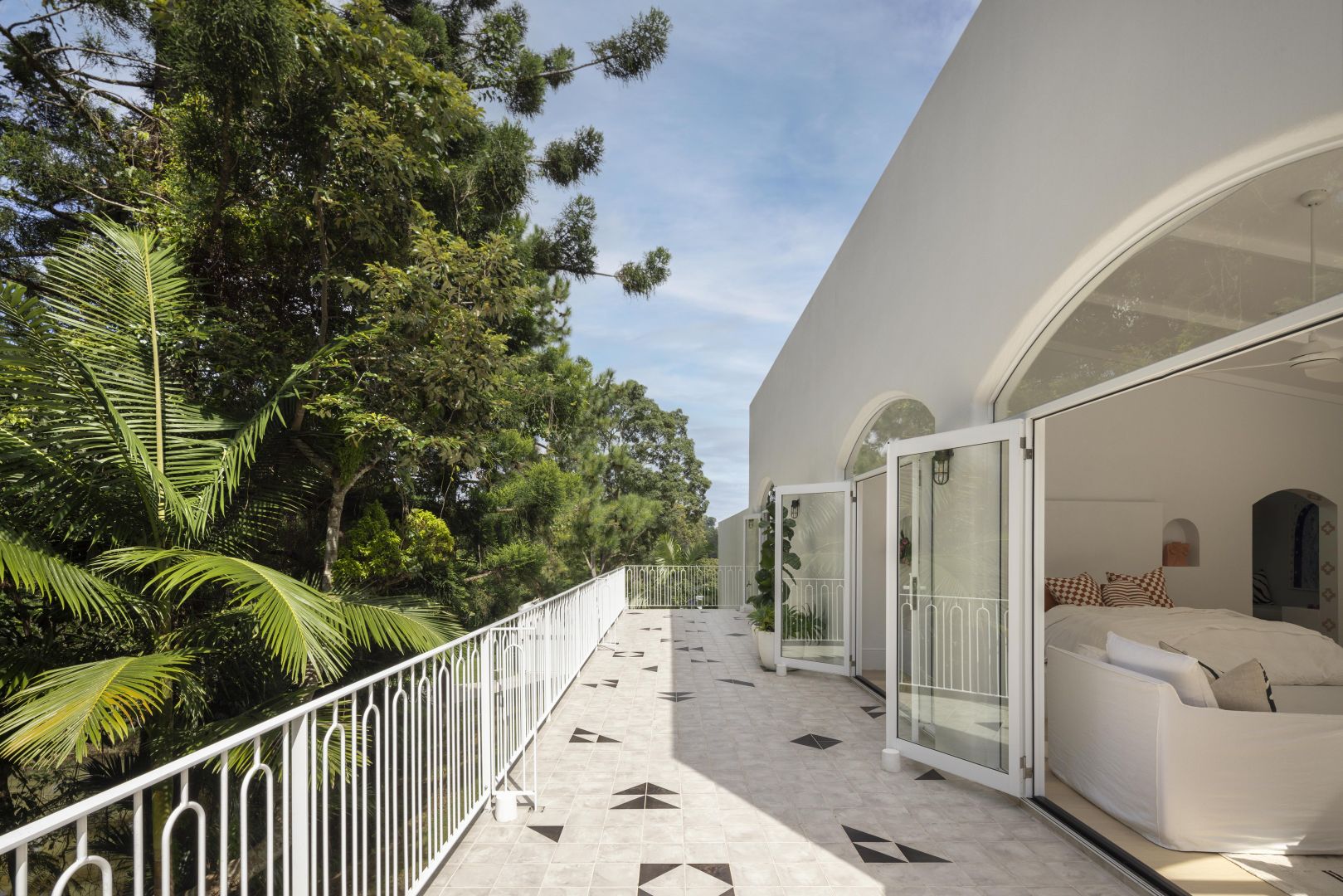
The upper terrace wraps the master suite and accompanying studio space.
The remains of the accommodation is found downstairs, each with built-in robes alongside laundry and a separate media room.
Built with the purpose of never needing to leave, there’s a range of smart home fixtures including smart home lighting and an inbuilt sound system throughout – controlled from the butler’s pantry – alongside electric Luxaflex blackout blinds in multiple rooms.
While secluded in its orientation, the residence is in a coveted pocket of northern NSW, due to its proximity to Byron Bay, Cabarita beach and its array of cafes, restaurants and boutiques.
The listing is with Luke Savage of LS Properties (+61 477 122 559) with a price guide of $4 million. Lsproperties.com.au

The Australian leather house has opened an immersive four-day pop-up in Manhattan, unveiling its Bloom Collection and redefining what a product launch can look like.

Following the successful launch of its Palais Collection, MAISON de SABRÉ has unveiled a new modular handbag system offering more than 720 styling combinations.
The US housing market remains under pressure as high mortgage rates continue to weigh on affordability and demand. Industry leaders say 2026 has been one of the toughest years for home sales, with slower price growth, weaker mortgage activity, and fewer buyers entering the market. However, experts say reduced competition and more price cuts could create opportunities for well-prepared buyers.
2 min
The typically busy spring season for the housing market was a dud, and the summer isn’t looking much brighter.
Housing services companies like Zillow Group and Rocket RKT +3.78% were loud and clear last week on earnings calls: Rocket CEO Varun Krishna called the quarter through June “one of the toughest spring housing markets in years.”
Jeremy Hofmann, Zillow’s chief financial officer, said on a conference call that the company predicted earlier this year that the market for mortgages would be flat. “We actually now think it’s going to be down low-to-mid-single digits,” he said.
The rest of 2026 will remain challenging for mortgage origination volume, says KBW analyst Bose George. The question now is what happens in 2027. “If mortgage rates remain [around] 6.75%, I think that’s going to be challenging even for next year,” he says.
But what’s bad news for mortgage companies could be a positive for bargain hunters. Buyers can expect prices to grow more slowly—or mildly decline—with less competition as long as mortgage rates remain unpredictable.
Mortgage rates at the beginning of the year were solidly below year-ago levels, notes Zillow senior economist Kara Ng. But they surpassed last year’s levels recently, she adds, referencing Freddie Mac’s weekly survey of 30-year fixed mortgage rates. Last week’s reading, at 6.69%, was higher than year-ago levels for the first time in 2026.
“From the affordability point of view, it’s going to get more challenging in the second half of the year,” she says. “And when affordability gets more challenging, that impacts sales and home price appreciation.”
Mortgage application data tracked by the Mortgage Bankers Association has cooled since the beginning of the year. The trade group expects that the number of mortgage originations in the remaining two quarters will lag behind last year’s levels, after exceeding 2025 levels in the first half.
Rocket’s early-stage data—which the company told Barron’s it derives from its brokerage Redfin, demand for its mortgage products, and signs in its servicing portfolio that a homeowner is preparing to refinance or move—“leads us to expect the third quarter mortgage market to be smaller than the second,” Chief Financial Officer Brian Brown, said on the company’s call. He added that such an occurrence is “something the industry has not seen since 2022.”
Prices will be about flat nationally, Ng says. Zillow’s most recent forecast, which shows how values are expected to change in the year ending June 2027, show them dropping in roughly half of the 100 largest U.S. metros for which data is available.
Buyers aren’t rushing in at a time when mortgage costs are rising and unpredictable. But those with the right combination of patience and cash could stand to benefit. “If you are financially qualified to buy a starter home, you are facing less competition and you’re more likely to get a price cut,” Ng says.