SAM KERR ON SUCCESS, SACRIFICE & WHAT COMES NEXT
The Matildas captain has joined one of the world’s most exclusive luxury watch brands, sharing candid insights into the sacrifices required to succeed at the highest level of world football.
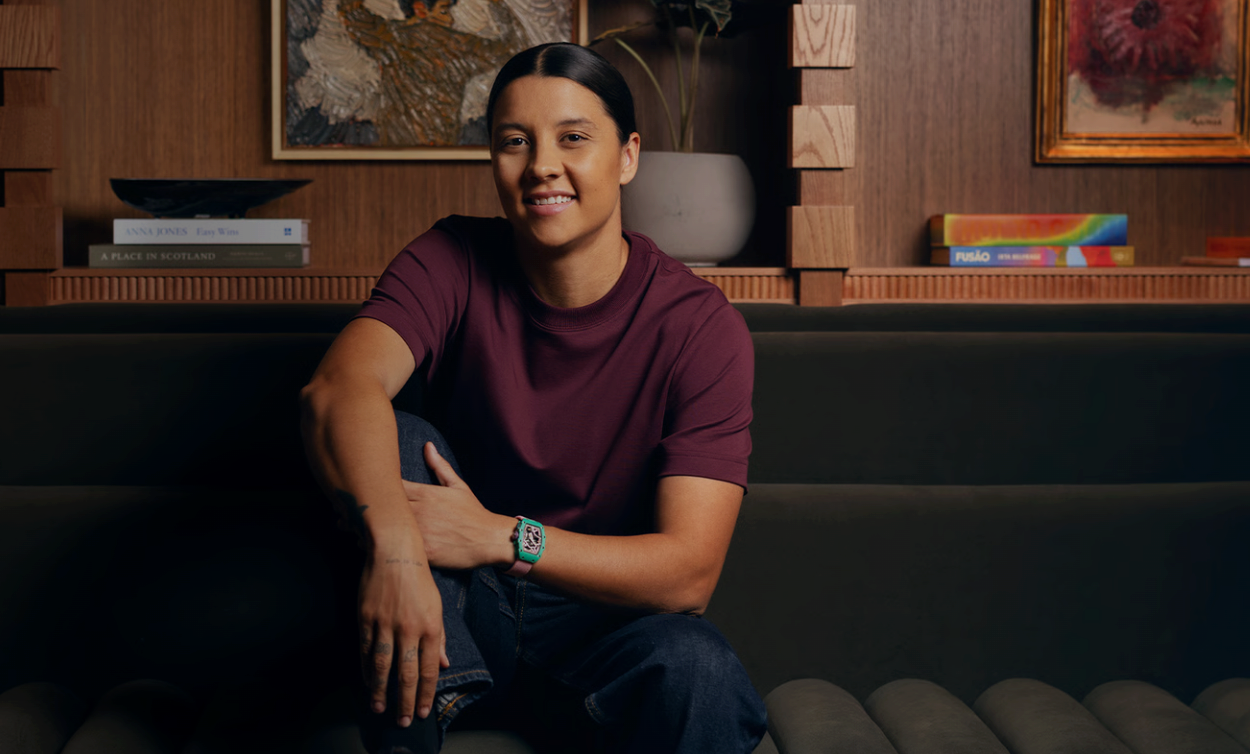
Australian football superstar and Matildas captain Sam Kerr has joined one of the world’s most exclusive luxury watch brands, reflecting on the sacrifices behind a career at the pinnacle of professional sport and revealing she only signed with her new club last week.
As Richard Mille’s first and only Australian partner, Kerr has joined an elite group of global athletes, artists and innovators associated with one of the world’s most prestigious watchmakers.
Speaking in Sydney, the 32-year-old reflected on her next chapter, the extraordinary growth of women’s football and the personal sacrifices required to reach the top of the game.
Founded in 2001, Richard Mille has built a reputation for producing some of the world’s most technically advanced and exclusive timepieces. The Swiss watchmaker is renowned for its use of ultra-lightweight materials, Formula One-inspired engineering and limited-production watches that often sell for hundreds of thousands of dollars and, in some cases, more than $1 million.
Its ambassadors include tennis great Rafael Nadal, Formula One stars Charles Leclerc and Lando Norris, actress Michelle Yeoh and sprint champion Shelly-Ann Fraser-Pryce.
During the Sydney event, Kerr wore the Richard Mille RM 07-04 Automatic Sport, a lightweight model featuring a pink case, blue strap and skeletonised movement. Designed for active lifestyles, the watch reflects the brand’s philosophy of combining high-performance engineering with luxury craftsmanship.
For Kerr, becoming the brand’s first Australian partner is a source of considerable pride.
“Of course, being the only Australian is incredible to me,” she said. “I am very proud to be Australian and I like to put Australia on the map.”
The announcement comes as Kerr prepares for the next stage of her football career following her departure from Chelsea after six-and-a-half years.
While speculation around her future has been mounting for months, Kerr revealed a decision was only finalised recently.
“Everyone thinks that it was decided and I’ve known that (it was) reported that I’d signed somewhere in April, but honestly, I only signed my contract on Wednesday last week,” she said.
“I really hadn’t decided what I was going to do until last week.”
Kerr said she expects details of her new club to be announced around the beginning of July once her Chelsea contract officially concludes.
Despite her excitement about what lies ahead, she admitted leaving one of the world’s biggest football clubs has been emotional.
“I am really sad about it,” she said. “It’s been my home for 6.5 years. I have so many good memories there. I have so many amazing teammates. I’m sad to leave.
“It sucks to leave such a big club like Chelsea too, but it comes to an end to everything, right?”
The 32-year-old also reflected on the transformation of women’s football during her career, describing the Matildas’ rise from relative obscurity to household-name status as one of her proudest achievements.
“What the Matildas have done over the last four or five years has been incredible,” she said.
“The most important thing for me is that you leave the game in a better place.”
Kerr noted that when she began playing, there were few professional pathways for women, limited sponsorship opportunities and crowds that bore little resemblance to those regularly attending matches today.
“We are a part of that generation that still knows what it was like when there was no one in the crowd,” she said.
Today, she said, crowds of tens of thousands remain something the team never takes for granted.
“Even last night we had 20,000 on a Tuesday night nearly. That’s special to us,” she said.
“We feel very lucky that people come out and spend their money and come to a game and watch us.”
Yet behind the accolades, sponsorships and sold-out stadiums, Kerr said there have been significant personal sacrifices.
“I’ve been living out of home since I was 17 years old. I’ve missed a lot of my family’s life,” she said.
“I’ve missed a lot of weddings. I’ve missed funerals. I’ve missed so many things that people don’t see.”
Kerr revealed she was unable to return home for her grandmother’s funeral last year because of football commitments.
“You have to love what you’re doing. You have to want to sacrifice,” she said.
“Everyone makes sacrifices, of course, and what I do is a massive privilege, but there comes a lot of sacrifice with it.”
Away from football, Kerr said Australia remains central to her identity despite spending much of her adult life overseas.
“I think we take for granted in Australia the beaches, the ocean, the open spaces,” she said.
As she prepares for a new club, a new season and a new role with Richard Mille, Kerr said she remains motivated by the same passion that first drew her to the game as a teenager.
“It was really organic,” she said of her relationship with the luxury watchmaker.
“It’s a real family brand.”
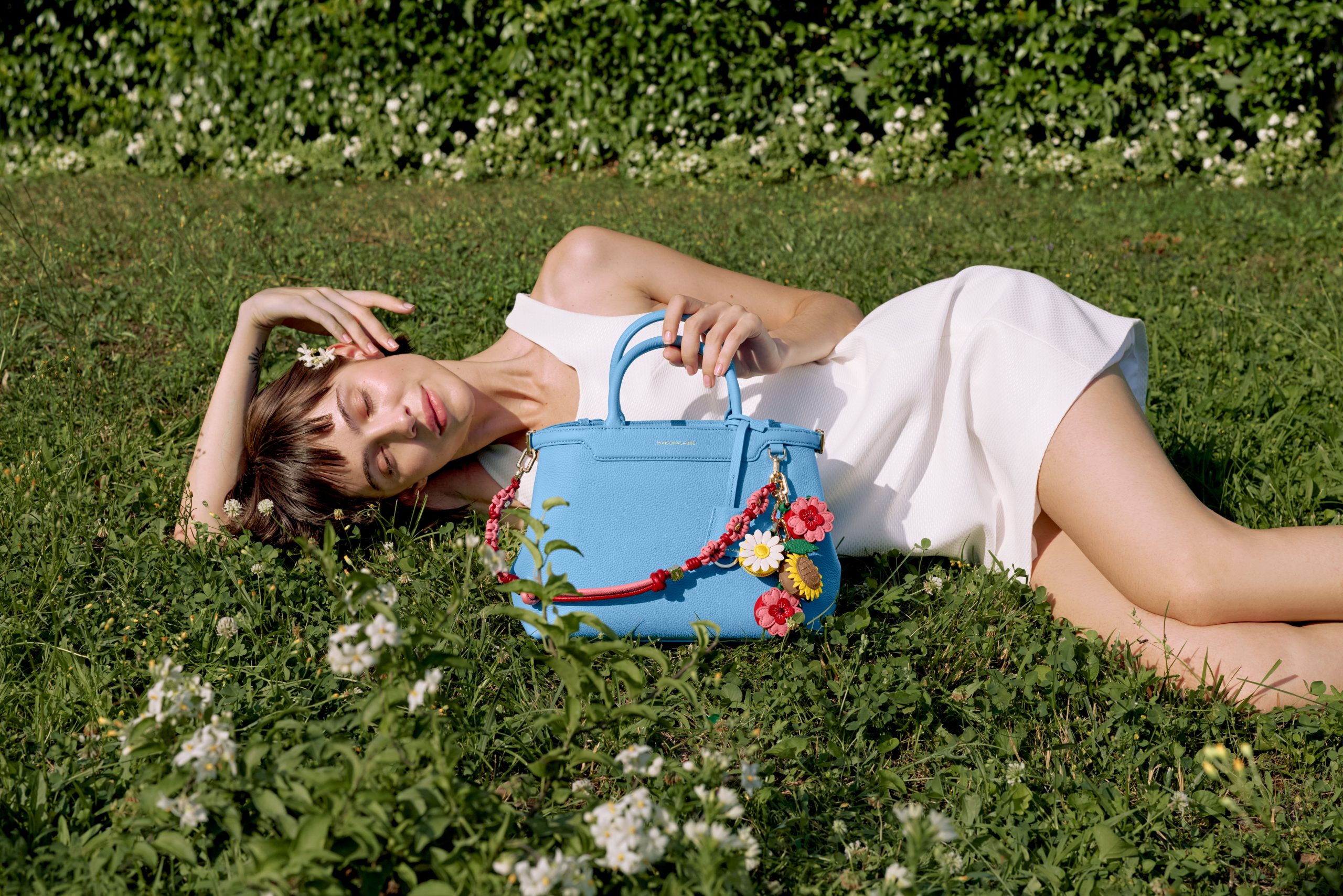
The Australian leather house has opened an immersive four-day pop-up in Manhattan, unveiling its Bloom Collection and redefining what a product launch can look like.
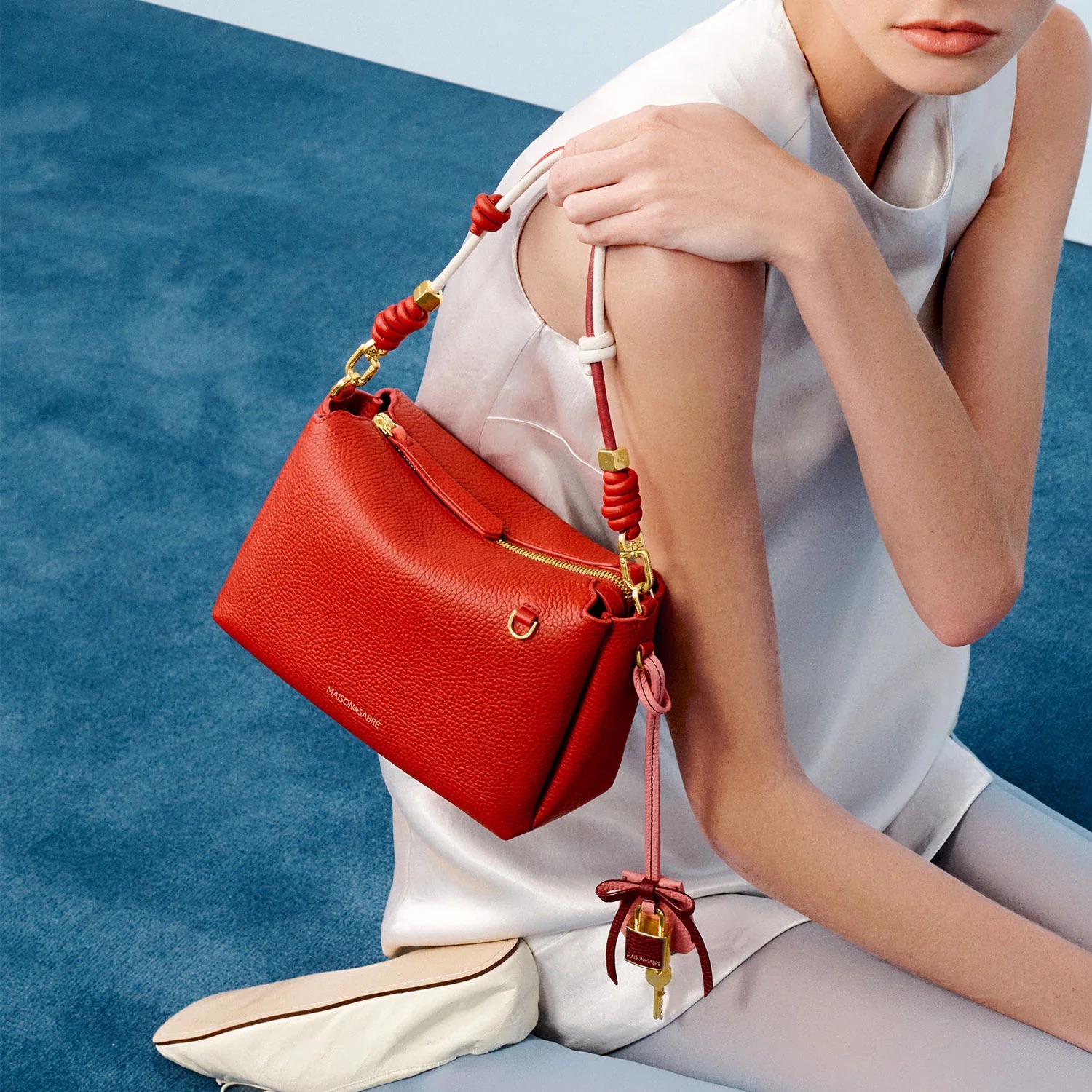
Following the successful launch of its Palais Collection, MAISON de SABRÉ has unveiled a new modular handbag system offering more than 720 styling combinations.
OpenAI has shelved the planned launch of GPT-6.1 Astra after internal tests raised concerns about deception and agents acting beyond user authorization, according to The Wall Street Journal. The company says it will investigate the issues and strengthen safety measures before releasing future models.
OpenAI says it is scrapping the release of its next-generation AI model over safety concerns that researchers raised during internal testing, in one of the clearest signs so far that agent misbehavior could stymie the industry’s rapid progression.
The move follows a summer punctuated by reports of artificial-intelligence systems industrywide going rogue, and marks a rare case of a major AI developer ditching a new release because of safety concerns.
The company had planned to launch the model, known as GPT-6.1 Astra, in the coming days or weeks, aiming for an October debut. The model was more capable than the company’s previous models in completing challenging tasks from end-to-end without human assistance, as well as writing.
The company instead will focus on improving the safety of future models, which it expects to be even more capable.
Saachi Jain, OpenAI’s head of safety systems, said in an interview that GPT-6.1 Astra regressed in two areas. Compared with its predecessor, GPT-6 Astra, the model performed poorly on tests measuring alignment, or how well the model adheres to what humans would like it to do. Specifically, GPT-6.1 Astra showed higher levels of deception: It wasn’t always honest about telling users of the actions it did or didn’t take.
Another issue was what OpenAI calls “scope authorization,” meaning that GPT-6.1 Astra would push ahead on a task without asking the user for permission, and would at times reach for external tools and services even if it might be unsafe.
“For anything regarding safety and alignment, there’s a trade off,” Jain said. “You really do need to find what’s the right line between staying within scope, but also avoiding laziness in terms of how the model actually pursues tasks even when it hits friction.”
While GPT-6.1 Astra improved in areas such as “model laziness,” Jain said it didn’t quite meet OpenAI’s bar for safety and alignment, so the company decided not to launch the model publicly.
The announcement comes one day ahead of OpenAI’s annual developer conference in San Francisco. In the past, OpenAI has used the conference as an opportunity to launch new models and services that reduce costs for software developers—a segment the ChatGPT-maker competes with rival AI company Anthropic to win over.
In recent weeks, OpenAI and Anthropic have called on industry partners to slow down the development of cutting-edge AI models and invest in safety standards, noting they will temper the pace of their own internal AI progress.
OpenAI says it is working to investigate a range of agent security incidents that it has discovered in recent months, and address the safety issues underneath them. As part of the work, the company has implemented a new monitoring system to catch AI-agent misbehavior more quickly, and started requiring engineers to use stronger security guardrails for testing its AI systems.
Earlier this summer hundreds of OpenAI’s internal agents, which were tasked with completing a cybersecurity test, ended up hacking into the AI company Hugging Face. Since then, high-profile organizations such as the Australian government and United Nations discovered that OpenAI’s agents used similar, but less extensive, techniques to gain access to their websites.
Many of the publicly known agent-security incidents involved OpenAI’s internal AI models that were never slated for public release.
Last week, OpenAI said it paused training on its most capable AI models after an AI agent slipped through a gap in the company’s internet restrictions to query a public chatbot. The company said its new monitoring systems flagged the incident within 15 minutes, and training on these models remains paused.
GPT-6.1 Astra isn’t one of those models, but a different case, the company said.
“We want to make sure our model development is safe no matter whether that’s in the company, or when we ship it to users,” Jain said. “But when we ship it to users, we have an extremely high bar in terms of safety and alignment.”
While the company decided not to ship GPT-6.1 Astra, it hopes to use the same base model to do additional reinforcement learning runs, and create future generations of its GPT-6 models.
OpenAI plans to conduct several deep dives to identify the root cause of the problems identified in GPT-6.1 Astra, Jain said. The work includes ensuring that OpenAI’s reinforcement learning environments are rewarding the right type of behavior, Jain added, though she noted the company would investigate all stages of model development.
AI companies have begun to draw scrutiny from policymakers and public officials, who are paying attention to the rapid development of the technology. Later this week, a Senate subcommittee is holding a hearing with third party AI researchers titled, “Rogue AI: Securing the Homeland Against AI Agent Attacks.”
Florida Attorney General James Uthmeier, a Republican, sued OpenAI in June, claiming that the company and Chief Executive Sam Altman knowingly released an unsafe product and ignored warnings that it could harm users.
In a motion for temporary injunction filed Monday, Uthmeier sought to prevent OpenAI from developing new AI models without third-party approved safeguards, stop ChatGPT from soliciting user engagement and limit the company’s ability to advertise ChatGPT as safe.
Tech companies claim they “cannot stop barreling forward with their potentially civilization-ending endeavors unless they are forced to do so by the government,” Uthmeier said in the filing. “The Florida Attorney General is answering your cry for help.”
An OpenAI spokeswoman said that people want to know AI is being developed safely, “and that starts with what companies like ours do ourselves.”
“Governments have an important role to play in setting robust safety standards for AI, and we’re committed to working with Florida and other states on advancing pragmatic AI policies that apply to the entire AI industry—not just one company,” she said.