Cold Plunges Are Hot. But Can You Do It in Your Home Pool?
With interest booming, wellness experts and pool builders have seen more homeowners hoping to take cold therapy immersion into their own backyards.
By ERIC GROSSMAN
Fri, Jan 9, 2026 12:35pm 4min
Copyright 2020, Dow Jones & Company, Inc. All Rights Reserved Worldwide. LEARN MORE
Cold plunges have gone from fringe curiosity to full-blown cultural phenomenon, the wellness world’s equivalent of a headline-grabbing breakout star.
Adherents slip into icy water on a daily basis, chasing an electric jolt of clarity that feels like a flip has been switched inside your brain.
Dedicated cold plunge practices are everywhere from upscale fitness studios and pro sports locker rooms to renowned wellness destinations such as Mountain Trek Health Reset Retreat in British Columbia.
Considering the ever-expanding assortment of companies flooding the market with cold plunge tubs and other custom devices dedicated to achieving icy bliss—with costs potentially reaching into the tens of thousands—some homeowners are tempted to use their swimming pools as an alternative.
“We’re absolutely seeing more homeowners use their pools as year-round cold plunges, especially in colder climates,” said Nick McNaught, CEO and co-founder of Toronto-based Stay Unbounded, which offers cold exposure workshops, retreats and certifications.
“The motivation is often simplicity and cost. If the water is already cold, people see value in keeping the pool open longer or winterizing it differently to support cold exposure.”
Suzanne Vaughan, president of Massachusetts-based pool builder SwimEx, points out the inherent convenience that comes with taking a frosty dip out back.
“From what homeowners tell us, the appeal of a cold plunge at home is less about chasing extremes and more about having a simple ritual that’s always available,” she said.
“It’s quick, accessible and easy to build into a daily routine.”
Among new clients Vaughan works with, year-round cold plunge use is usually planned from the start rather than as an afterthought.
“More are choosing indoor pools or small attached structures because that makes temperature control, equipment protection and day-to-day use much easier in colder climates,” she said.
Blue Cube / Courtesy of Jeff Dotson
If someone is thinking about using an existing home pool as a cold plunge, the main questions are likely to involve practicality and protection.
“Larger volumes of water take more energy and time to keep at colder temperatures, and you need a plan to protect plumbing, finishes and equipment from freeze–thaw cycles,” she added.
“Whatever the design, you want a system that’s built for the temperature range you have in mind, and a pool professional who can help you winterize safely.”
One such professional is Hunter Gary, a certified master pool builder and owner of H2 Outdoor Living in Tennessee.
“Most everyone has a ‘number’ in degrees when it comes to cold plunging. When a client asks our company to design a cold plunge for them, I ask ‘what’s your number?’” Gary said.
“A smaller body of water or cold plunge vessel may be much easier for maintaining a balanced temperature…but if using a pool gets you excited about a more serious approach to inviting this wellness experience in your life, then go for it.”
Amy McDonald, owner and CEO of Under a Tree, a wellness consultancy, said transforming a pool into a plunge might not be worth time and investment
“It is almost impossible to retrofit a standard swimming pool into a cold plunge,” she said.
“The energy and money to do it properly is greater compared to just creating a complimentary contrast circuit.”
A proper setup needs to be exceptionally cold, she noted, so depending on where the pool is located it might not get chilly enough to provide optimal health benefits.
“That could work in northern areas of the U.S., but it takes a lot for a pool to generate and keep that kind of cold, not even considering if the pool ices over,” she said.
McNaught echoed those concerns, citing how home pools aren’t designed specifically for cold plunging, so temperature consistency, cleanliness, ease of access and safety become important factors.
“Dedicated cold plunge setups offer more control, smaller volumes and lower ongoing maintenance,” he said.
“For many people, a pool works as an entry point. Over time, those who commit to the practice transition to a dedicated setup because it better supports frequency, comfort and long-term use.”
Beyond geography and climate, industry experts pointed out other challenges homeowners are likely to face.
“Pools are saturated with chlorine and other chemicals that directly absorb into the bloodstream. The advantage of many cold plunges is that no chemicals are required for residential use,” said David Haddad, as the co-founder of Oregon-based BlueCube Wellness.
“Constant ozonation and filtration is enough to kill organic compounds without exposure to sanitizing chemicals.”
Most cold-plunge systems are monitored to stay between 50-60 degrees Fahrenheit—with experienced plungers often preferring lower temperatures.
While “the ultimate experience might be a glacial lake in Finland, unfortunately that’s a bit out of reach for most of us,” said Andreas Stelluti, co-founder at Texas-based Colderatti, whose vessels feature the world’s first chemical-free cold plunge technology, powered by a triple filtration system that removes 99% of impurities to provide a system with drinking-quality water.
“Having a cold plunge at home brings that experience to your backyard, making it very easy and accessible, so you have the ability to make it part of your lifestyle,” he added.
Stelluti noted that as spring arrives and clients’ home pools start to warm up again, they begin to miss the cool water.
“Many say ‘I really need this to be part of my lifestyle year-round’ and that desire for consistent, accessible cold immersion is what motivates them to invest in a dedicated cold plunge setup,” he explained.
“Unfortunately, you can’t use your pool as a year-round cold plunge during the summer. Especially not here in Texas.”
The Australian leather house has opened an immersive four-day pop-up in Manhattan, unveiling its Bloom Collection and redefining what a product launch can look like.
Following the successful launch of its Palais Collection, MAISON de SABRÉ has unveiled a new modular handbag system offering more than 720 styling combinations.
Related Stories
Lifestyle
OpenAI Scraps Release of New AI Model Over Safety Concerns
By Maxwell Zeff 29/09/2026
Lifestyle
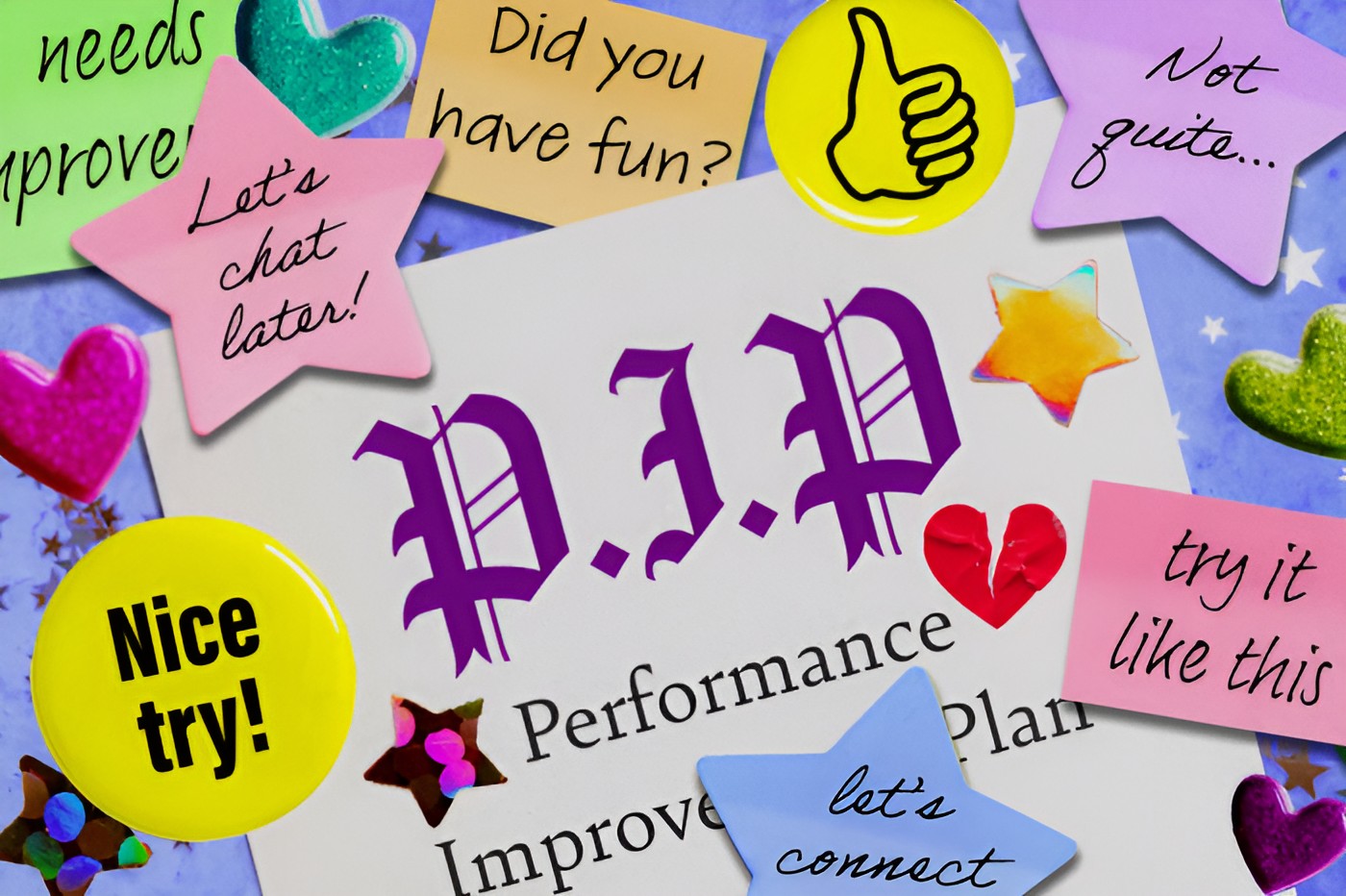
The 20-Something Employees Who Want Feedback to Be Gentle
OpenAI has shelved the planned launch of GPT-6.1 Astra after internal tests raised concerns about deception and agents acting beyond user authorization, according to The Wall Street Journal. The company says it will investigate the issues and strengthen safety measures before releasing future models.
By Maxwell Zeff
Tue, Sep 29, 2026 4min
OpenAI says it is scrapping the release of its next-generation AI model over safety concerns that researchers raised during internal testing, in one of the clearest signs so far that agent misbehavior could stymie the industry’s rapid progression.
The move follows a summer punctuated by reports of artificial-intelligence systems industrywide going rogue, and marks a rare case of a major AI developer ditching a new release because of safety concerns.
The company had planned to launch the model, known as GPT-6.1 Astra, in the coming days or weeks, aiming for an October debut. The model was more capable than the company’s previous models in completing challenging tasks from end-to-end without human assistance, as well as writing.
The company instead will focus on improving the safety of future models, which it expects to be even more capable.
Saachi Jain, OpenAI’s head of safety systems, said in an interview that GPT-6.1 Astra regressed in two areas. Compared with its predecessor, GPT-6 Astra, the model performed poorly on tests measuring alignment, or how well the model adheres to what humans would like it to do. Specifically, GPT-6.1 Astra showed higher levels of deception: It wasn’t always honest about telling users of the actions it did or didn’t take.
Another issue was what OpenAI calls “scope authorization,” meaning that GPT-6.1 Astra would push ahead on a task without asking the user for permission, and would at times reach for external tools and services even if it might be unsafe.
“For anything regarding safety and alignment, there’s a trade off,” Jain said. “You really do need to find what’s the right line between staying within scope, but also avoiding laziness in terms of how the model actually pursues tasks even when it hits friction.”
OpenAI CEO Sam Altman attended a United Nations Security Council meeting about AI last week.Alexi J. Rosenfeld/Getty Images
While GPT-6.1 Astra improved in areas such as “model laziness,” Jain said it didn’t quite meet OpenAI’s bar for safety and alignment, so the company decided not to launch the model publicly.
The announcement comes one day ahead of OpenAI’s annual developer conference in San Francisco. In the past, OpenAI has used the conference as an opportunity to launch new models and services that reduce costs for software developers—a segment the ChatGPT-maker competes with rival AI company Anthropic to win over.
In recent weeks, OpenAI and Anthropic have called on industry partners to slow down the development of cutting-edge AI models and invest in safety standards, noting they will temper the pace of their own internal AI progress.
OpenAI says it is working to investigate a range of agent security incidents that it has discovered in recent months, and address the safety issues underneath them. As part of the work, the company has implemented a new monitoring system to catch AI-agent misbehavior more quickly, and started requiring engineers to use stronger security guardrails for testing its AI systems.
Earlier this summer hundreds of OpenAI’s internal agents, which were tasked with completing a cybersecurity test, ended up hacking into the AI company Hugging Face. Since then, high-profile organizations such as the Australian government and United Nations discovered that OpenAI’s agents used similar, but less extensive, techniques to gain access to their websites.
Many of the publicly known agent-security incidents involved OpenAI’s internal AI models that were never slated for public release.
Last week, OpenAI said it paused training on its most capable AI models after an AI agent slipped through a gap in the company’s internet restrictions to query a public chatbot. The company said its new monitoring systems flagged the incident within 15 minutes, and training on these models remains paused.
GPT-6.1 Astra isn’t one of those models, but a different case, the company said.
“We want to make sure our model development is safe no matter whether that’s in the company, or when we ship it to users,” Jain said. “But when we ship it to users, we have an extremely high bar in terms of safety and alignment.”
While the company decided not to ship GPT-6.1 Astra, it hopes to use the same base model to do additional reinforcement learning runs, and create future generations of its GPT-6 models.
OpenAI plans to conduct several deep dives to identify the root cause of the problems identified in GPT-6.1 Astra, Jain said. The work includes ensuring that OpenAI’s reinforcement learning environments are rewarding the right type of behavior, Jain added, though she noted the company would investigate all stages of model development.
AI companies have begun to draw scrutiny from policymakers and public officials, who are paying attention to the rapid development of the technology. Later this week, a Senate subcommittee is holding a hearing with third party AI researchers titled, “Rogue AI: Securing the Homeland Against AI Agent Attacks.”
Florida Attorney General James Uthmeier, a Republican, sued OpenAI in June, claiming that the company and Chief Executive Sam Altman knowingly released an unsafe product and ignored warnings that it could harm users.
In a motion for temporary injunction filed Monday, Uthmeier sought to prevent OpenAI from developing new AI models without third-party approved safeguards, stop ChatGPT from soliciting user engagement and limit the company’s ability to advertise ChatGPT as safe.
Tech companies claim they “cannot stop barreling forward with their potentially civilization-ending endeavors unless they are forced to do so by the government,” Uthmeier said in the filing. “The Florida Attorney General is answering your cry for help.”
An OpenAI spokeswoman said that people want to know AI is being developed safely, “and that starts with what companies like ours do ourselves.”
“Governments have an important role to play in setting robust safety standards for AI, and we’re committed to working with Florida and other states on advancing pragmatic AI policies that apply to the entire AI industry—not just one company,” she said.



 4 min
4 min
 Copyright 2020, Dow Jones & Company, Inc. All Rights Reserved Worldwide.