MAISON de SABRÉ TAKES PARIS: AUSTRALIA’S MODERN LUXURY BRAND ARRIVES AT LE BON MARCHÉ
Eight years after launching from Brisbane, MAISON de SABRÉ has made its Paris debut at Le Bon Marché Rive Gauche, confirming its place among the world’s new generation of luxury houses.
By Jeni O'Dowd
Mon, Nov 3, 2025 10:07am 2min
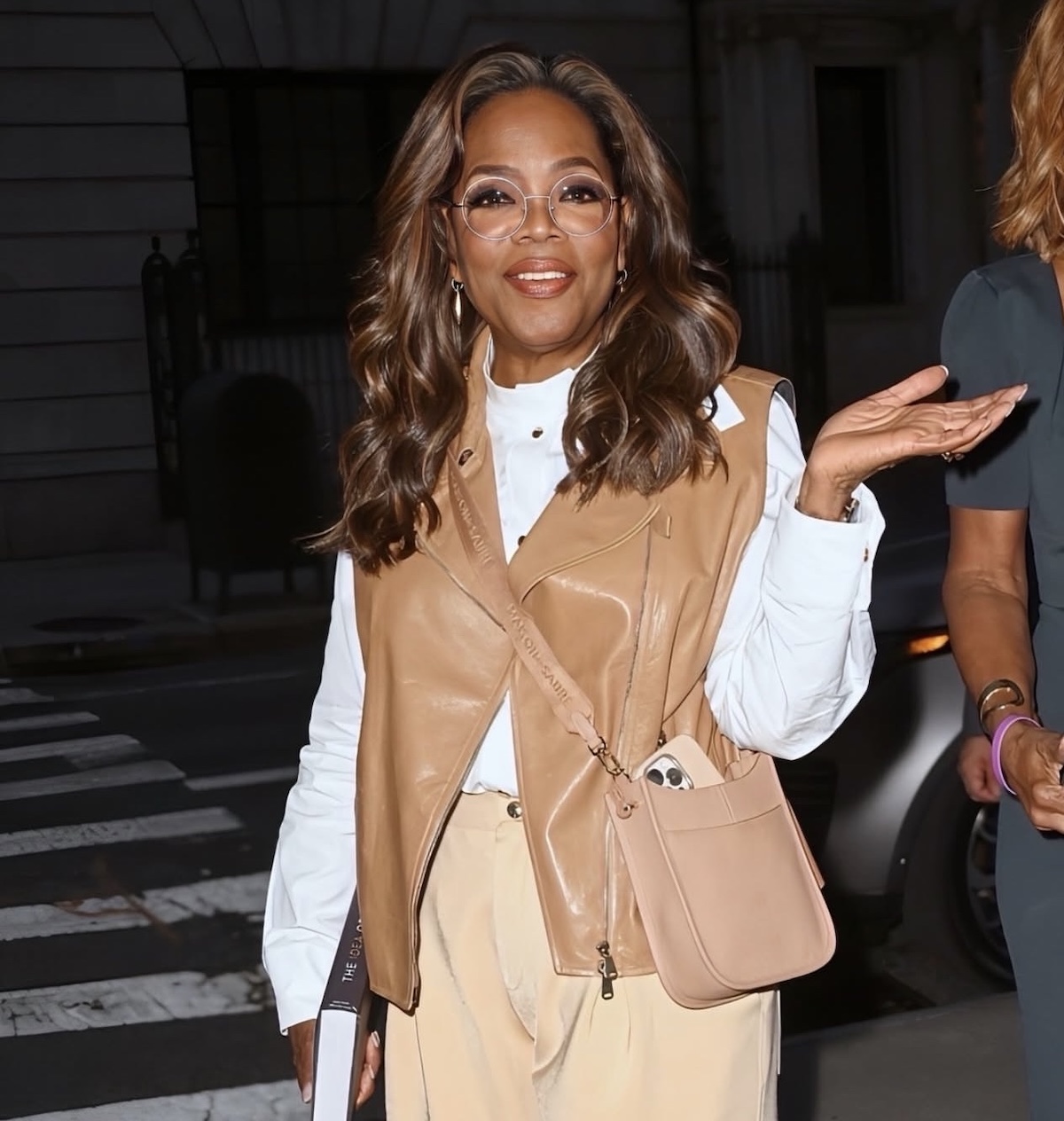
Australian design house MAISON de SABRÉ has opened a pop-up at Le Bon Marché Rive Gauche, marking its first Paris appearance and celebrating eight years of extraordinary growth for the brand founded by brothers Omar and Zane Sabré.
The residency, running from October 25, 2025, to January 3, 2026, positions the self-funded label within one of the world’s most exclusive retail destinations — a milestone that cements its status as one of Australia’s most successful global luxury exports.
Since its founding in 2017, MAISON de SABRÉ has evolved from a personalised phone case start-up into a $100 million modern luxury business, now shipping to more than 150 countries.
Around 80 per cent of its sales come from international markets, proof that its clean, design-led aesthetic and commitment to craftsmanship have global appeal.
At the centre of the Paris showcase is The Palais, the brand’s flagship handbag and new icon. Conceived over eight years, its architectural form represents MAISON de SABRÉ’s shift from personalised accessories to the rarefied territory of luxury fashion.
“The industry loves to romanticise heritage,” says co-founder Zane Sabré. “But heritage doesn’t guarantee relevance. The Palais proves you don’t need a century of history to create something iconic – you need conviction, execution, and a brand people actually believe in.”
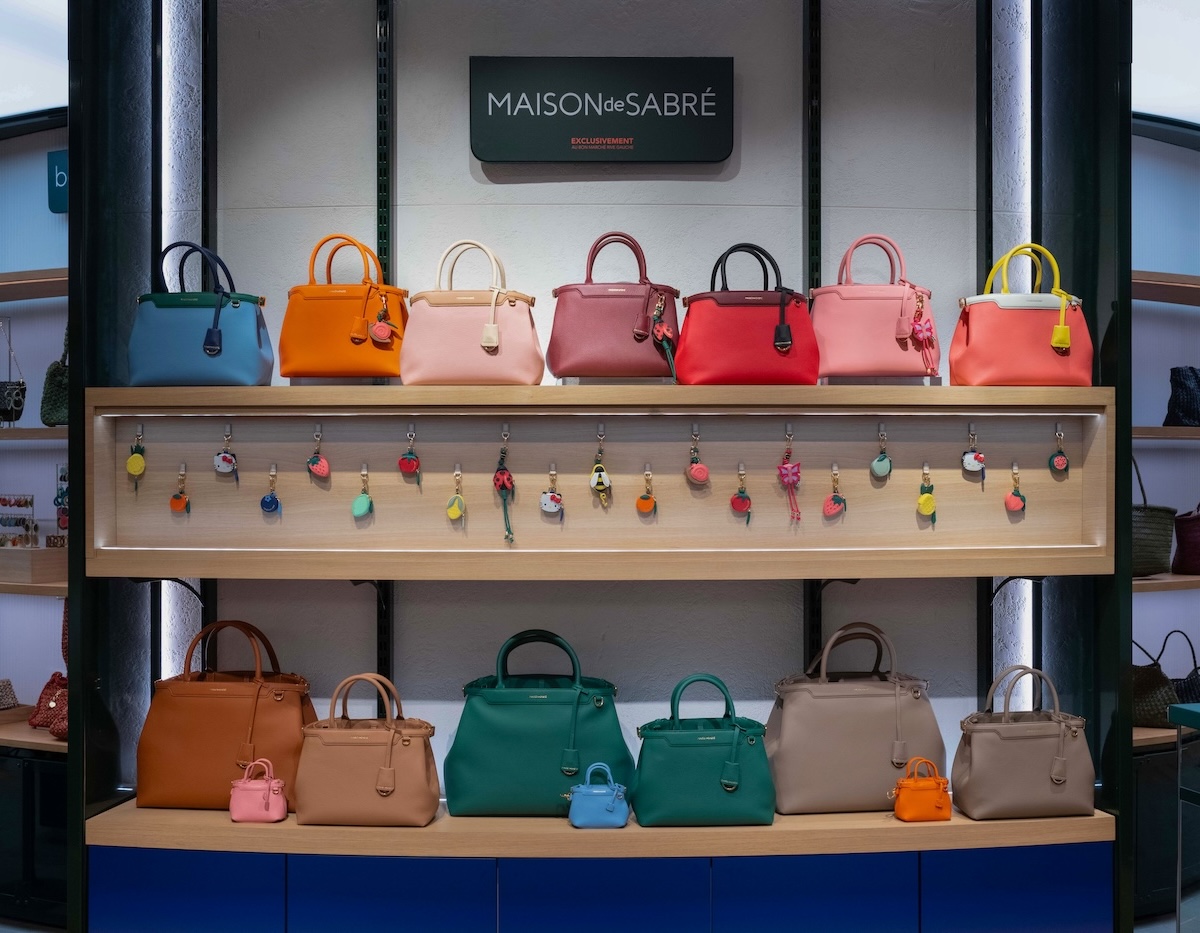
Maison de Sabré Pop-up at Le Bon Marché, October 2025, Paris
Brother and creative director Omar Sabré adds, “Hermès has the Birkin. We have The Palais.”
Following its global sell-out debut earlier this year, The Palais now leads the brand’s international assortment and signals its arrival in the global handbag market.
The Le Bon Marché installation features multiple sizes of the bag, alongside the full collection of handbags and small leather goods. A Charm Bar offering on-site personalisation brings the brand’s signature interactive retail experience to the Paris stage.
The pop-up follows a string of high-profile activations in Tokyo, New York and Milan, where MAISON de SABRÉ has demonstrated its ability to reinterpret traditional luxury through a modern, design-forward lens.
Its recent flagship experience at Tokyo’s Miyashita Park placed the brand alongside Louis Vuitton, Gucci, Prada and Balenciaga — a move that signalled its ambition to compete at the highest level.
Underpinning MAISON de SABRÉ’s rise is a quiet but resolute commitment to sustainability and responsible production. The brand sources all leather from Leather Working Group Gold-Rated tanneries, including a Dutch partner pioneering waterless tanning technology that saves up to 20 litres of freshwater per hide.
Its charm collections are crafted from upcycled leather offcuts, demonstrating that environmental awareness can coexist with luxury design.
For a brand that began in Australia with a single monogrammed accessory, the Paris debut at Le Bon Marché is more than a retail event. It’s a statement — that modern luxury can be born anywhere, thrive without legacy, and redefine craftsmanship for a global audience.
From Tokyo backstreets to quiet coastal towns and off-grid cabins, top executives reveal where they holiday and why stepping away makes the grind worthwhile.
From woven fibres to sculpted metal and clay, textural wall art is redefining high-end living spaces with depth, tactility and light.
By Sara Mulcahy
Tue, Dec 23, 2025 4min
In 2026, home interior trends are predicted to reflect our growing need for warmth, comfort and personal expression: a response, perhaps, to the fast-paced, always-on lifestyle many of us feel forced to embrace.
And where better to start than the four walls that define your living space? Unlike flat prints and traditional paintings, textured art invites engagement, creating a dynamic ambience in living rooms, bedrooms and outdoor entertaining spaces.
Interior designers are increasingly looking to create a multi-sensory experience, and wall art is a key part of that: blending art and sculpture, creating a focal point, and showcasing changing light patterns throughout the day.
Weaving ways
Sydney-based fibre artist Catriona Pollard uses traditional techniques to transform foraged plant fibres and recycled materials into evocative, sculptural works.
“I discovered weaving more than a decade ago, at a time when I was searching for a slower, more mindful way of creating,” she says.
“I had been working in a very fast-paced environment, and weaving became a way to reconnect with myself and with nature.”
Much of Pollard’s inspiration comes directly from the Australian landscape, from the textures of bark, seed pods and leaves, to the movement of wind and water.
“I see weaving not just as a technique, but as a dialogue with nature, where the materials guide the direction of the work as much as I do,” she explains.
Textural wall art is credited with bringing another dimension to how we experience art. A flat canvas is viewed front-on, but fibre works extend into space and interact with their surroundings.
They cast shadows that shift throughout the day, so the work is never static, it is alive and responsive to light.
“There is something visceral about woven materials,” says Pollard.
“People instinctively want to touch them, to feel the textures and patterns. Fibre carries its own history, whether it is a vine that once grew in the bush or copper wire that once carried electricity, and that embedded story becomes part of the artwork.”
Leaf Skeleton, Helen Neyland’s intricate metal wall art, captures the fragility of nature in sculptural form.
Metal magic
At the other end of the material spectrum, metal is also having a moment. Flexible, versatile and built to last, it brings a striking talking point to entertaining spaces indoors or out.
“I have been making sculptural wall art for over 30 years. I draw my ideas from organic shapes in nature and also from mechanical and architectural forms, and make work that has texture, depth and movement,” says Helen Neyland, artist and creative director at Entanglements Metal Art Studio at her Jasper Road studio in Melbourne’s Ormond.
“Metal wall art breaks away from a painting. It is 3D, it is textural, it works indoors or out, in foyers, large voids and bare walls. As the light passes through the day, the shadows change, stretching and falling across the wall. It gives you a work that is alive. You can backlight it for effect, or just let the light play naturally.”
Neyland notes that more people are seeking handmade, crafted pieces.
“There is more value placed on artisan work,” she says. “Sculptural wall art gives depth, presence and honesty that you do not get with mass-produced pieces.”
Stigmartyre by Brad Gunn evokes both reverence and unease.
Emerging artists
Bluethumb Gallery is Australia’s largest online gallery of original art, representing more than 30,000 emerging and established artists across the country.
Nadia Vitlin is one of them. Based in Sydney, she has a background in geospatial and biological sciences and describes her art as bringing together “the study of nature, humanity, emotions and sociological phenomena through the lens of the scientist”, via the tactile form of clay.
“I do also create two-dimensional works, and love having ‘flat’ art on my walls, but 3D and textured wall art is really having a moment,” she says.
“This may be because they are like hung sculptures more than they are paintings, and can contribute to the feel of a space rather than directly telling a visual story. Another thing may be that the tactility of a 3D object is quite irresistible.
“I always let gallery visitors touch my artworks – within reason! It is especially tempting because I make hard clay look soft, so the brain cannot help but want to feel it to understand it.”
Sculptor Brad Gunn agrees. “I think the element of depth captures the viewer’s eyes more quickly. It invites touch, and the tactile nature gives a secondary element to the work.
“Also, as the light changes in the room, either from the natural sun’s rays, overhead lighting or lamps, the work will cast its own shadows and feel different throughout the day.”
This story appeared in the summer issue of Kanebridge Quarterly Magazine. You can buy a copy here.


 2 min
2 min