NEW WAVE: THE EVOLUTION OF AUSTRALIA’S COASTAL LUXURY
From the shacks of yesterday to the sculptural sanctuaries of today, Australia’s coastal architecture has matured into a global benchmark for design.
By Kirsten Craze
Mon, Dec 1, 2025 6:00am 4min
In the land down under, the beach is in our DNA. So is it any wonder that Australian architecture is leading the world in luxury coastal design?
With about 85 per cent of our population living within 50 kilometres of the coastline, we’ve perfected the art of the beach house. Yet over the past two decades, there’s been a sophisticated shift in the traditional coastal cottage.
The residential revolution that has washed over our most valuable waterfront locations has replaced the original weatherboard “shacks” by the sea with a contemporary design movement shaped by admiration and respect for the natural environment.
No longer simply about the view, today’s coastal architecture is about creating beautiful homes that perform seamlessly in an increasingly volatile climate while meeting the rising tide of high-net-worth buyers who want it all.
From infinity pools to wellbeing spaces that connect with nature, one-time weekenders have been transformed into permanent escapes, providing year-round indulgence.
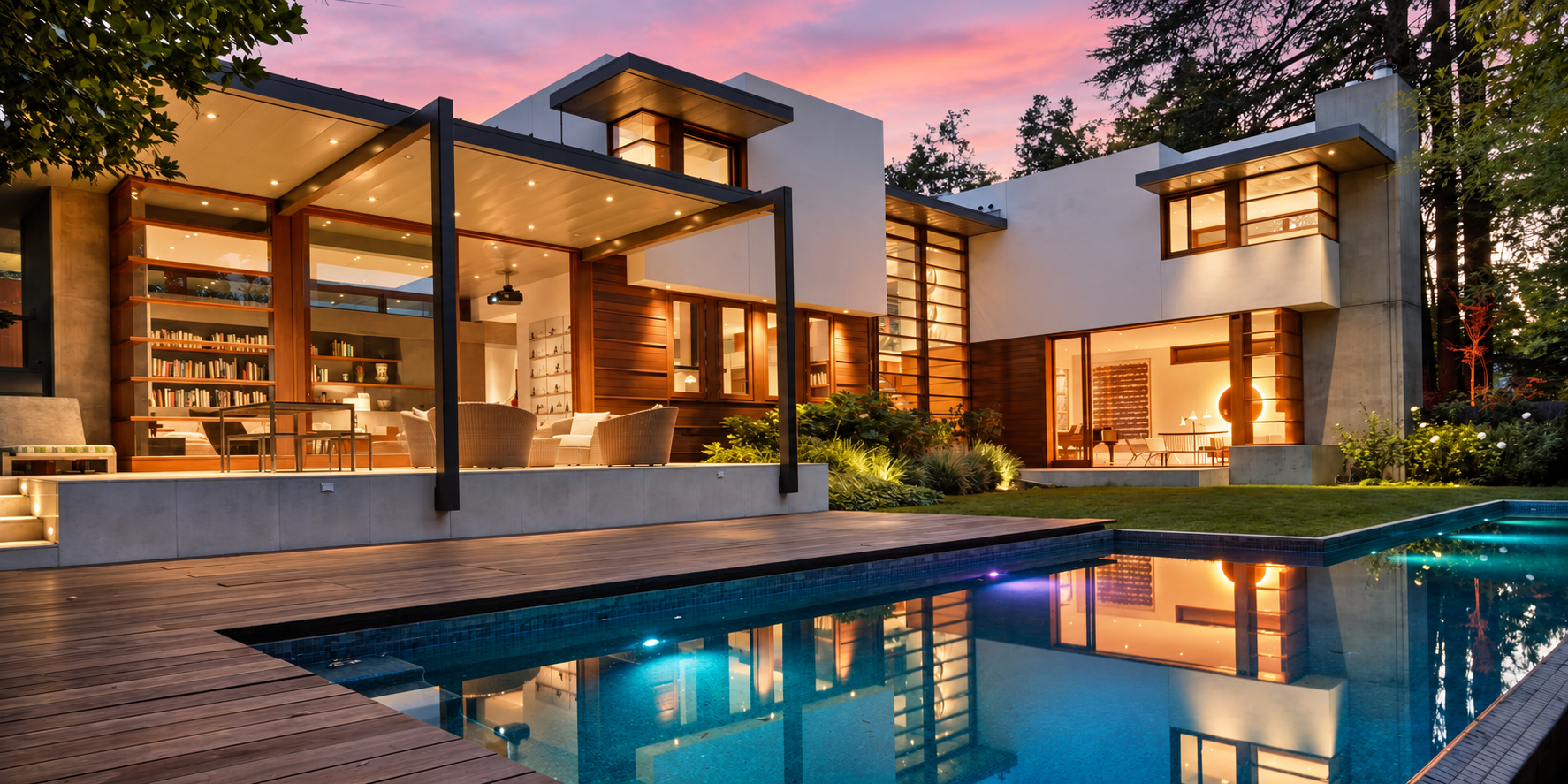
The Wamberal beach house.
An island home
Belgian-born, Tasmania-based architect Lara Maeseele believes the quintessential coastal home has become a finely tuned instrument. With more vacant land to experiment with, and lower entry prices, she says the Apple Isle is perfectly placed for architects and homeowners to explore the new-age beach house.
“A highlight in Tassie is you can find these amazing vacant blocks on the coastline, and still be blown away by the unexpected views,” she says.
Having studied in Belgium and worked in London, Maeseele brings a northern European minimalist sensibility to the Australian beach house.
“Our way of life is so complex. When we get home, it’s nice to slow down, to declutter and find some peace and quiet.”
Nebraska House on Bruny Island took home the 2025 HIA Tasmanian Home of the Year and earned a commendation at the Houses Awards, but Maeseele still affectionately refers to her design overlooking the D’Entrecasteaux Channel as a “shack.”
“What we tried to do was make sure that from the foreshore, it was kept small and consistent with the neighbouring properties, and that’s the luxury element that I see in the shack. It sits quietly in its setting.”
With a water backdrop from most rooms, she says the ocean was a primary player when designing the house, but light was just as important for the clients.
“Both the western and eastern elevations slide wide open so it feels like a bit of an umbrella,” she says. “Then in winter, it’s fully insulated and glazed. When the sun sets, you have the most beautiful evenings, feeling cosy and sheltered while watching the wind and water outside.”
True to her European roots, Maeseele believes that when it comes to aesthetically pleasing and functional coastal design, the less-is-more approach should drive every project.
“We’re on an island, so we’re very aware any build leaves an impact,” she says. “We chose lightweight materials so, in the end, the house could be dismantled and the timber reused.”
Light pours into the Wamberal Beach house dining room.
Thriving by the sea
Sydney architect Jon King, who has designed both beach houses and boutique hotels, says the new generation of coastal design is a balancing act between luxury and environment.
Even in today’s dazzling designs, he believes comfort should still overshadow spectacle.
“If you’re going to make an exceptional beach house, it has to adapt. It needs to be beautiful when the sun is shining and the whales are jumping out of the water, but the next day it needs to withstand horrendous southerlies and wild storms,” he says.
“The material choices are vital because they need to look great, but last in that salty environment and in extreme winds and rain.”
What was once the domain of fibro cottages has developed into a sea of enviable, state-of-the-art designs.
“For a long time, we lived simply in beach environments because the land was cheap and our buildings were unsophisticated. But now, living on the coast has become coveted, even fetishised. People are making statements through architecture, and that changes everything.”
He says that in an effort to connect with nature, the temptation can be to build with vast walls of glass to capture the ultimate panorama, but subtle design can be more successful when it gives the dramatic backdrop a curated cameo.
“Most coastal locations are suburban in nature with small blocks and neighbours either side, so you can’t always get the view you want,” he says.
“But you can frame it beautifully rather than opening everything up to the elements.”
Cheyne Fox of White Fox Gold Coast, who has recently listed one of only two houses on Hayman Island in the Whitsundays, agrees that Australia’s coastal homes are unparalleled.
“Gone are the days when people wanted their properties to stand out and look at odds with the surrounds. Today’s luxury designs are very much about fitting in,” Fox says.
The Residence at Hayman spans three levels and offers more than 1,400 square metres of internal and external living space.
Designed by the late, internationally renowned architect Kerry Hill, it also features breezeways, terraces and an infinity pool designed to embrace the subtropical environment.
“When you get to Hayman Island, you get calico bags. There are no plastic bottles or even cars. There is a true respect for the environment, being so close to the Great Barrier Reef. And as such, the architecture reflects that ethos.”
She says high-net-worth buyers will pay top dollar for such indulgent and considered coastal designs.
“This is a once-in-a-lifetime proposition for a purchaser, but also a once-in-a-lifetime proposition for an agent.”
The Australian leather house has opened an immersive four-day pop-up in Manhattan, unveiling its Bloom Collection and redefining what a product launch can look like.
Following the successful launch of its Palais Collection, MAISON de SABRÉ has unveiled a new modular handbag system offering more than 720 styling combinations.
Related Stories
Property
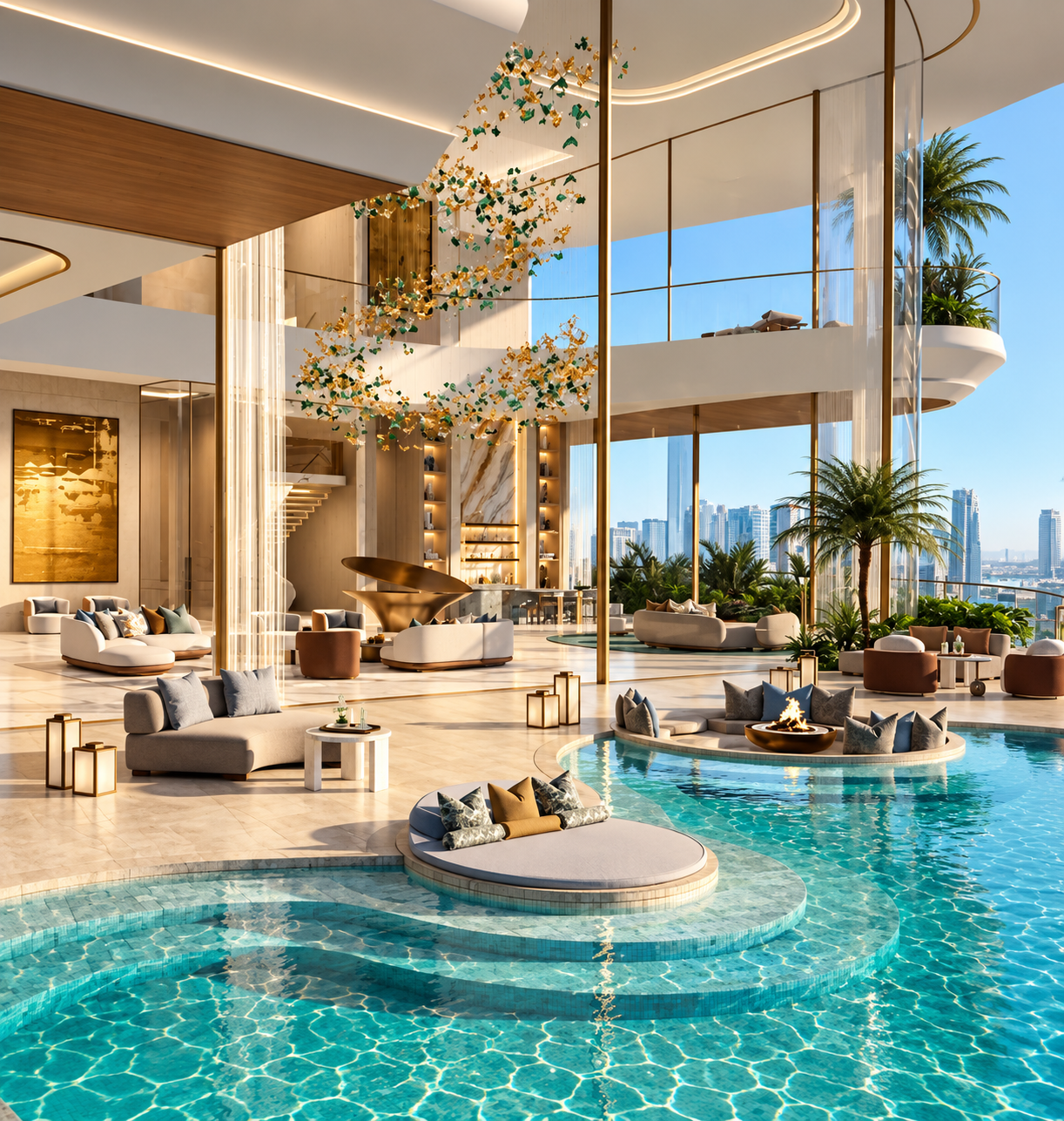
Dubai and Abu Dhabi’s Trophy-Home Developers Are Doubling Down on Waterfront Living
By Jake Emen 01/10/2026
Property
A Modern Home in Silicon Valley Lists for $44 Million
By E.B. Solomont 24/09/2026
Property
The 60-Year-Old Real-Estate Agent Giving History Lessons on Instagram
رغم التوترات الإقليمية، يواصل سوق العقارات الفاخرة في الإمارات جذب المشاريع الجديدة، مع تصدر الواجهات البحرية المشهد. وتستعد دبي وأبوظبي ورأس الخيمة لإطلاق مجموعة من المشاريع السكنية الفاخرة، بينها مساكن تحمل علامات فندقية عالمية مثل Ritz-Carlton وJanu.
By Jake Emen
Thu, Oct 1, 2026 6min
Long-term optimism remains strong in the United Arab Emirates, even as the war in neighboring Iran hinders home sales and demand for now.
While there have certainly been residential and commercial real estate projects across the U.A.E. that have been paused or delayed due to the turmoil experienced across the region, by and large, new developments continue to be launched.
That’s the case in the luxury residences sector in particular, where a string of starry, big-name projects are putting homes on the market before the close of the year. One trend is that the islands of Dubai, Abu Dhabi and the U.A.E. at large that are taking their turn in the spotlight, as waterfront living continues to be in demand and come at a premium.
For would-be buyers looking for resort-style homes along the shores, there’s an array of upcoming projects to get excited about. Right at the top of the list are hotel branded residences from the likes of Ritz-Carlton and Janu, the sister brand of powerhouse Aman, among five swanky projects selling this season.
Credit: The Ritz-Carlton Residences Al Maryah Island
The Ritz-Carlton Residences Al Maryah Island, Abu Dhabi
Luxury hotel branded residences are thriving, and the exciting Ritz-Carlton Residences Al Maryah Island development is a great example of why. Residents can expect hotel-style amenities and services from a locale within Abu Dhabi’s thriving waterfront district, with the creature comforts of home built into it.
This project was unveiled at Abu Dhabi Finance Week 2025 and promises to offer The Ritz-Carlton brand’s signature, timeless style and unwavering attention to detail. All units will feature floor-to-ceiling windows with enviable views, while residents will be able to take advantage of a resort-grade, infinity waterfront pool, immersive spa and wellness facilities, and a waterfront promenade with curated outdoor spaces as well as high-end retail and dining venues.
Sales launch in October.
Number of Units: 172
Price Range: Starting at $1.2 million
Developer/Architect: Killa Design and Tara Bernerd, with SAAS Properties.
Home Sizes: One- to four-bedroom residences ranging from 882 square feet to 4,962 square feet, and a five-bedroom, 13,713-square-foot penthouse.
Amenities: Wellness facilities including premium fitness center, massage room, meditation and recovery rooms, cold plunge and indoor pool. There’s also a rooftop pool, co-working lounge, executive golf lounge, and a games room and children play area.
Just 50 minutes from Dubai International Airport, Janu Al Marjan Island aims to both feel a world apart from the city, while also offering supreme ease of access. The property has its own private stretch of beach and marina, ideal for superyacht mooring and serving as the scene of a beach club.
The Janu Residences will be positioned next to the Janu hotel, with residents able to take advantage of its many social and wellness spaces, in addition to resident’s-only amenities and services. Meanwhile, the adjacent Wynn Al Marjan Island, the U.A.E.’s first integrated resort, is in direct proximity as well.
Social life by the sea, with discretion and wellness on tap, not to mention a chance to get in early on burgeoning Ras Al Khaimah.
Sales launch in late October.
Number of Units: 73
Price Range: Starting at $2.3 million
Developer/Architect: Jointly developed by Marjan and Wynn Resorts, with architecture by SCDA Architects.
Home Sizes: One- to five-bedroom residences ranging from 2,117 square feet to 18,955 square feet, as well as five Marina Villas and a residential tower penthouse.
Amenities: An active lifestyle comes to the forefront with the Janu Spa and Wellness center and a padel court. Six dining venues and a signature beach club are key features for residents who want it all, right on-site.
Sei Saadiyat, Saadiyat Cultural District, Abu Dhabi
Located in the Saadiyat Cultural District, Sei Saadiyat combines its historic locale with a unique spin rooted in the Japanese concept of stillness and calm, or “Sei.” That foundational principle is what this community will be based on, with a mission to foster wellness and relaxation in all forms, including fitness and social connection.
A total of 778 homes will be spread across six Jacobs-designed buildings. Aldar is also introducing a first in their residential portfolio in the form of their two-bedroom Kanso Lofts at Sei Saadiyat, featuring double-height, open-plan living in loft style spaces including an elevated bedroom.
Phase one sales launched in September.
Number of Units: 778 total (265 involved in this phase one launch)
Price Range: Starting at $800,000
Developer/Architect: Aldar with architecture by Jacobs and interiors by Kettle Collective.
Home Sizes: Residences range from 753 square feet to 2,238 square feet, in a range of floor plans including one- and two-bedroom apartments, three-bedroom Kanso Residences and two-bedroom Kanso lofts.
Amenities: Amenities tie into the brand’s ethos of stillness and calm: expect a Zen garden with serenity pool and outdoor yoga decks, along with numerous indoor and outdoor fitness areas, and hot-and cold-pool experiences.
Amali Canal Residences is located on Dubai Canal in Al Wasl. The community is suspended above the canal, and brings the presence of water even closer to home with a number of features including private plunge pools in every residence, and a swim-through, indoor-outdoor pool with a signature waterfall facade that would make the posh resorts of the Swiss Alps blush.
There will be no shortage of on-site entertainment and diversions, whether in the form of a private cinema and resident bowling alley, cigar lounge and library, padel and sports courts, a panoramic fitness center. Then there’s The Retreat, a wellness center incorporating spa, sauna, steam, onsen baths, hydrotherapy, and yoga and pilates studios. When it’s time for a bit of work in between the diversions, residents can use an executive boardroom, private studies and co-working lounges.
Sales launch in October.
Number of Units: 211
Price Range: Two bedrooms starting at $3.9 million; three bedrooms starting at $5.4 million; four bedrooms starting at $7.4 million; penthouse pricing on request.
Developer/Architect: Amali Properties in collaboration with AHS Properties, with architecture by Killa Design and interior design by HBA Residential.
Home Sizes: Two- to four-bedroom apartments ranging from 2,880 square feet to 7,800 square feet, in addition to four- and five-bedroom penthouses ranging up to 21,000 square feet.
Amenities: 55,000 square feet of interconnected amenity spaces including myriad lounges, infinity pools with cabanas, children’s waterpark and child care center, padel court and a rooftop secret garden.
The Rixo Residences on Al Reem Island, Abu Dhabi, are designed to match its island environs with the thriving culture and finance dynamics of the city. Panoramic water and skyline views bring both faces to life, in this East & West Properties project.
Residences showcase expansive terraces offering boundless views from within a community centered around three dedicated amenity zones: the Oasis, the Haven and the Gathering. Together, wellness, fitness, social life and relaxation are all available in a number of formats.
Less than half a mile from the coast, and only 10 minutes from downtown Abu Dhabi, Rixos Residences offers generous layouts and amenity-rich public spaces that deliver equally as well for family-friendly living as well as investors.
Sales launched in August.
Number of Units: 386
Price Range: One-bedrooms starting at $570,000, with larger loft units starting at $1.8 million.
Developer/Architect: East & West Property Development under the Ennismore portfolio, with architect Aedas and interiors by HBA Residential.
Home Sizes: One- to two-bedroom apartments as well as three- and four-bedroom lofts, from 954 square feet to 2,941 square feet.
Amenities: Wellness treatment areas as well as Turkish hammam and steam rooms, landscaped walking tracks, padel court, rooftop clubhouse and plunge pool, private cinema, and services including concierge, valet and security.


 4 min
4 min