‘Wuthering Heights’ Review: Emerald Fennell’s Emphasis on Longing
Margot Robbie and Jacob Elordi star in an adaptation of the classic novel that respects the romance’s slow burn.
The most 2026 element of the latest screen adaptation of 1847’s hottest novel, “Wuthering Heights,” is the scene in which Heathcliff repeatedly asks the young lady he’s undressing, “Do you want me to stop?” even as she writhes with lust, indicating an affirmative response is unlikely.
Previously understood as a notorious brute even by 19th-century standards, Heathcliff now exhibits signs of having earned perfect grades in today’s campus training modules.
There’s also a reference to septicemia, which is writer-director Emerald Fennell’s perhaps too-technical stab at explaining the nonspecific Victorian disease that afflicts one character.
Mostly, however, Ms. Fennell has done an admirable job of not modernising a dark and moody romance. If most of today’s filmmakers crave hearing, “This is not your mother’s (fill in the blank)” when adapting classic material, this pretty much is your mother’s “Wuthering Heights,” or at least one she will recognise.
Catherine Earnshaw, played with great soapy gusto by Margot Robbie, is still the same judgment-impaired social-climbing drama queen as ever, and Ms. Fennell frequently associates her with a rich, decadent red—the colour of the bordello—to suggest that she has unwisely traded her body for riches.
Ms. Fennell, who won an Oscar for writing the feminist parable “Promising Young Woman,” doesn’t bother suggesting that Catherine is a victim of society’s impossible expectations for women, which allows her to focus on the core story without intrusive mutters of disapproval for 19th-century mores.
The plot is a template for every Harlequin romance about a woman caught between a sexy beast and a languid but wealthy wimp.
Catherine, who lives with her frequently drunken father (Martin Clunes) on a struggling Yorkshire estate called Wuthering Heights, grows up with a wild, apparently orphaned boy adopted by her father after being found hapless in the street.
The boy at first doesn’t even talk, and seems to have no name, so Catherine calls him Heathcliff. As an adult, he is played by Jacob Elordi , an excellent match for Ms. Robbie, both in comeliness and star power.
The pair grow up best friends and even sleep in the same bed. The desperate attraction between them is evident to both, but Catherine has her sights set on a higher-status mate than this mere stable boy.
After much figurative and literal peering over the walls of the posh neighbouring estate, Thrushcross Grange, she twists an ankle and becomes a six-week houseguest of the gentleman who owns it, the wealthy Edgar Linton (Shazad Latif). He lives with his ward, Isabella (Alison Oliver). Heathcliff, in agony, moves away without notice while Catherine marries Edgar.
Ms. Fennell has greatly streamlined the complicated plot of Emily Brontë’s novel, eliminating the framing device, the supernatural element, several peripheral figures and a second generation of characters.
Other adaptations have made similar excisions, and yet the latest version is luxuriantly long, fully half an hour longer than the much-loved 1939 film by William Wyler that starred Merle Oberon, Laurence Olivier and David Niven.
Ms. Fennell is a millennial who might have been expected to make the material slick, hip or at least fast; she has done none of that.
The story is a slow burn, as it should be, an extended sonata of moaning winds, crackling storms, smouldering glances and heaving bosoms. When you’ve got two actors as luminous as Ms. Robbie and Mr. Elordi, you don’t need them to say clever things, and they don’t.
Having simplified matters, Ms. Fennell sloughs off the psychological depth of the novel and instead lavishes attention on the heavy breathing and the decor, exhibiting much interest in the ornate mansion in which the Linton family lives (one room is set aside for ribbons only) and the costumes and accessories with which Ms. Robbie is gloriously draped.
Catherine essentially becomes a character in a Sofia Coppola movie who grows increasingly trapped and anguished in proportion to her cosseting. A slate of songs by Charli XCX captures Catherine’s tragic self-absorption without seeming jarringly modern.
The movie is very much aimed at female viewers, and Heathcliff (whose bare-chested form Ms. Fennell’s camera adoringly takes in) is less robustly drawn than in some previous iterations, driven mainly by carnal lust rather than a more all-encompassing rage.
Olivier’s demonic anger at the world came through clearly, whereas Mr. Elordi’s Heathcliff seems as though he’d be content to simply peel away Catherine from Edgar. And though Nelly (Hong Chau), Catherine’s maid and confidante, plays an essential role in developments, her character remains a bit frustratingly hazy.
Still, in the wake of adaptations such as 2012’s “Anna Karenina,” with Keira Knightley , and 2013’s “The Great Gatsby,” with Leonardo DiCaprio, that were all sizzle and flash, “Wuthering Heights” is a worthy throwback.
Deeply felt longing is its own kind of sizzle.
The Australian leather house has opened an immersive four-day pop-up in Manhattan, unveiling its Bloom Collection and redefining what a product launch can look like.
Following the successful launch of its Palais Collection, MAISON de SABRÉ has unveiled a new modular handbag system offering more than 720 styling combinations.
The global economy is increasingly exposed to the risks of an AI slowdown, as data-centre investment fuels growth, trade and technology exports worldwide. While Asian economies benefit from booming chip and hardware demand, a pullback in AI spending could trigger market losses, weaken global trade and increase recession risks.
A message from the violent swings in stock markets over the past week: The fallout from an artificial-intelligence bust wouldn’t stop at the U.S.’s shores.
The AI build-out has been an engine of growth not just for the U.S. this year but for the whole global economy. Squeezed by the energy crunch caused by the Iran war, the world has relied heavily on U.S. data-center investment to power otherwise lackluster growth.
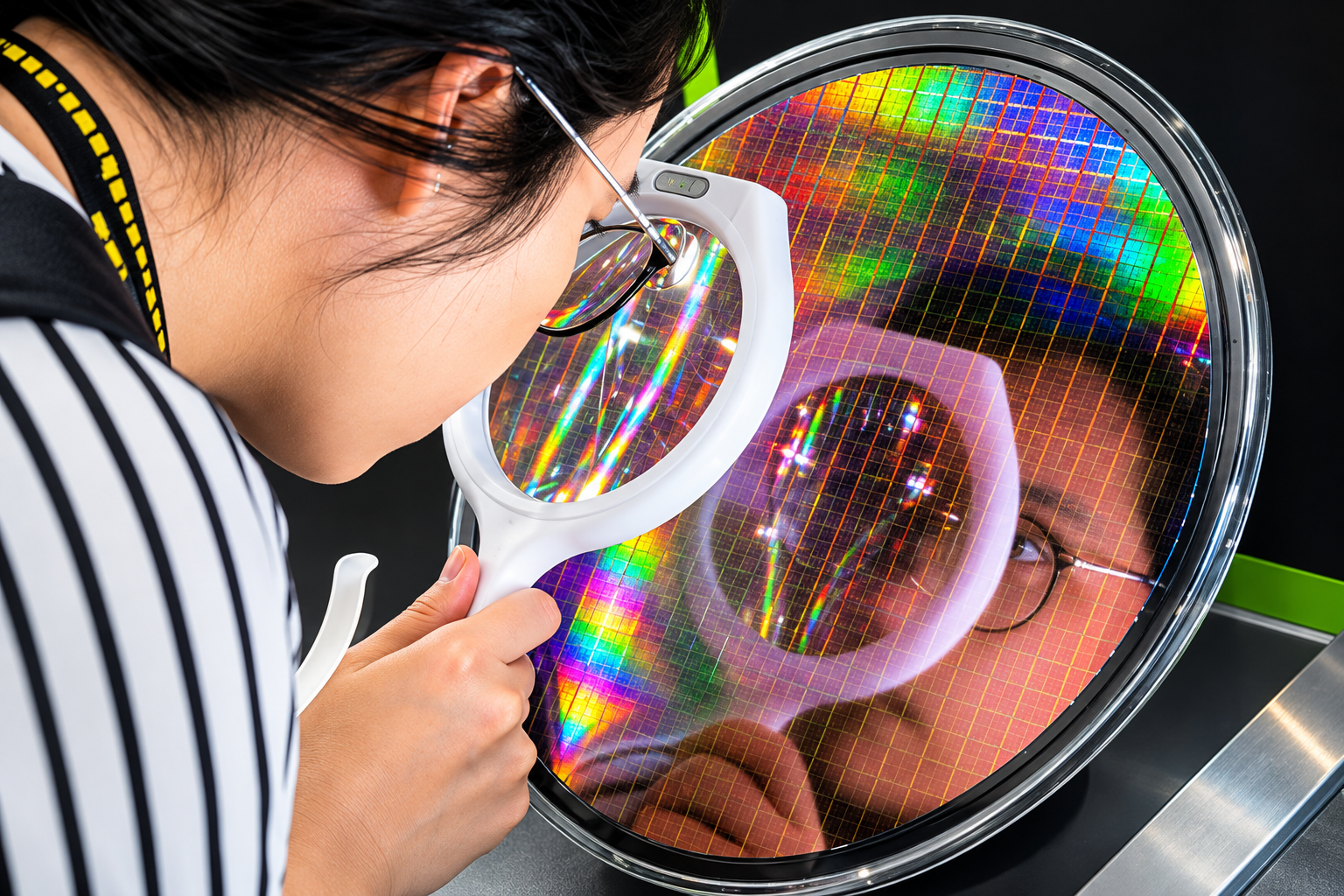
Global trade has thrived as Asian economies such as China, Taiwan and South Korea have enjoyed booming exports of computer chips, server racks and electronic equipment to feed ravenous demand for computing power in the U.S.
The Silicon Valley bounty is spreading as other economies join the party. Assembly hubs such as Vietnam and Mexico are seeing exports take off. Malaysia, Thailand and Australia are building data centers of their own. Europe’s industrial giants are supplying the power and cooling systems that make the AI revolution possible.
Yet the anxiety that spread through global markets in the aftermath of the U.S. midterm elections shows this growing dependency on Silicon Valley has a downside.
A slowdown in AI investment would punish exports in economies that in many cases show few other signs of growth. A sustained stock slide would crush mom-and-pop investors all over the world who have piled into technology stocks in anticipation of bumper returns. Overstretched budgets mean governments have limited room to respond with more spending.
Economists calculating what might happen if the pace of investment slows or the AI boom turns to full-blown bust say the only real question is how severe the global consequences will be.
“There is very little that can be done to prevent a global recession should the AI boom collapse,” said Frederic Neumann, chief Asia economist at HSBC in Hong Kong.
Stock markets have been on a wild ride since the Democrats’ victory in the U.S. midterm elections sparked concerns that Congress will hit the brakes on data-center development.
The latest upset in the industry has been the alleged spying scandal engulfing Nvidia, the linchpin of the AI ecosystem because of its deep pockets and advanced chips.
Stocks have clawed back some losses in recent days, moves that suggest many investors think the selloff is overdone. Even so, key stocks and indexes remain well below recent peaks. The tech-heavy Nasdaq index closed Wednesday 8% below its year-to-date high. Japan’s Nikkei index is down 16%, and South Korea’s Kospi, home to major memory-chip maker Samsung Electronics and SK Hynix, is down 43%.
For now, the stock-market gyrations haven’t spilled over into real economic activity, with global data pointing to the AI boom still going strong.
Asian economies are still seeing bumper export growth, with many of the gains driven by surging prices for chips and other hardware. China’s exports were up 35% year-over-year in October, according to figures from data provider CEIC. South Korea’s were up 93%, with Japan, Taiwan, Singapore and others also posting double-digit gains.
Economists at Capital Economics said the export bonanza means global trade is on track for its best spell of annual growth this year since the days of hyperglobalization in the early 1990s, excluding the big rebounds after Covid-19 and the 2008-09 financial crisis.
But the consulting firm warned that as much as 80% of recent export growth has been concentrated in AI-related goods, leaving global trade vulnerable to any change in U.S. spending on data centers. China, South Korea and other major economies are beset by weak consumption, meaning a drop-off in trade would have an outsize hit on growth.
Political and regulatory hurdles could drag on data-center investment. So, too, could rising interest rates or disappointments on earnings if AI firms’ revenues fail to keep up with outlays. The AI splurge already eclipses past infrastructure booms such as the railroads, and even without external pressure it might struggle to maintain that breakneck rate of growth.
As data-center investment slows, “AI capex will turn from a major prop to a drag on world trade,” Marcel Thieliant, head of Asia-Pacific at Capital Economics, said in a report.
Some economists have looked back to the dot-com bubble of the early 2000s as a yardstick to measure the possible costs to the global economy of an AI blowup.
In that episode, U.S. business investment sank and stocks crashed, hurting U.S. consumer spending and crushing imports.
As a share of gross domestic product, U.S. imports of IT-related equipment fell 55% in two years from their mid-2000 peak, according to Oxford Economics—a drop that hit Asian and other economies that were suppliers of the goods. Global trade plummeted, and world growth in 2001 collapsed to just 2%, consistent with a global recession.
The globalized financing of the AI boom would in a bust spread financial pain around the world, adding to the damage from a steep fall in trade. Gaurav Ganguly, head of international economics at Moody’s Analytics in London, said the world would struggle to absorb a sharp AI stock slide on top of an oil shock, tariffs and rising interest rates.
“The result could be a severe economic shock with global recessionary consequences,” he said.