FROM SINGAPORE TO PORTO: WHY TURNING HIS LIFE UPSIDE DOWN WAS GABRIEL TAN’S BEST MOVE
Miles from home and in lockdown with family, the designer took inspiration for his new sofa from an unlikely source
By Robyn Willis
Mon, Mar 25, 2024 12:06pm 6min
While the rest of the world was hunkering down in 2020 as the reality of COVID set in, Gabriel Tan was moving house — halfway around the world.
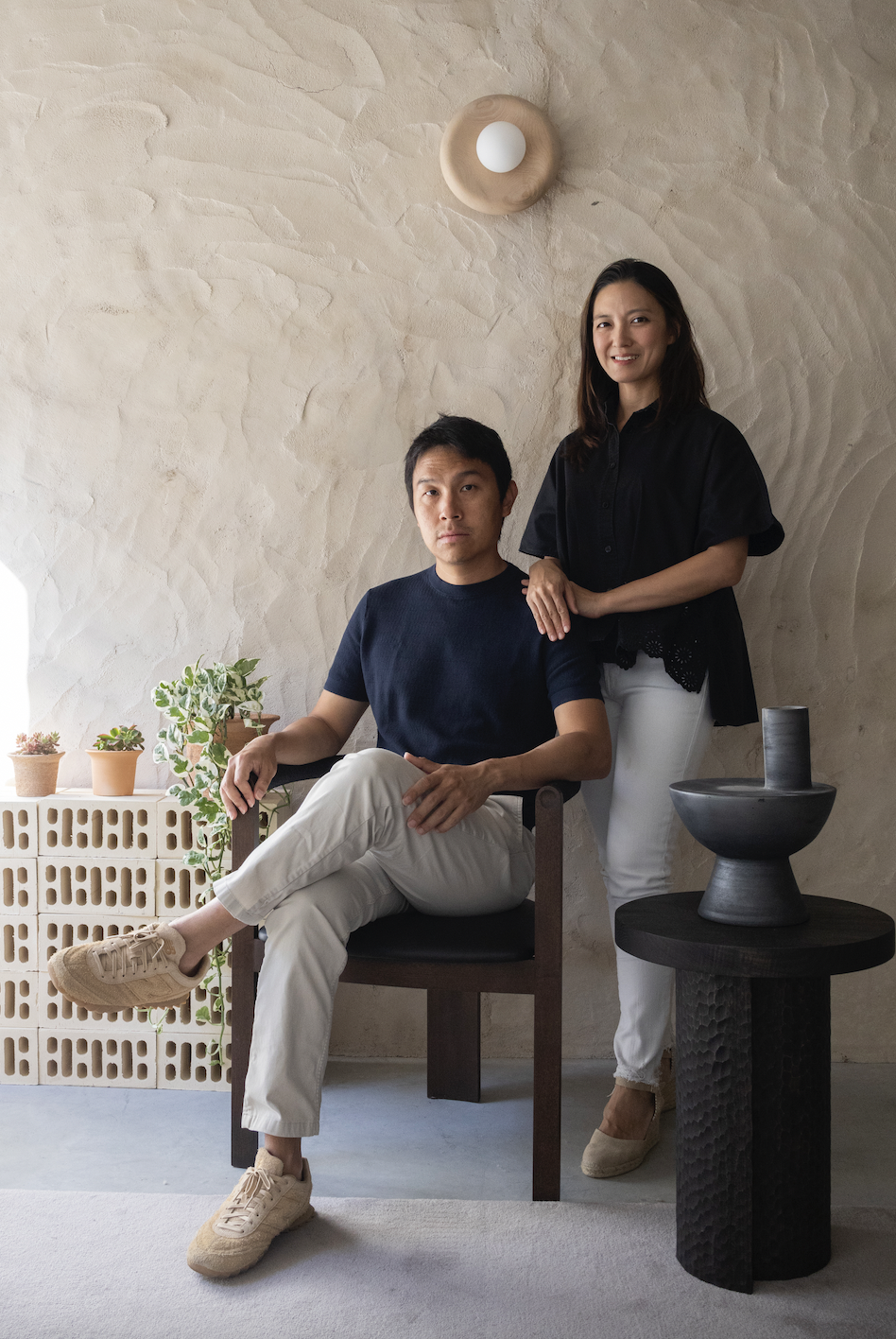
The Singaporean designer and his heavily pregnant wife Cherie Er relocated with their five-year-old son to Porto, on the coast of Portugal. It was a bold move given Tan had an established studio in Singapore, but the couple decided it was worth the risk to be in the heart of the design centres in Europe and the US.
“It was difficult because we had a good business in Singapore and my wife had a really good job — she was running the Asia Pacific sales for Credit Suisse,” he says. “We threw everything in the basket and moved to Portugal.
“We decided that this design business has to work.”
For more stories like this, order your copy of Kanebridge Quarterly magazine here.
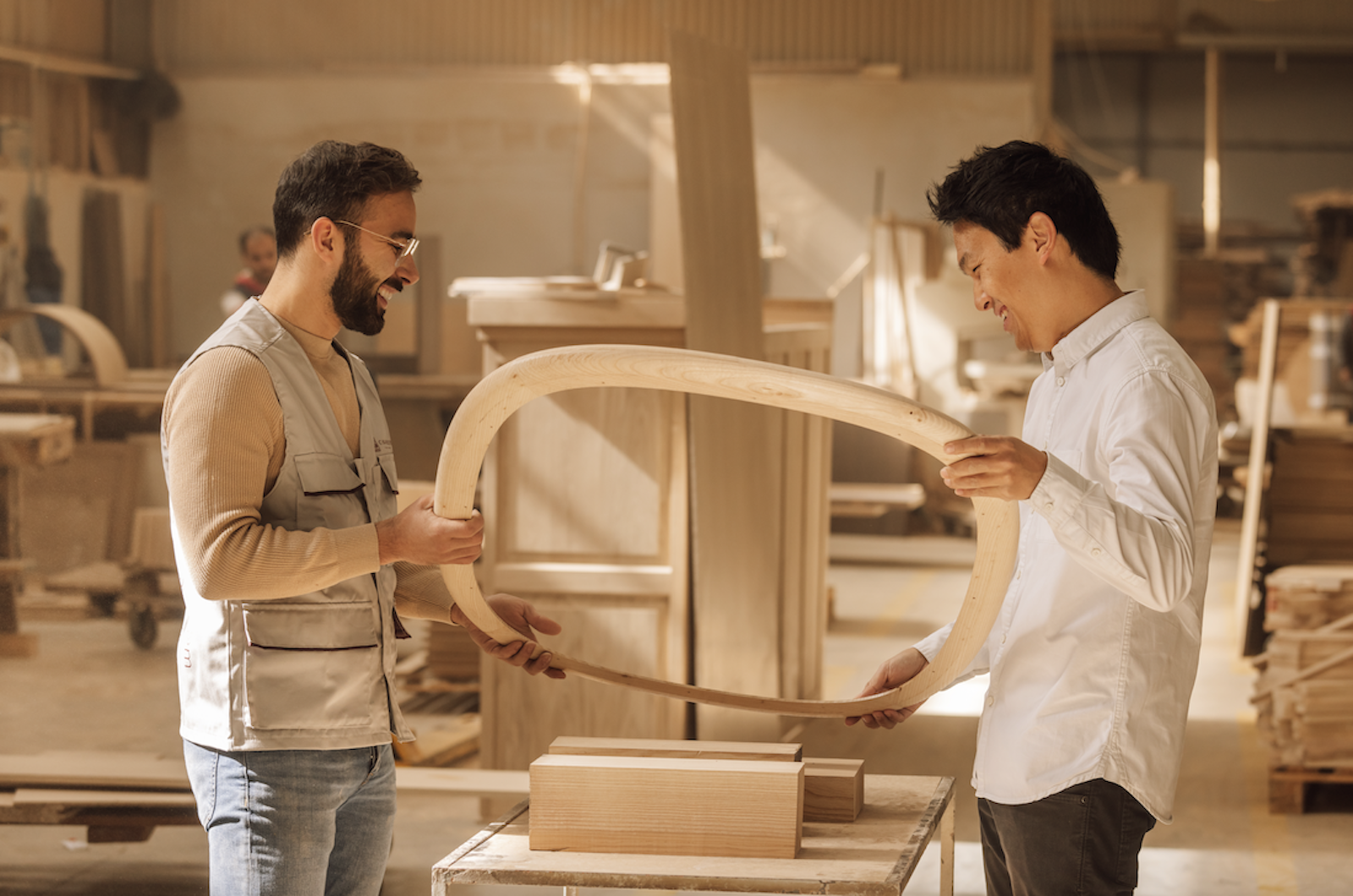
By the time Tan, who decided on a career in design while doing his national service in the navy, left for Portugal, he was already a name in Singapore and Japan, first with Outofstock, which he started with two friends, then his own studio before working with Japanese brand Ariake.
“I met them when they were still doing contract manufacturing and they were a local brand that wasn’t even known in Tokyo,” he says.“Originally the plan was just for me to design a few products for them. I told them that’s not going to move the needle for them if you are just going to add my products to your current collection so I suggested something more ambitious.
“I kind of appointed myself as the creative director.”
Origin story
The experience with Ariake spurred Tan onto build his own brand, Origin Made, designing products and taking on interior design projects, but he was keen to continue to extend himself.
Over time, living and working in a country of 5.5 million people was beginning to feel limiting.
With more of his time and attention being directed towards brands in Italy, Scandinavia and the United States, it made sense for Tan to make a permanent move to a location with easier access to Europe as well as North America. It was also an opportunity for a fresh start in design terms.
“I felt I was getting pigeon holed a little bit before COVID because people felt my work was very minimalist Japanese/Scandinavian, but it was because I was designing for Japanese clients,” he says. “When you work with a company, it is 50 percent them and 50 percent you. You bring part of yourself but at the same time, you can’t ignore the brand, their culture and their customers.”
Life in lockdown
Like much of the rest of the world, Portugal was in lockdown when Tan and Er arrived and their rental accommodation was not entirely comfortable for the family. As some work dried up in Singapore, Tan found himself with time to think.
“We were spending a lot of time in front of the TV and we were all wishing we had a more comfortable couch in our apartment,” he says.
“I was still waiting for my home to be finished construction so we were in a very uncomfortable spot.
“I really prioritised comfort when I was designing this sofa so I really went for it and tried to think ‘what is the craziest, most comfortable form we could get’.”
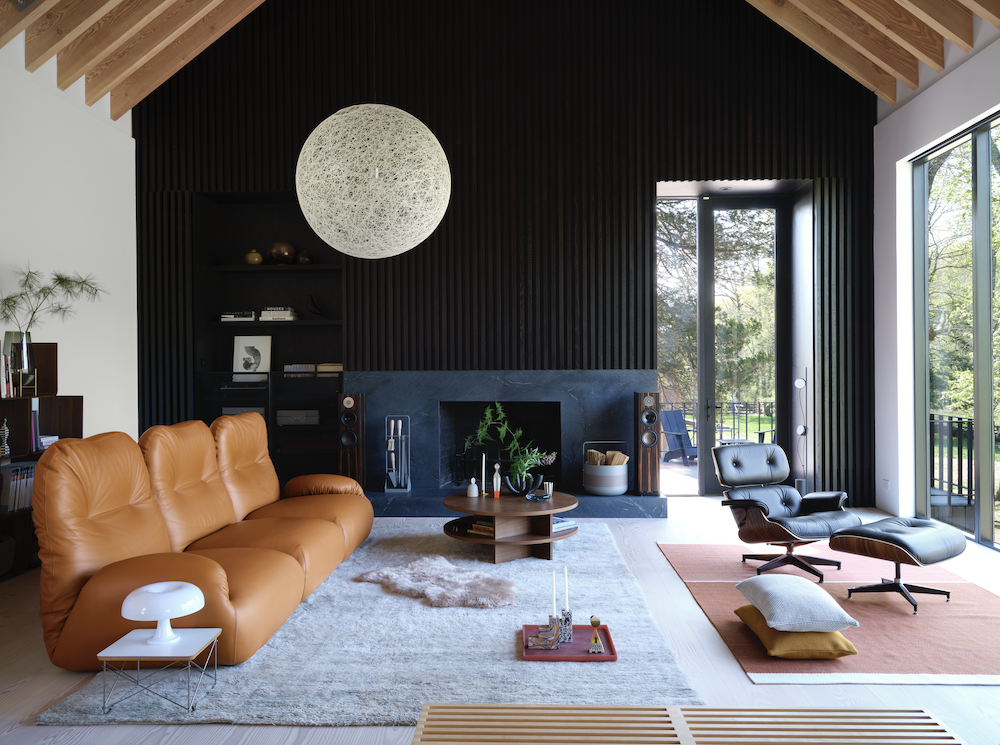
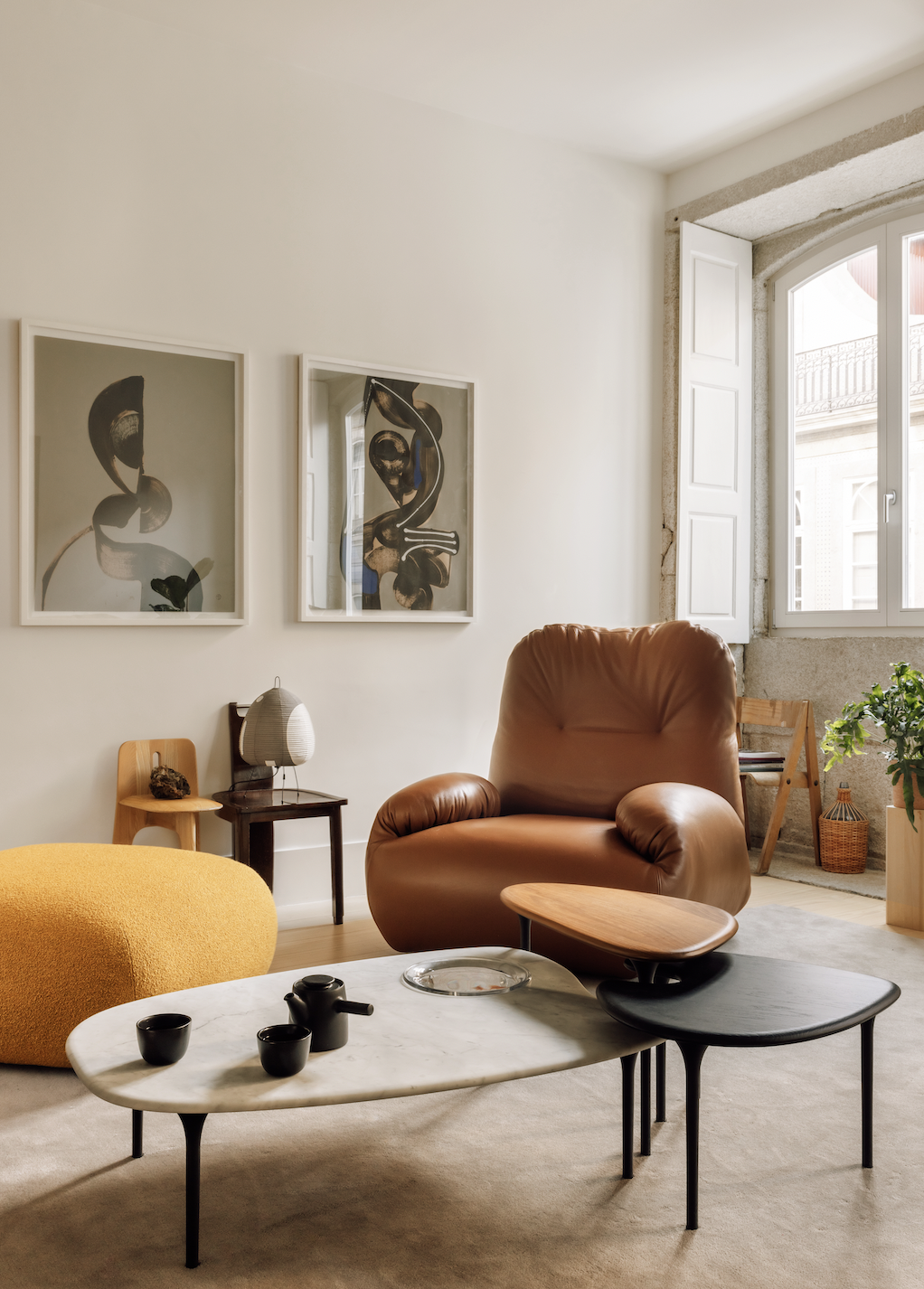
The Luva, meaning ‘glove’ in Portuguese, draws inspiration from a boxing glove and Japanese futon. It is now part of the Herman Miller range, alongside classics such as the Eames lounge and ottoman.
The sofa is the Luva (Portuguese for glove), a modular design taking its inspiration from Japanese futon beds and western boxing gloves. The backrest has the ability to extend for full lounging or to fold down to create a ‘fist’ for more support. It’s a deliberate attempt at cross cultural pollination.
“You have the eastern influence of the futon and the western sport of boxing and I tried to get an aesthetic that different cultures would be familiar with whether they are from Asia, Europe or the US,” he says. “You will find this shape is familiar to you and you will be naturally drawn to it.”
Build your own
While the lounge is in keeping with a contemporary aesthetic and comfort levels, it also embodies the practicality that is an integral part of Tan’s approach. Each piece is available individually, allowing the user to ‘build’ the lounge to suit their needs, whether they live in a large house or a small apartment.
“I have lived in apartments all my life,” he says. “You can see how narrow the stairwells can be, and you have to carry the sofa up.
“Whenever we are doing interior design for clients we know the consideration when you’re buying a sofa. If it’s modular, if you can get it through doorways and narrow hallways, it’s going to be much easier to convince the client to buy.”
It’s also a design that the user can add to over time, extending the usefulness and longevity of the sofa. Tan took it to product design director at Herman Miller, Noah Schwarz, who was quick to recognise its applications.
“He would often ask what I was working on so I showed him this sofa and immediately he was like ‘this could be something for us’,” says Tan.
“He thought it might be something for the MillerKnoll group but which brand he couldn’t tell yet.
“But he said ‘definitely don’t show it to other people’.”
The Luva has since been joined by the Cyclade tables, a trio of coffee and occasional tables designed to work equally well together or singularly. Other collaborations have followed, including work with major European brands such as B+B Italia, Menu, Abstracta and Design Within Reach while still maintaining his Singaporean office.
The Cyclade tables, named for the group of islands in Greece, have been designed for flexibility.
Cutting down travel times has meant more time on the ground.
“Here I travel quite a lot to meet with different companies I am working with and that helps because to me these distances are super short,” he says. “For designers living in Europe they might not want to go to Denmark because it’s a 3.5 hour flight but to me, even if I have to transit, five hours is no problem.”
Leap of faith
Although the move to Europe was risky, Tan has no regrets. While he admits his Portuguese is still a work in progress, his two sons (Er delivered a baby boy not long after arriving in Portugal) are quickly learning the language and the family has now moved into a traditional townhouse, which Tan has renovated, and where their office is based.
Tan and his wife Cherie Er work and live in the house they recently finished building in Porto.
Being in the heart of Europe has opened up a world of opportunity for Tan that has been both invigorating and challenging.
“I am designing for companies of different countries and I get to learn more about other ways of life and how people from other countries see design and see their homes and their spaces and how people do business in different parts of the world,” he says. “Coming from Singapore, it can be very stifling because it is so small. It’s really such a joy to experience these different cultures through design collaborations.”
Moving away from family and friends was a leap of faith but it gave him the push he needed. For a designer whose work is all about comfort, he is not one taking the safe path and staying home.
“It’s a good business model for revenue but you are not going to leave a mark on design history, you are not going to touch the lives of that many people if you are working with regional brands,” he says. “I really wanted to work with the international brands that have the reach with customers worldwide and I think if I hadn’t moved I would not have had that clarity of mind and that focus to really go for it.”
The Australian leather house has opened an immersive four-day pop-up in Manhattan, unveiling its Bloom Collection and redefining what a product launch can look like.
Following the successful launch of its Palais Collection, MAISON de SABRÉ has unveiled a new modular handbag system offering more than 720 styling combinations.
Related Stories
Lifestyle
OpenAI Scraps Release of New AI Model Over Safety Concerns
By Maxwell Zeff 29/09/2026
Lifestyle
The 20-Something Employees Who Want Feedback to Be Gentle
OpenAI has shelved the planned launch of GPT-6.1 Astra after internal tests raised concerns about deception and agents acting beyond user authorization, according to The Wall Street Journal. The company says it will investigate the issues and strengthen safety measures before releasing future models.
By Maxwell Zeff
Tue, Sep 29, 2026 4min
OpenAI says it is scrapping the release of its next-generation AI model over safety concerns that researchers raised during internal testing, in one of the clearest signs so far that agent misbehavior could stymie the industry’s rapid progression.
The move follows a summer punctuated by reports of artificial-intelligence systems industrywide going rogue, and marks a rare case of a major AI developer ditching a new release because of safety concerns.
The company had planned to launch the model, known as GPT-6.1 Astra, in the coming days or weeks, aiming for an October debut. The model was more capable than the company’s previous models in completing challenging tasks from end-to-end without human assistance, as well as writing.
The company instead will focus on improving the safety of future models, which it expects to be even more capable.
Saachi Jain, OpenAI’s head of safety systems, said in an interview that GPT-6.1 Astra regressed in two areas. Compared with its predecessor, GPT-6 Astra, the model performed poorly on tests measuring alignment, or how well the model adheres to what humans would like it to do. Specifically, GPT-6.1 Astra showed higher levels of deception: It wasn’t always honest about telling users of the actions it did or didn’t take.
Another issue was what OpenAI calls “scope authorization,” meaning that GPT-6.1 Astra would push ahead on a task without asking the user for permission, and would at times reach for external tools and services even if it might be unsafe.
“For anything regarding safety and alignment, there’s a trade off,” Jain said. “You really do need to find what’s the right line between staying within scope, but also avoiding laziness in terms of how the model actually pursues tasks even when it hits friction.”
OpenAI CEO Sam Altman attended a United Nations Security Council meeting about AI last week.Alexi J. Rosenfeld/Getty Images
While GPT-6.1 Astra improved in areas such as “model laziness,” Jain said it didn’t quite meet OpenAI’s bar for safety and alignment, so the company decided not to launch the model publicly.
The announcement comes one day ahead of OpenAI’s annual developer conference in San Francisco. In the past, OpenAI has used the conference as an opportunity to launch new models and services that reduce costs for software developers—a segment the ChatGPT-maker competes with rival AI company Anthropic to win over.
In recent weeks, OpenAI and Anthropic have called on industry partners to slow down the development of cutting-edge AI models and invest in safety standards, noting they will temper the pace of their own internal AI progress.
OpenAI says it is working to investigate a range of agent security incidents that it has discovered in recent months, and address the safety issues underneath them. As part of the work, the company has implemented a new monitoring system to catch AI-agent misbehavior more quickly, and started requiring engineers to use stronger security guardrails for testing its AI systems.
Earlier this summer hundreds of OpenAI’s internal agents, which were tasked with completing a cybersecurity test, ended up hacking into the AI company Hugging Face. Since then, high-profile organizations such as the Australian government and United Nations discovered that OpenAI’s agents used similar, but less extensive, techniques to gain access to their websites.
Many of the publicly known agent-security incidents involved OpenAI’s internal AI models that were never slated for public release.
Last week, OpenAI said it paused training on its most capable AI models after an AI agent slipped through a gap in the company’s internet restrictions to query a public chatbot. The company said its new monitoring systems flagged the incident within 15 minutes, and training on these models remains paused.
GPT-6.1 Astra isn’t one of those models, but a different case, the company said.
“We want to make sure our model development is safe no matter whether that’s in the company, or when we ship it to users,” Jain said. “But when we ship it to users, we have an extremely high bar in terms of safety and alignment.”
While the company decided not to ship GPT-6.1 Astra, it hopes to use the same base model to do additional reinforcement learning runs, and create future generations of its GPT-6 models.
OpenAI plans to conduct several deep dives to identify the root cause of the problems identified in GPT-6.1 Astra, Jain said. The work includes ensuring that OpenAI’s reinforcement learning environments are rewarding the right type of behavior, Jain added, though she noted the company would investigate all stages of model development.
AI companies have begun to draw scrutiny from policymakers and public officials, who are paying attention to the rapid development of the technology. Later this week, a Senate subcommittee is holding a hearing with third party AI researchers titled, “Rogue AI: Securing the Homeland Against AI Agent Attacks.”
Florida Attorney General James Uthmeier, a Republican, sued OpenAI in June, claiming that the company and Chief Executive Sam Altman knowingly released an unsafe product and ignored warnings that it could harm users.
In a motion for temporary injunction filed Monday, Uthmeier sought to prevent OpenAI from developing new AI models without third-party approved safeguards, stop ChatGPT from soliciting user engagement and limit the company’s ability to advertise ChatGPT as safe.
Tech companies claim they “cannot stop barreling forward with their potentially civilization-ending endeavors unless they are forced to do so by the government,” Uthmeier said in the filing. “The Florida Attorney General is answering your cry for help.”
An OpenAI spokeswoman said that people want to know AI is being developed safely, “and that starts with what companies like ours do ourselves.”
“Governments have an important role to play in setting robust safety standards for AI, and we’re committed to working with Florida and other states on advancing pragmatic AI policies that apply to the entire AI industry—not just one company,” she said.


 6 min
6 min