Shein Had 4.4 Billion Reasons to Speed Its IPO Along - Kanebridge News
Share Button

Shein Had 4.4 Billion Reasons to Speed Its IPO Along

SHEIN’s Hong Kong IPO wiped a $4.4 billion obligation from its books, but the fast-fashion giant still faces a payout of up to $3.5 billion to early investors.

By Esther Fung
Tue, Sep 1, 2026 8:01pmGrey Clock 3 min

Companies typically go public to raise money to supercharge growth. Fast-fashion giant Shein has another motivation.

The company’s initial public offering in Hong Kong this week is allowing it to avoid paying out billions to early investors.

If Shein hadn’t sold shares by the end of the year, the company would have been required to fork out nearly $4.4 billion in cash to holders of its convertible redeemable preferred shares. With the IPO, the $17.3 billion in preferred shares was converted to ordinary equity, and that obligation was wiped off the books.

But Shein was still on the hook for another payment. Holders of those preferred shares were entitled to a payout of billions more, in part because the company’s valuation has fallen from its peak. That payout came to nearly $3.5 billion in cash, according to regulatory filings.

The retailer on Monday priced its shares at 48.56 Hong Kong dollars each, equivalent to about $6.20 and near the middle of the range of HK$47.60 ​and HK$49.50 it provided last week.

The company pressed ahead with its IPO despite slowing growth and regulatory headwinds in the U.S. and European Union. Shein priced its IPO at a valuation of around $26 billion, roughly a quarter of the $98.2 billion valuation it achieved in a funding round in 2022.

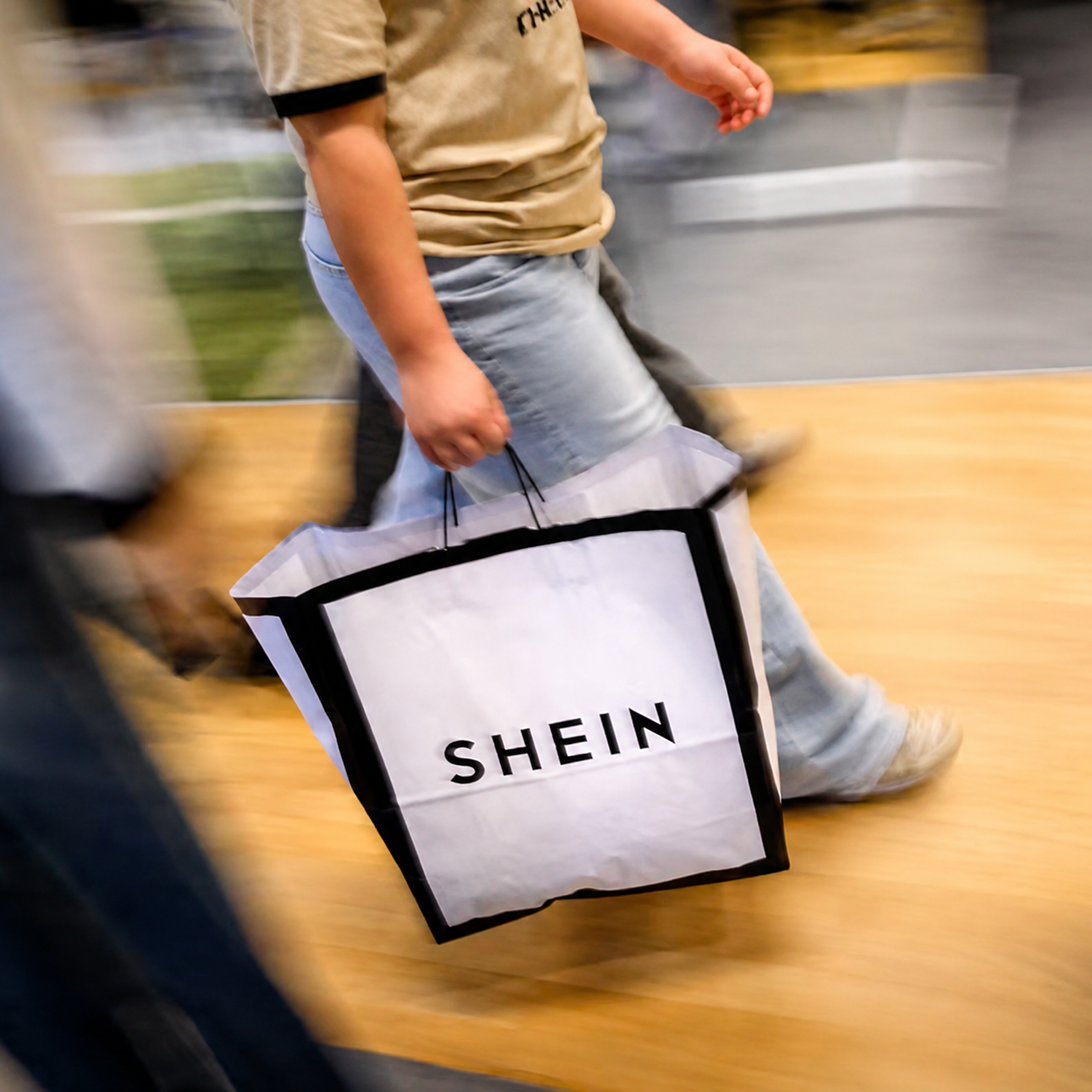
Shein started selling its wares in the U.S. around 2012 and shot to popularity during the pandemic when more people shopped online. Its supply-chain prowess and vast range of styles at affordable prices made the brand a favorite among many U.S. consumers. It showed other retailers, including Amazon.com, that consumers were willing to wait more than a week for their online purchases to be delivered—if the price was right. But rivals soon emerged, such as Temu, which sells more products apart from apparel.

Workers sewing clothes for SHEIN at Dongguan Tingxuyuan Garment Co ltd.
Apparel being produced for Shein by a subcontractor in China. Gilles Sabrie for WSJ

Shein’s business model of selling massive amounts of cheap goods lost some of its shine as more countries started imposing tariffs on small packages. The U.S. removed a trade exemption that allowed packages valued at or below $800 to enter the country duty-free, and the EU has introduced a €3 (about $3.50) customs duty on imports of low-value parcels.

Shein has worked toward its IPO for years, and the looming $4.4 billion obligation wasn’t the only reason it went public. But the threat of the big payout on Dec. 31 was certainly a part of its reason to press ahead, said Jianggan Li, founder and chief executive of Momentum Works, a research advisory firm based in Singapore.

“Complete the listing before then,” said Li, “and a very large liability comes off the balance sheet.”

While that liability will now be off its books with a successful IPO, Shein said it was saddled with another bill: the roughly $3.5 billion it owed its early investors upon going public.

That amount includes $1.3 billion that Shein had to pay several late-stage pre-IPO investors who had been guaranteed a cash payout at an 8% or 12% annual return, and up to $2.2 billion in compensation for the fall in the company’s valuation in the period after they made their investments. The $2.2 billion was a projection based on the lower end of the offer price range, or HK$47.60 per share, so the total bill will likely be smaller than $3.5 billion. The exact amount has yet to be disclosed by the company.

Notably, the amount it owes investors is more than the roughly $1.7 billion the company raised in the IPO. The company said it was paying the funds to its investors out of cash it has on hand.

The investors entitled to the payments include entities linked to HSG, formerly known as Sequoia China, Boyu Capital, Tiger Global, General Atlantic, Thrive Capital and others.

“What the IPO really does here is resolve the capital-structure overhang,” Li said. “It gives investors liquidity, terminates those preferred-share rights and cleans up obligations created when Shein raised money at much higher valuations.”

Shein could have kicked the can down the road by renegotiating terms with its investors, he said: “Shein is not taking the cheapest way out of its old financing obligations. It is taking the cleaner way out.”

MOST POPULAR

The Australian leather house has opened an immersive four-day pop-up in Manhattan, unveiling its Bloom Collection and redefining what a product launch can look like.

Following the successful launch of its Palais Collection, MAISON de SABRÉ has unveiled a new modular handbag system offering more than 720 styling combinations.

Related Stories
Lifestyle
Apple Joins Nvidia in the $5 Trillion Valuation Club
By Rolfe Winkler 15/10/2026
Lifestyle
AI Agents Are a Threat to Travel Businesses. Airbnb Could Still Be a Winner.
By David Wainer 13/10/2026
Lifestyle
Amazon in Talks to Buy AI Startup Decart for Around $7 Billion
By Kate Clark and Lauren Thomas 12/10/2026

Apple closed above a $5 trillion market valuation for the first time, capping Tim Cook’s 15-year tenure and setting a high bar for incoming CEO John Ternus, as the company faces growing pressure to strengthen its AI capabilities and sustain growth.

By Rolfe Winkler
Thu, Oct 15, 2026 3 min

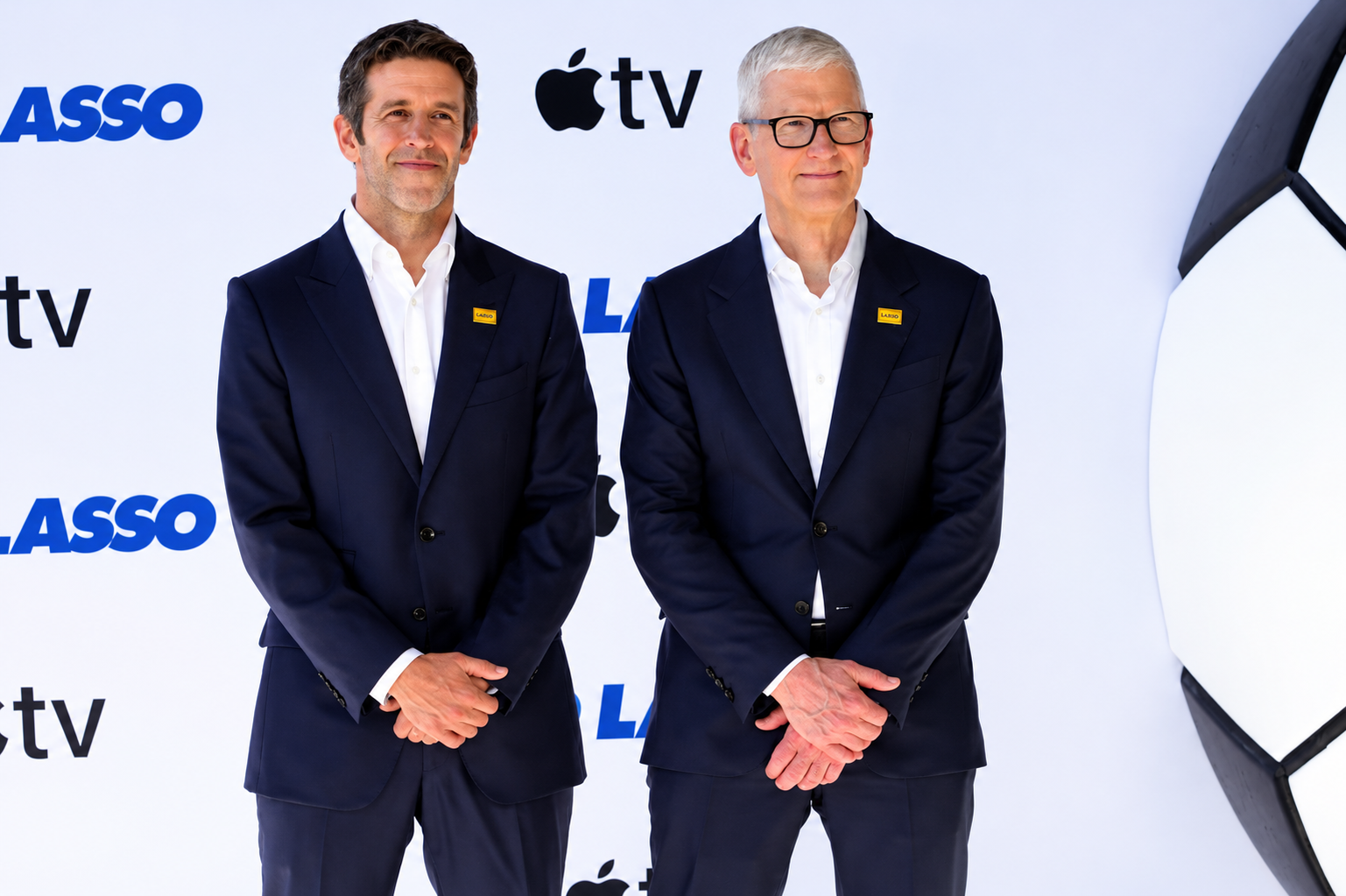
Apple AAPL 0.50%increase; became the second company to close above the $5 trillion mark on Wednesday, capping the Tim Cook era, and posing an implicit challenge to new Chief Executive John Ternus.

The iPhone-maker’s shares closed at a record, just enough to push the company’s market capitalization into territory that only chip colossus Nvidia occupies. Apple’s market value has surpassed $5 trillion six times previously during intraday trading, but it had never closed above that level, which it squeaked past on Wednesday, ending the day at $5.005 trillion according to Dow Jones Market Data.

Cook’s act will be tough to follow. During his 15-year tenure as CEO, which ended Aug. 31, Apple’s market capitalization multiplied by a factor of 13. He nearly quadrupled the number of iPhones sold annually. He grew its highly profitable services business from $10 billion annually to more than $100 billion. He launched the Apple Watch and AirPods, which together generate more than $30 billion a year. He poured Apple’s cash into more than $1 trillion worth of share buybacks and dividends.

Today, Apple shares trade at a premium compared with the overall S&P 500 even though the company’s revenue growth rate is slower than the index’s average. That is because the company’s shares are viewed as safe, and its business predictable, say analysts.

A key to Apple’s success under Cook is how it has limited capital spending, juicing the company’s returns for investors and greatly reducing the risks of its business. That has never been more apparent than during the AI build-out, when big tech rivals have rushed to spend gargantuan sums on data centers while Apple has focused on its core businesses making devices and selling high-margin services for them.

Apple investors are so confident in its business that they have driven up its shares despite big cost increases that threaten profit margins. The cost of memory and storage chips inside iPhones, Macs and iPads has skyrocketed as demand for those chips from data centers has led to shortages. Apple has responded by raising prices across its device lineup, including for older model iPhones that would typically get a price cut.

In theory, such a move could hurt Apple since iPhone buyers might wait longer to upgrade their devices. Yet since the first wave of price increases Apple shares have jumped 25%.

In part, that is because investors think Apple device buyers will pay the higher prices, enabling Apple to generate as much or more in total profits even if margins are down, said Bank of America analyst Wamsi Mohan. He added that Apple’s new foldable iPhone Duo is likely to be popular and that the new Siri AI will prompt iPhone upgrades.

AI has long been viewed as Apple’s Achilles’ heel. The company failed in its efforts to build its own frontier model, and it also allowed its Siri assistant to fall far behind rivals. ChatGPT revolutionized what smartphone users expect from chatbots.

Apple hopes to turn a corner with the new Siri AI. Built with Google’s help, Apple’s redesigned chatbot was released this fall. It still lags behind rival AI systems in key respects, though it has the advantage of being built directly into the device that many people already use, their iPhone. Apple also has access to more personal data, which could theoretically be used for compelling AI features, though new AI agents show the technology is advancing faster than Apple’s ability to keep up.

Tech rivals know how important it is to control the devices that people use to deliver their services. Perhaps most threatening to Apple, OpenAI is planning a family of AI-powered devices. It has poached hundreds of Apple employees to drive its device strategy. Apple responded in July by suing OpenAI, alleging it stole Apple trade secrets.

OpenAI has said it is “not aware of any evidence that this complaint has merit” and alleged in a new legal filing Wednesday that Apple poached one of its own employees who took confidential files with him. Apple said in response that it had found no evidence supporting the new allegation.

AI could be the battleground where Ternus makes his mark, either ushering in a new era of innovation and growth for Apple or finally losing its status as the company that has defined how people interact with computers.