MAISON de SABRÉ turns luxury shopping into theatre with New York's Floral Atelier - Kanebridge News
Share Button

MAISON de SABRÉ turns luxury shopping into theatre with New York’s Floral Atelier

The Australian leather house has opened an immersive four-day pop-up in Manhattan, unveiling its Bloom Collection and redefining what a product launch can look like.

By Jeni O'Dowd
Wed, Jul 15, 2026 11:53amGrey Clock 2 min

Product launches used to mean a store window and a press release. MAISON de SABRÉ has other ideas.

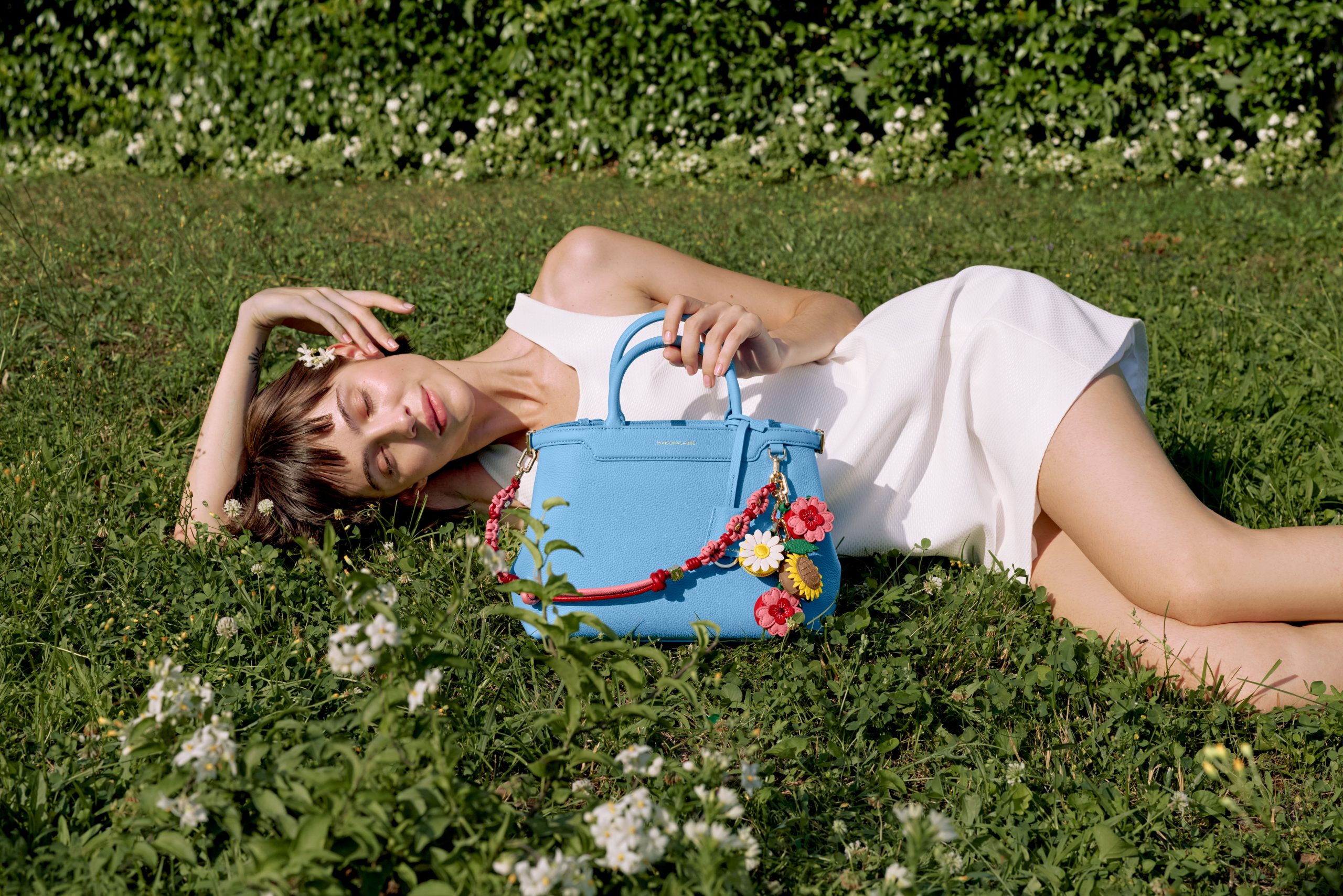
The Australian-born luxury house, founded in 2017 by brothers Omar and Zane Sabré, has opened a four-day Floral Atelier in the heart of New York City, transforming a stretch of Manhattan into what it calls an “overgrown botanical landscape” of craftsmanship, floristry, hospitality and music.

It’s the brand’s most ambitious physical activation to date, and the setting for the launch of its new Bloom Collection.

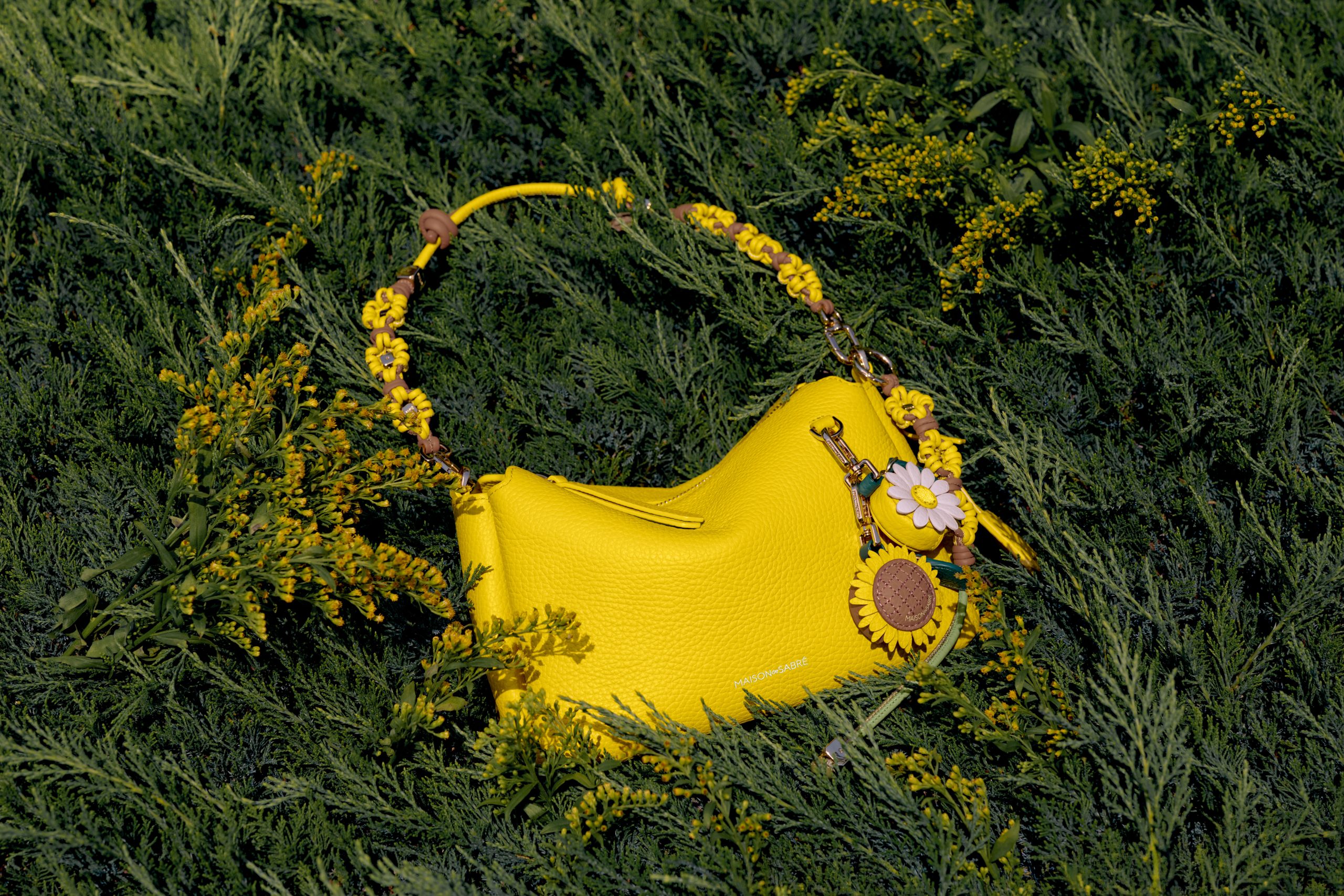
At the centre of the collection are three new SABRÉMOJI flower charms, named Wild Daisy, Sunflower and Cherry Blossom, each made entirely from upcycled leather offcuts and finished with ultrasonic embossing and embroidery.

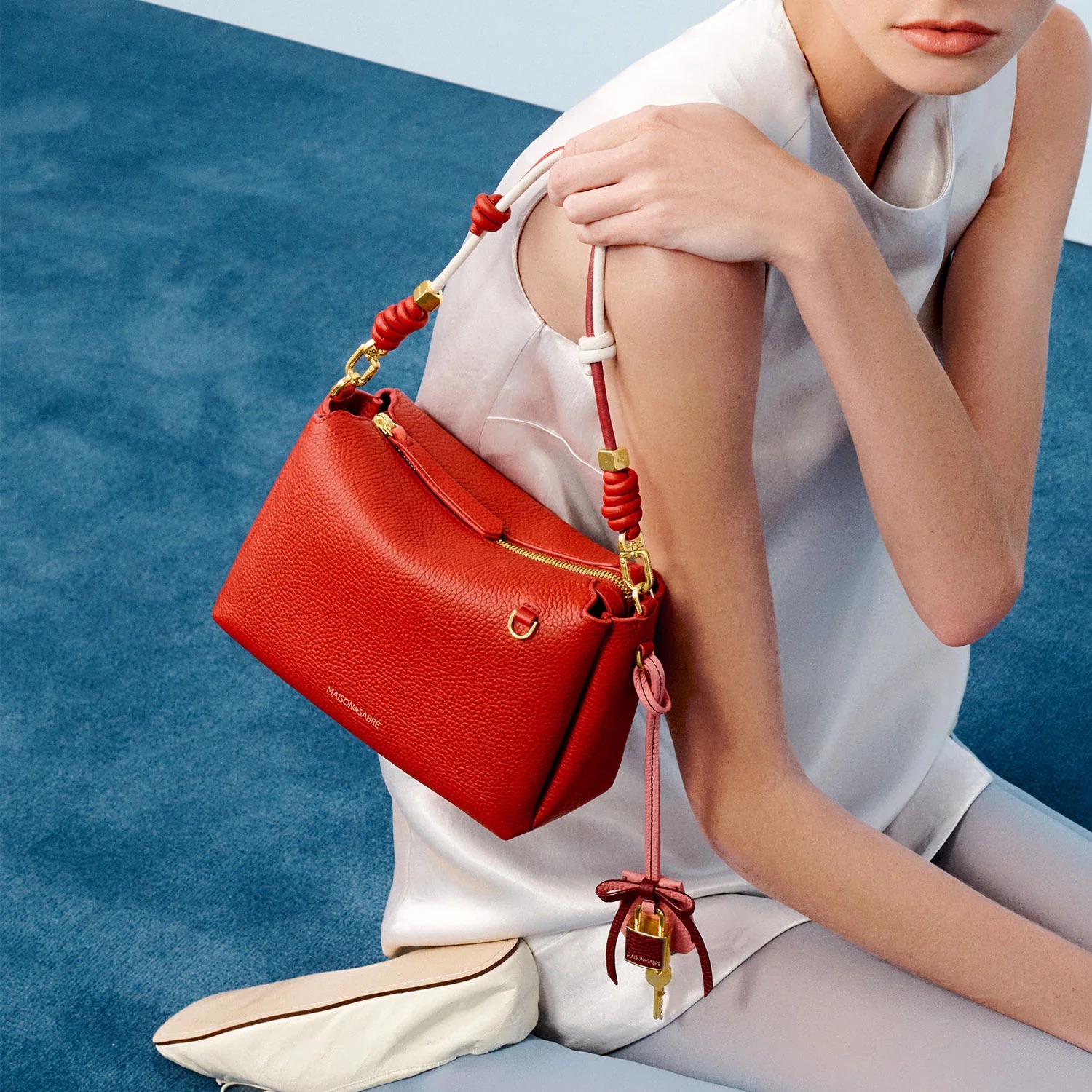
There’s also the Floral Twist Handle, arguably the house’s most technically demanding piece yet, which takes 36 individual hand-tied knots to form six leather flowers, plus another ten structural knots that let it convert from a hand-carry to a shoulder strap.

A new Floral Wristlet debuts a leather-knotting technique developed specifically for the collection.

Between them, the pieces bring the brand’s product ecosystem to more than 10,000 possible styling combinations, all built from what would otherwise be manufacturing waste.

“Bloom is the latest evolution in the MAISON de SABRÉ product ecosystem, reimagining the handbag as a living canvas,” said co-founder and creative director Omar Sabré. He points to the smaller pieces as proof of intent rather than afterthought: “The smallest products demand extraordinary precision.”

It’s a strategy with numbers behind it.

The brand’s connected styling platform, of which Bloom is the latest chapter, has helped push MAISON de SABRÉ past $100 million in annual revenue and lifted average order value by 45 per cent, evidence that designing products to be added to and reinterpreted has become a genuine commercial engine rather than a marketing line.

The SABRÉMOJI charm platform alone has sold more than 500,000 units globally, with sold-out collaborations including Pokémon, Hello Kitty and Mr Men Little Miss.

For co-founder and managing director Zane Sabré, the Atelier is really about where the relationship with a customer begins.

“Retail is no longer just about selling products; there’s been a structural shift toward experience and participation,” he said.

“With Bloom, we wanted to create an environment where clients can experience our craft, understand our styling system and explore what is possible before they think about making a purchase.”

The Floral Atelier runs from July 3-26 in New York. The Bloom Collection launched globally today at maisondesabre.com, before rolling out to stockists including Bloomingdale’s, Nordstrom, Saks Fifth Avenue, Net-a-Porter’s FWRD, Revolve, Farfetch, Le Bon Marché and Ounass.

MOST POPULAR

The Australian leather house has opened an immersive four-day pop-up in Manhattan, unveiling its Bloom Collection and redefining what a product launch can look like.

Following the successful launch of its Palais Collection, MAISON de SABRÉ has unveiled a new modular handbag system offering more than 720 styling combinations.

Related Stories
Lifestyle
Apple Joins Nvidia in the $5 Trillion Valuation Club
By Rolfe Winkler 15/10/2026
Lifestyle
AI Agents Are a Threat to Travel Businesses. Airbnb Could Still Be a Winner.
By David Wainer 13/10/2026
Lifestyle
Amazon in Talks to Buy AI Startup Decart for Around $7 Billion
By Kate Clark and Lauren Thomas 12/10/2026

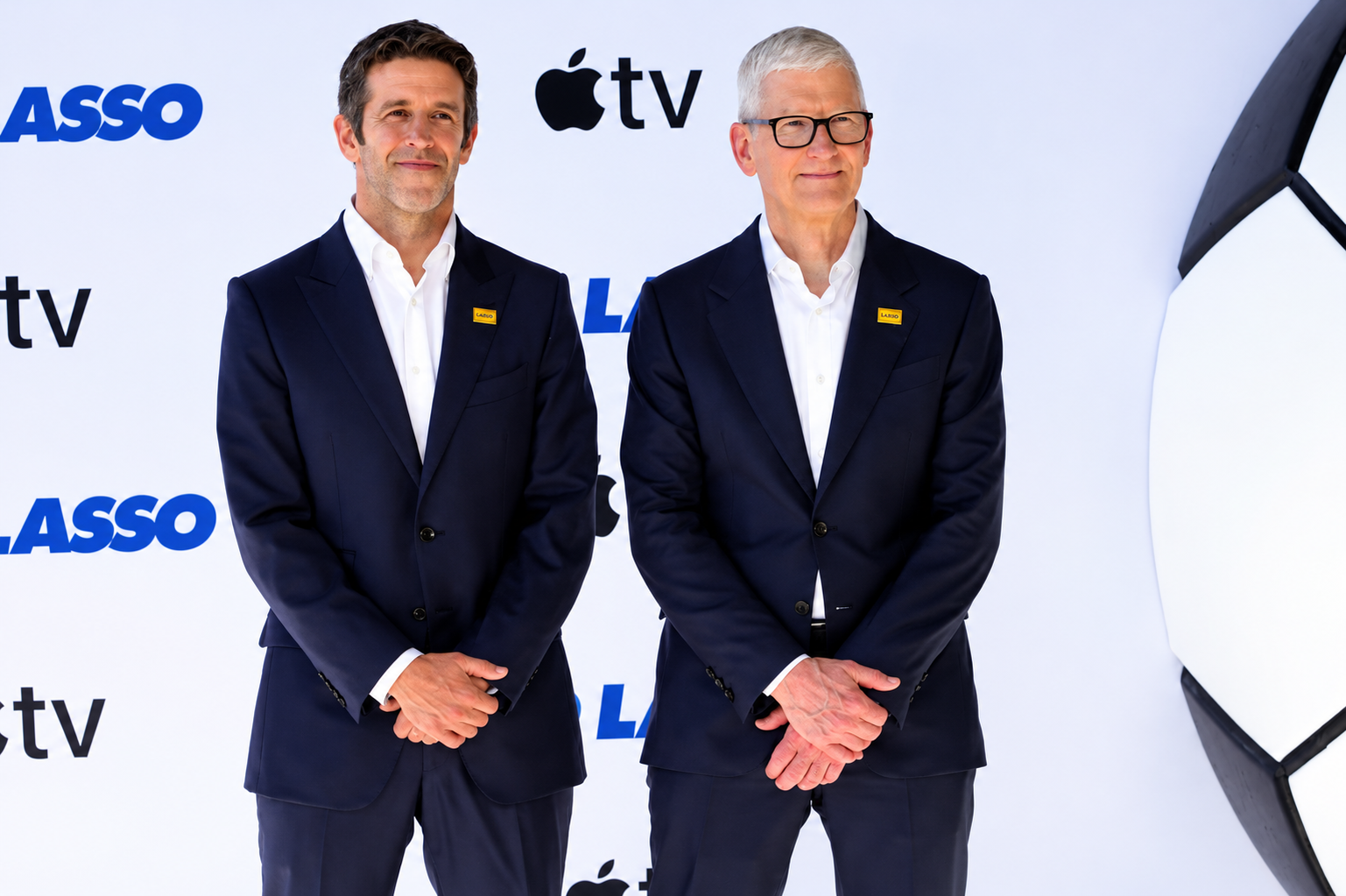
Apple closed above a $5 trillion market valuation for the first time, capping Tim Cook’s 15-year tenure and setting a high bar for incoming CEO John Ternus, as the company faces growing pressure to strengthen its AI capabilities and sustain growth.

By Rolfe Winkler
Thu, Oct 15, 2026 3 min

Apple AAPL 0.50%increase; became the second company to close above the $5 trillion mark on Wednesday, capping the Tim Cook era, and posing an implicit challenge to new Chief Executive John Ternus.

The iPhone-maker’s shares closed at a record, just enough to push the company’s market capitalization into territory that only chip colossus Nvidia occupies. Apple’s market value has surpassed $5 trillion six times previously during intraday trading, but it had never closed above that level, which it squeaked past on Wednesday, ending the day at $5.005 trillion according to Dow Jones Market Data.

Cook’s act will be tough to follow. During his 15-year tenure as CEO, which ended Aug. 31, Apple’s market capitalization multiplied by a factor of 13. He nearly quadrupled the number of iPhones sold annually. He grew its highly profitable services business from $10 billion annually to more than $100 billion. He launched the Apple Watch and AirPods, which together generate more than $30 billion a year. He poured Apple’s cash into more than $1 trillion worth of share buybacks and dividends.

Today, Apple shares trade at a premium compared with the overall S&P 500 even though the company’s revenue growth rate is slower than the index’s average. That is because the company’s shares are viewed as safe, and its business predictable, say analysts.

A key to Apple’s success under Cook is how it has limited capital spending, juicing the company’s returns for investors and greatly reducing the risks of its business. That has never been more apparent than during the AI build-out, when big tech rivals have rushed to spend gargantuan sums on data centers while Apple has focused on its core businesses making devices and selling high-margin services for them.

Apple investors are so confident in its business that they have driven up its shares despite big cost increases that threaten profit margins. The cost of memory and storage chips inside iPhones, Macs and iPads has skyrocketed as demand for those chips from data centers has led to shortages. Apple has responded by raising prices across its device lineup, including for older model iPhones that would typically get a price cut.

In theory, such a move could hurt Apple since iPhone buyers might wait longer to upgrade their devices. Yet since the first wave of price increases Apple shares have jumped 25%.

In part, that is because investors think Apple device buyers will pay the higher prices, enabling Apple to generate as much or more in total profits even if margins are down, said Bank of America analyst Wamsi Mohan. He added that Apple’s new foldable iPhone Duo is likely to be popular and that the new Siri AI will prompt iPhone upgrades.

AI has long been viewed as Apple’s Achilles’ heel. The company failed in its efforts to build its own frontier model, and it also allowed its Siri assistant to fall far behind rivals. ChatGPT revolutionized what smartphone users expect from chatbots.

Apple hopes to turn a corner with the new Siri AI. Built with Google’s help, Apple’s redesigned chatbot was released this fall. It still lags behind rival AI systems in key respects, though it has the advantage of being built directly into the device that many people already use, their iPhone. Apple also has access to more personal data, which could theoretically be used for compelling AI features, though new AI agents show the technology is advancing faster than Apple’s ability to keep up.

Tech rivals know how important it is to control the devices that people use to deliver their services. Perhaps most threatening to Apple, OpenAI is planning a family of AI-powered devices. It has poached hundreds of Apple employees to drive its device strategy. Apple responded in July by suing OpenAI, alleging it stole Apple trade secrets.

OpenAI has said it is “not aware of any evidence that this complaint has merit” and alleged in a new legal filing Wednesday that Apple poached one of its own employees who took confidential files with him. Apple said in response that it had found no evidence supporting the new allegation.

AI could be the battleground where Ternus makes his mark, either ushering in a new era of innovation and growth for Apple or finally losing its status as the company that has defined how people interact with computers.