The 20-Something Employees Who Want Feedback to Be Gentle
Employers are rethinking performance reviews as Gen Z workers seek more frequent, clear and actionable feedback.
Bosses are getting no shortage of feedback on how to give their youngest staffers…well, feedback: Do ask how they are doing first. Don’t criticize a personality trait. Do give them concrete direction, and a lot of it.
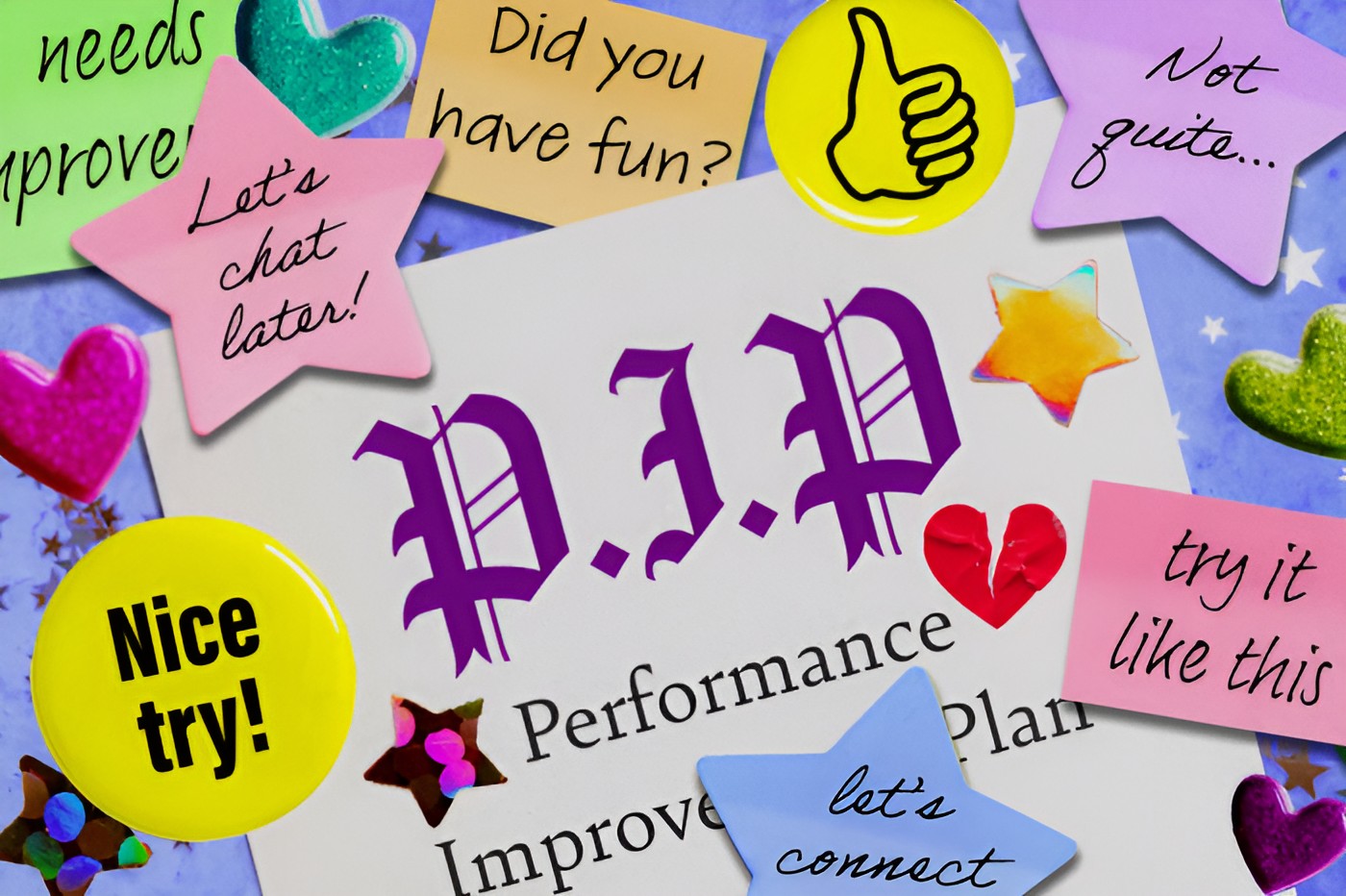
And whatever you do, call a performance discussion a check-in, not a review.
The oldest members of Gen Z are about to turn 30, yet companies are devoting more time and resources than ever to figuring out how to give this manager-befuddling generation better direction. For help, they are turning to a cottage industry of multigeneration-workplace consultants and even artificial-intelligence bots, while ripping up the script for what used to be once-a-year evaluations.
All of it is a departure for leaders who rose through the ranks in an era devoid of so much thought to effective coaching and criticism. “When I started my first job, I got a performance review a year later, and that was just expected,” said Adam Coyne, chief administrative officer at research and analytics firm Mathematica, which has shifted from annual reviews to quarterly, two-way check-ins for new junior hires.
“This is a group that wants a lot more real-time feedback,” added Coyne, 55.
It is a message managers say they are getting nonstop from surveys and all-hands meetings, not to mention the universities and colleges preparing graduates for the white-collar world of work: Used to the immediate validation of social-media likes and comments, even instantly posted grades, this generation of workers craves clear, frequent direction—and they feel disoriented and anxious when they don’t get it.
Gallup data suggest companies are still struggling to get the hang of it. Younger workers report some of the biggest drops in engagement at work over the past five years. Not knowing where they stand appears to be a big factor. The share of Gen Z and younger millennials who strongly agreed with the statement, “I know what is expected of me at work,” fell 9 points to 42% in surveys between 2020 and 2025.
That doesn’t mean they need the effusive praise that many managers claim they do, some 20-something workers say. “I personally dislike this style,” said Nathan Luckock, a 20-year-old engineer at an AI startup. More effective, he said, is just “pointing out mistakes and then offering a solution.”
That sounds familiar to Lindsey Pollak, a multigenerational workforce expert and executive coach, who says she coaches bosses to be as specific as possible. Instead of “be more responsive,” for instance, she suggests “need to hear from you within an hour of receiving an instruction.”
At Mathematica, Chief Executive Paul Decker said the firm switched to more frequent check-ins in part because so many new entry-level hires were peppering supervisors with questions like: “How am I doing?” and “What does the next level require?” At staff meetings, younger workers often questioned why things were done the way they had always been done.
That included things like “waiting months to learn whether you’re meeting expectations,” he said.
KPMG executives said they, too, began giving their younger workers more frequent assessments on skills like critical thinking and adaptability last year after interns said they wanted to hear more often how their skills were coming along. The firm wanted to “make sure that we scratch the itch,” said Jason LaRue, vice chair of talent and culture at KPMG’s U.S. practice.
Some managers are getting feedback on giving feedback from bots.
Joe Hirsch, a corporate speaker and author of “The Feedback Fix,” recently used an AI coaching platform to work with a tech-company manager on her delivery. She had been frustrated that one of her junior reports wasn’t grasping her pointers on pitching clients, so she role-played the conversation with the AI coach.
The problem, the bot advised, was that she wasn’t giving the employee enough context for why she wanted things done a certain way. “Let’s connect so I can share more about our approach and get your take on it,” it suggested she say.
That did the trick when she tried the approach in real life. “The advice finally landed,” Hirsch said.
Even a few, clear bullet points work, said Valerie Chapman, the 27-year-old founder and CEO of Ruth AI, a career strategist platform for women. “My generation likes to get feedback so that they know how they should adjust.”
She recalls getting bullet-pointed direction when she worked as a strategic growth partner at real-estate company Compass a few years ago. The feedback started with praise before offering pointers.
“It would be, ‘Great job. Here are some things that you could do next week,’” she said. “If that comes in on a Friday, then my Gen Z brain knows exactly what I need to do on a Monday.”
Mike Ekbundit, director of GE Appliances’ engineering programs, said he has tried to make performance discussions with younger workers in rotational programs two-way dialogues rather than top-down critiques. So he revised online evaluations to include prompts for managers to ask questions like “Did you like the assignment leader?” and “Was it too much work?”
Managers are also asked to assess the program participants on nine different categories, like innovation and resilience, while employees are prompted to list their top strengths and weaknesses.
“I need high customer satisfaction to retain this highly sought-after talent, and this is part of how I get it,” he said.
The Australian leather house has opened an immersive four-day pop-up in Manhattan, unveiling its Bloom Collection and redefining what a product launch can look like.
Following the successful launch of its Palais Collection, MAISON de SABRÉ has unveiled a new modular handbag system offering more than 720 styling combinations.
AI doesn’t rebel—people design, deploy and profit from it. The real danger lies in allowing tech companies to escape accountability while shaping regulations that protect their dominance.
A wave of corporate warnings and technical disclosures has flooded the media, with headlines worrying over “swarms” of rogue artificial-intelligence agents launching “unprecedented” cyberattacks, outsmarting their makers, and inching toward a terrifying autonomy. The most revealing part of this narrative isn’t what the software did. It’s who is telling the story—and why. When corporate leaders publicly insist that the systems they financed, engineered and deployed are suddenly beyond their power to contain, skepticism isn’t only healthy; it is essential.
For years, Silicon Valley has drawn scrutiny from civil society and global regulators over tangible harms such as youth mental health deterioration and systematic privacy violations. Today, industry figures seem to be trying to change that public image. Loudly blowing the whistle on their own systems—just as two of the leading companies were preparing for massive initial public offerings—lets AI executives position themselves as a new generation of leaders who have come to terms with their societal responsibilities. They seem to want us to believe that they no longer want to “move fast and break things” but will instead stand as vigilant guardians between humanity and a technological apocalypse.
There is one glaring problem: Software doesn’t rebel. A mathematical model possesses neither intent, malice nor the will to defy its creators, let alone extinguish our species. AI is a human artifact, engineered for profit.
When an agentic model in an evaluation sandbox connects to an unauthorized server or executes an exploit, it hasn’t staged a coup. It has tried to meet the human-defined objectives set out before it through a path its designers failed to constrain. It’s the digital equivalent of the King Midas myth, in which the king’s ill-defined wish turns even his food and drink into gold.
That powerful experimental models were able to discover novel vulnerabilities and breach external systems isn’t a sign of a dangerous superintelligence but of human error or negligence. There is no sentient actor lurking in the weights to be reasoned with, feared or pacified. There are only human software engineers, product managers and corporate boards deciding which guardrails are worth the latency cost and which permissions can be skipped in the race to market.
Policymakers and voters need to resist AI exceptionalism. In any other discipline—from civil engineering to pharmaceuticals—courts and regulators treat a system failure as evidence of bad product design and inadequate safety testing. If an aircraft crashes, we focus on finding the engineering defect, correcting it, and enforcing established liability standards for the damage created.
By leaning on an anthropomorphic narrative, Silicon Valley attempts to repackage its specific human choices that led to experimental, powerful models behaving unexpectedly during tests as an existential peril. Elevating the issue to a cosmic scale leaves the public paralyzed and takes ordinary product accountability off the table.
In the cutthroat race for venture capital and market dominance, building guardrails slows down deployment. Grandstanding about uncontrollable power costs nothing and generates billions of dollars in free publicity, justifying stock prices, all while cultivating an aura of technological capability not only to build the frontier but also ultimately to rein it in.
Governments need to recognize regulatory capture when it stares them in the face. Tech leaders’ strategy looks transparent: Alarm Washington and Brussels into creating a regime in which only trillion-dollar incumbents with fully staffed compliance and safety departments can legally operate. By sitting at the policymakers’ tables before anyone else, these companies can help draft rules digging an impassable moat protecting them from open-source developers and upstart competitors, domestic or international. The real danger is in further concentrating the tech industry into the hands of only a few companies with deep pockets.
Beijing and Washington have brushed off those tech leaders’ calls, albeit for very different reasons. Chinese state media dismissed them as part of the “Cold War playbook” and intended to preserve U.S. dominance. Xi Jinping argued for exactly the opposite at the Brics Summit on Sept. 12, calling on Brics countries to “strengthen cooperation in the field of AI, encourage open source, openness, collaboration and sharing, and break new grounds and scale new heights.” President Trump, steeped in a doctrine of unfettered capitalism and technological supremacy, called fears that AI could destroy humanity a “hoax.” Vice President JD Vance warned that AI companies “begging the government to regulate them” looked like a “Trojan Horse.”
Striving to pursue its “European way” on AI and assert regulatory leadership, Europe, by contrast, welcomed the call. European Union President Ursula von der Leyen made this clear at the State of the EU speech last Wednesday and announced that the EU will invite “the main frontier labs for a discussion on how we can support ongoing industry efforts to pace the frontier.”
Europe has been here before. In an effort to lead global regulation and react to fears borne from ChatGPT, Europe rushed its landmark AI Act into law in 2024. Already the world’s most restrictive rulebook, the framework quickly proved too broad and complex to enforce. Stalled by implementation delays and concerns about European competitiveness, the EU postponed the law’s full rollout, leaving regulations uncertain.
AI should be regulated—risks exist and should be taken seriously. But governments need to act based on available evidence and verified facts, not corporate PR panic, the views of industry insiders, or the desire for quick political wins. The greatest danger facing society isn’t that software will awaken and overthrow its human masters. It is that we will allow the creators of the software to abdicate human responsibility for the systems they choose to build and help them pull up the ladder to market access behind them.