Interview: Sam Elbanna, Project Director Laver Residential Projects
We discuss home ownership trends, development success and longevity in the sector.
By Marwan Rahme
Tue, Apr 12, 2022 1:26pm 5 min
5 min
5 min


We discuss home ownership trends, development success and longevity in the sector.
5 min
Kanebridge News: What’s the allure of working in property for you?
Sam Elbanna: Property is the foundation of much of the world’s wealth and, for many Australians, a fundamental element of our lives. Property houses us, provides us with income, and gives us venues in which to work, play and be entertained. For me, working in property is exciting because it is tangible, always evolving and interesting due to the vast array of people I get to meet daily from all walks of life who are all brought together by property.
How do you think notions of homeownership have changed in Sydney over the last 5 years?
The last 5 years have seen numerous fundamental shifts in the way we live and work with Covid-19 being the biggest influence. Prior to Covid, certainly in the inner city, there had been a shift toward smaller apartments, often for singles and couples. This was further fuelled by affordability issues, investor demand etc. Many people were comfortable with this because the local area provided them with ample amenities to socialise, train and simply be around others.
Since we have adjusted to life with Covid, I have seen shifts in buying behaviour such as a strong desire to buy in lifestyle areas — for example near beaches, wanting apartments with designated office space, a strong desire for outdoor space nearby and as part of dwellings and for local entertainment.
What do you think people need to know before buying a property – what advice would you give them?

How has project marketing changed on the business front in the last 5-10-years?
The biggest change over the last ten years has been the extensive use of technology in the marketing and selling of property. Large proportions of advertising budgets are allocated to online advertising and, over the last 5 years, social media. We are now exchanging contracts and settling online. In February this year, I showed a buyer through a multi-million dollar property via facetime. Last week we exchanged numerous contracts where buyers signed on their smart phones. Essentially, it has become more apparent than ever that if you aren’t using technology extensively, you will be left behind.
You’ve chalked up over 5000 apartment sales in your time. Has it gotten easier, harder, different?
It is just different. For a start, the internet has changed the way we operate. It has broadened the reach of advertising, and the speed of communication with consultants. But with all the changes, the one fundamental that has remained the same is that we are in the people business. People buy real estate from people. They live in real estate with people. The properties are designed, and built by people. So, we in the sales industry have to recognise that, whilst we do this every day, the people we are selling to are making massive, life changing decisions. Successful project marketers take a collaborative approach to selling, act as advisors and play the long game.
What do you do differently that has given you longevity in the industry?
I would love to talk about discipline and hard work which obviously are important but for me, it’s a genuine love for the business. So even though some days are hard, I’m having fun and I’m surrounded by people that I genuinely like. Interestingly, many of my closest friends are somehow related to the business. And because it is constantly evolving, I am forced to constantly learn and embrace change which is exciting. Not really work is it?
What makes for a successful development, is there a recipe for success?
This quite simple… not easy but simple.
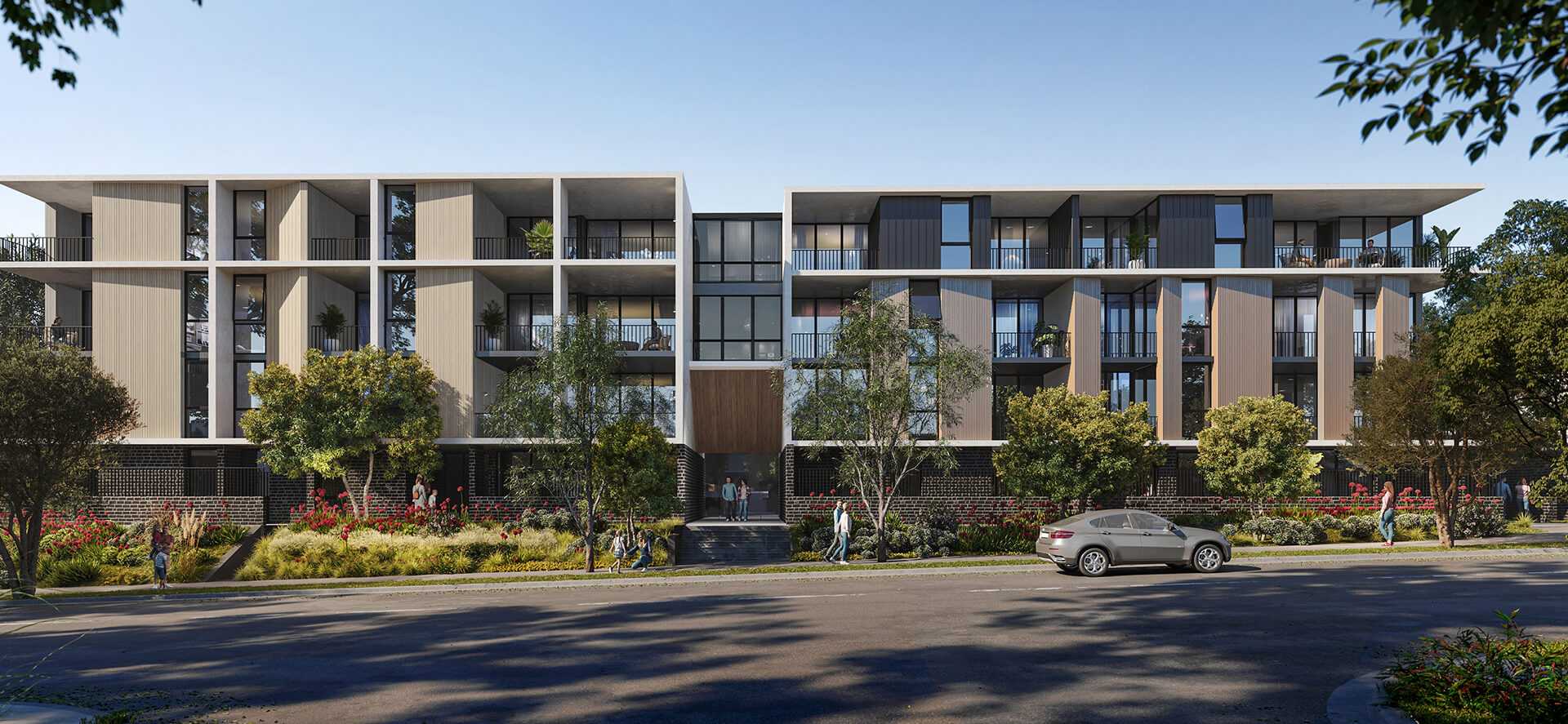
A live example of this is a project called The Halston in North Strathfield. Originally almost half the project was made up of 1 bedroom properties. It’s normally easy to ascertain what people want because we would look at other developments in the area and what they’re doing and how people are buying them.
But here, because there’s no new development, and hasn’t been for many years, we interviewed hundreds of people to get an idea of what people in the area wanted. It became obvious that there was strong demand for 3 bedroom properties as many people were selling their homes in the area and there was simply new little three bedroom stock available.
Now in the project, 1 bedroom units make up less than 30% and the number of 3 bedroom apartments has increased markedly. After a couple of days on the market, this has proven to be the right move with much of the interest being focussed on those apartments.
What does Laver offer that other firms don’t?
Laver is very different to other firms. It is a collection of some of property industry’s most experienced and successful people working together for a common goal. Each of us have complementary skills that are applied to each project to ensure success. We offer a complete end-to-end service to developers and financiers, from site acquisition, planning and design, right through to project marketing and sales strategy. Most importantly, our directors play an exceptionally hands-on role in every component of every project, including on the frontline making sales.
What do you think homeowners are looking for, is there a trend you see growing in the next 1-3 years?
I see a move towards a highly segmented market where trends within those segments will dictate the property landscape moving forward. For example, one of the fastest-growing and most affluent segments is the empty nester market. These are the children of the first baby boomers. These buyers are young enough to embrace technology yet old enough to understand the value of time and compounding. These buyers are overwhelmingly looking for lifestyle properties with ample space as they are often selling large family homes and anything smaller is a compromise. The other segment which will be influential on the property market are the first home buyers who are well paid, still living with their parents and seeking a property that appeals to their desire to live a certain way.
For more information on Laver Residential’s North Strathfield project, The Halston, click here.

The Australian leather house has opened an immersive four-day pop-up in Manhattan, unveiling its Bloom Collection and redefining what a product launch can look like.

Following the successful launch of its Palais Collection, MAISON de SABRÉ has unveiled a new modular handbag system offering more than 720 styling combinations.
The US housing market remains under pressure as high mortgage rates continue to weigh on affordability and demand. Industry leaders say 2026 has been one of the toughest years for home sales, with slower price growth, weaker mortgage activity, and fewer buyers entering the market. However, experts say reduced competition and more price cuts could create opportunities for well-prepared buyers.
2 min
The typically busy spring season for the housing market was a dud, and the summer isn’t looking much brighter.
Housing services companies like Zillow Group and Rocket RKT +3.78% were loud and clear last week on earnings calls: Rocket CEO Varun Krishna called the quarter through June “one of the toughest spring housing markets in years.”
Jeremy Hofmann, Zillow’s chief financial officer, said on a conference call that the company predicted earlier this year that the market for mortgages would be flat. “We actually now think it’s going to be down low-to-mid-single digits,” he said.
The rest of 2026 will remain challenging for mortgage origination volume, says KBW analyst Bose George. The question now is what happens in 2027. “If mortgage rates remain [around] 6.75%, I think that’s going to be challenging even for next year,” he says.
But what’s bad news for mortgage companies could be a positive for bargain hunters. Buyers can expect prices to grow more slowly—or mildly decline—with less competition as long as mortgage rates remain unpredictable.
Mortgage rates at the beginning of the year were solidly below year-ago levels, notes Zillow senior economist Kara Ng. But they surpassed last year’s levels recently, she adds, referencing Freddie Mac’s weekly survey of 30-year fixed mortgage rates. Last week’s reading, at 6.69%, was higher than year-ago levels for the first time in 2026.
“From the affordability point of view, it’s going to get more challenging in the second half of the year,” she says. “And when affordability gets more challenging, that impacts sales and home price appreciation.”
Mortgage application data tracked by the Mortgage Bankers Association has cooled since the beginning of the year. The trade group expects that the number of mortgage originations in the remaining two quarters will lag behind last year’s levels, after exceeding 2025 levels in the first half.
Rocket’s early-stage data—which the company told Barron’s it derives from its brokerage Redfin, demand for its mortgage products, and signs in its servicing portfolio that a homeowner is preparing to refinance or move—“leads us to expect the third quarter mortgage market to be smaller than the second,” Chief Financial Officer Brian Brown, said on the company’s call. He added that such an occurrence is “something the industry has not seen since 2022.”
Prices will be about flat nationally, Ng says. Zillow’s most recent forecast, which shows how values are expected to change in the year ending June 2027, show them dropping in roughly half of the 100 largest U.S. metros for which data is available.
Buyers aren’t rushing in at a time when mortgage costs are rising and unpredictable. But those with the right combination of patience and cash could stand to benefit. “If you are financially qualified to buy a starter home, you are facing less competition and you’re more likely to get a price cut,” Ng says.